

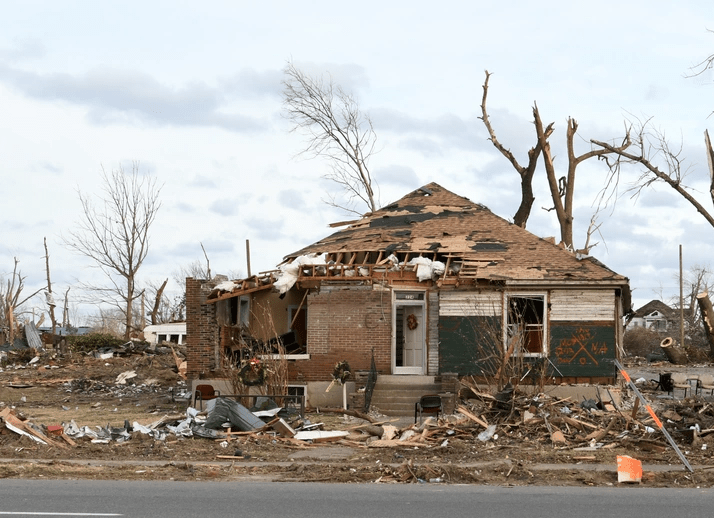
We can tell the future. Isaac Asimov wrote a series of books called The Foundation Trilogy that suggested it would be possible to use math and science to predict the future not of any one individual but of major movements of socioeconomic movements. When you think about it, we already do this with things like the Federal Reserve Board trying to adjust inflation. When I do the math, the neighborhoods of our nation’s capital are heading for dystopia.
Let’s look at some of the math for the District of Columbia. In 1999, the population of DC was 521,000 people. In 2022, the population was 672,000. Over those 2 decades, the city increased by 151,000 or nearly 30%. This is just the residents. It does not include everyone who commuted daily to sit in the office buildings. Commuters from the city’s Maryland and Virginia suburbs used to raise the city’s daytime population to more than one million during the workweek.
However, during COVID all the federal employees left the office buildings in DC bringing the office vacancy rate in the District to a record high of just under 20%. The mayor of DC repeatedly asked the President of the U.S. to bring back the federal employees and he made an executive order, but by that time, the federal agencies had already created fully remote policies, coordinated them with a plethora of unions, and published them. Then they documented the positions that could be fully remote and codified them. Then they released building leases, reducing the various organizations’ expenses. It’s impossible to turn back the tide.
Total overall commercial bankruptcies in the U.S. increased 22% in the first quarter of 2024. Hundreds, probably thousands of small businesses in the district relied on those federal employees who have since left the district to remote work from the suburbs and many have moved out of the suburbs into remote areas. A total of 76% of establishments in DC (or a total of 18,224) were small businesses. When the commuters used to come in from the suburbs swelling the district population to more than 1M daily, they/we used to eat lunch there, often breakfast, and sometimes even dinner. We used to shop at pharmacies, and grocery stores, get gas, or do dry cleaning in the district. But that swell of commuters has significantly decreased, robbing thousands of businesses of life-sustaining revenues.
Taxes are also leaving the district. IRS data shows a pandemic-era exodus of mid-to-high earners aged 26-44 from DC, leading to taxable income loss. Migration data from the Internal Revenue Service shows that between 2019 and 2021, during the height of the pandemic, the District of Columbia experienced a net loss of over 16,000 tax-filing households, which equates to approximately 31,000 people leaving the city. This migration resulted in a net loss of more than $3B in annual taxable income so far.
While tax and business revenues are going down, while mid-to-high earners are leaving the city, violent crime is going up. As most major U.S. cities recorded decreases in murders last year, killings in the nation’s capital headed in the other direction: 274 homicides in 2023, the highest number in a quarter century, amounting to a nearly 50 percent increase since 2015. Killing is just one part of the crime spike story. Other violent crimes like carjackings are stealing headlines. Homicides, carjackings, and robberies across Washington, DC, have affected prominent politicians and regular residents alike, leaving many in the nation’s capital fearful of the rising crime. While other major cities saw a drop in a variety of violent crimes, the nation’s capital suffered a 39% increase last year.
Homelessness is also increasing in the nation’s capital. Last year’s data revealed roughly 9,000 people were experiencing homelessness– an 18% increase from 2022.
Rent is going up. Two real estate sites, Zumper and RentCafe, place the median rent for a one-bedroom apartment in D.C. at just below $2,400. Zillow pegs it at more than $2,600.
Absenteeism among DC students is on the rise. Here’s a jaw-dropping number: 60% of D.C. high school students were chronically absent last school year.
Sadly, my conclusion of these trends is an irreversible spiral toward a dystopian community. However, that’s just for the nation’s capital and perhaps some other major cities. For the middle class and upper middle class who are taking on remote work, staying at home, and homeschooling their kids, life will begin to evolve more around their neighborhood in a way that it hasn’t since before women/mothers joined the workforce creating the dual-income household that is ubiquitous today, but that is another blog post.
https://www.axios.com/local/washington-dc/2024/03/07/high-school-student-absences
https://www.cnn.com/2024/02/05/us/washington-dc-crime-carjackings/index.html
 35-Year Public Affairs & IT Professional