Blog

A Memorial: Zhong Wen Hu

Zhongwen Hu

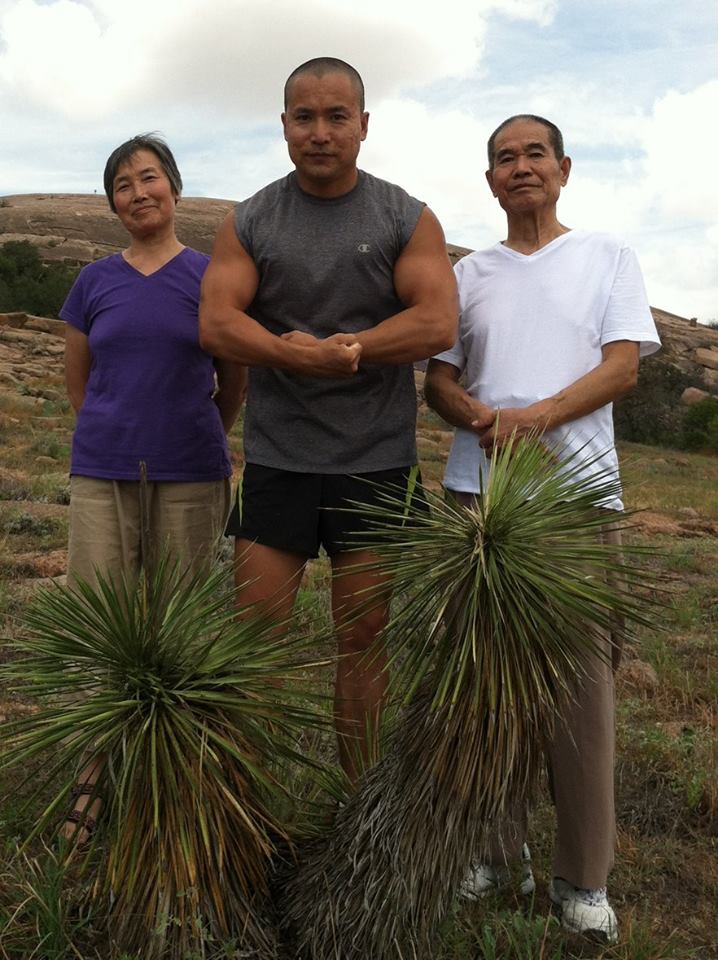
Zhongwen Hu lived a wholly remarkable life. He was born in 1937 and had a clear memory of a time before the communist revolution in China. His eldest son became an engineer, emigrated to Canada and now works for the auto industry in North America. His youngest son placed in Beijing body building championships, worked as a banker and professional photographer. Zhongwen Hu moved to Guyana, South America in 2010 and emigrated to the U.S., receiving his green card in Miami, Florida. Dad lived the rest of his life in San Antonio, TX. He traveled to AZ, SC, AL, NM, and LA. He left us in the summer of 2015, while his grand daughter, Ann, was still in her second trimester in my womb. He lived through the eight years of the Japanese army’s occupation of Bejing, great depression of China, the Great Leap Forward, the Cultural Revolution and the modernization of China.


New view on the Thucydides trap

Much discussion about whether the U.S. and China are destined for war ignores classical Chinese strategic texts about playing the barbarians against each other for the benefit of China. The Korean Conflict may be the Chinese greatest accomplishment with regard to the Chinese methodology for waging war. To truly accomplish one’s objectives with the least amount of loss to the home country is the ultimate Chinese military strategic accomplishment. If it’s true that Mao engineered the Korean Conflict, the U.S. and China have been at war since before my mom was born.

What if? Mao manufactured the Korean Conflict?

A close reading of Kissinger’s On China includes solid data regarding the Chinese deception of Moscow. The Chinese Army was already marching south on the peninsula when Mao cabled Moscow to tell them the Chinese would not interfere in the war between North and South Korea. Moscow and Beijing both blame the other for having originated the idea of North Korea invading South Korea.

Kissinger documents Chinese history, philosophy and tactics which include playing the barbarians against each other and using chess-like or Goban-like political moves to diminish an enemy’s national funds, national clout and domestic popularity. Kissinger notes clearly that the real winner in the Korean Conflict was China. At the end of WWII, the two most powerful global forces were Washington, DC and Moscow. At the end of the Korean Conflict, both had lost considerable domestic confidence, national financial reserves, human lives and global confidence.

However, Kissinger stops short of blaming the creation of the Korean Conflict on Mao. If Mao was able to manufacture a global event that cost, by some estimates 3 million lives both civilian and military, it was his crowning achievement as the ultimate political manipulator. It’s hard to imagine from a JudeoChristian ethic that someone could care so little for human lives as to use 3 million people as pawns in a political maneuver. However, in the military strategic view of classic Chinese texts, rather than be a horrific violation of ethics on a near genocidal level, it could be viewed as a master stroke of genius.

Terrifying to think of, really.41gbrddtfll-_sx324_bo1204203200_

Direct Democracy Regulatory Reform

I just wrote this for a university post and I loved it, so I thought I’d share it here.

How I got here

I love democracy. I want to further the cause of democracy by helping illustrate the specific realities of the United States of America, one of the most bodacious democratic experiments in human history. So, I became a government journalist and learned how to put words and photos in a weekly newspaper.

Then I realized that to write anything meaningful for those words and photos in the newspaper, you have to know stuff, a lot of stuff. I promised myself I would take at least one college class per semester, and I have since the early 1980s. I did more than 60 credit hours in search of a bachelor’s degree from more than a dozen different colleges and universities and finally cobbled it all together for a BA in Sociology from Chapman University. Then all but dissertation in the master’s degree from the American University in Cairo (Cultural Anthropology). Then an AAS in computer programming from Cochise Community College. Along the way, I have studied six languages, achieving scores of 3/3 in Spanish, 2/2 in Japanese, 2/2+ in Portuguese and 1+ in Arabic and Korean on the State Department evaluation system, which considers 3/3 equal to a native speaker who has a high school education. I have also studied my husband’s language of Mandarin Chinese.

But I also realized that college isn’t enough. So I read and read and read. I have read dozens of books on national histories, including the history of Chile in Spanish, and Egyptian and Japanese classic works of literature in translation, critical philosophers like Sun Tzu from China and my personal favorite, Plato. I wanted to put the world in context.

Since my earliest days, I’ve tried to find ways to cram more time into a single day or at least more information absorption. Reading a book is slow, cumbersome work. In the early days, when I took home less than a $1000 per month as a enlisted Marine in the 1980s, I would still spend as much as $100 for a book on cassette. I even went to the library to check out books on cassettes or DVDs and listened to them during commutes to work or while waiting for anything – a doctor, an airplane, whatever.

The first time I went overseas, I was limited to two pieces of luggage to sustain me for a year or two. My number one problem was which books to take. I couldn’t take my complete collection of the Encyclopedia Britannica Great Thinkers of the Western World, they were too heavy.

Of course, books on cassettes or DVDs were lighter and if I burned them all onto a hard drive, lighter still. Then one day, I met audible and the iPod classic and my life changed forever.

I could keep a virtually unlimited number of books in my pocket, weighing less than my wallet. I could let the information, including foreign languages, streaming into my ears day and night, even while drifting off to sleep.

Then I saw a presentation with Jeff Bezos talking about the effects of dual modality. That reading the text of a book, something I often did when I wasn’t driving, while simultaneously listening to an audio version of the same book increased comprehension and retention. In a 2016 journal article, authors Rogowsky, Calhoun and Tall explain and explore the value of dual modality. (Rogowsky, Calhoun, & Tall, 2016)

My audiobook collection is just over 800 books, mostly nonfiction, scholarly and history with a smattering of classical literature and science fiction. According to the audible website, I’ve been a member since August 30, 2008. Amazon bought Audible in March 2008, so I’m guessing I was one of the first on the platform. The app on my current iPhone says I’ve listened to audiobooks for a total time equivalent to one month, 14 days, 15 hours and 12 minutes. However, this doesn’t track the fact that I can and do listen to my Amazon audiobooks on my Alexa Smart Speaker, on my government computer using Amazon’s website and from my laptop computer. In fact, I can access my audiobooks from pretty much any internet-based platform, including my daughter’s iPad. I wish the website tracked total reading time across all devices. I listen to audiobooks using my iPhone connected to CarPlay in my SUV but have to use an aux cable in my subcompact car because it doesn’t have CarPlay yet. I called BestBuy and learned they can install CarPlay in my car along with a rearview camera. I plan to get them both installed this winter in addition to buying the Alexa device for autos, one for each car. At that point, it won’t matter if I forgot the cable to connect my iPhone to CarPlay, my car will have a copy of my audiobook downloaded in a device and with WhisperSync technology, it will know where I left off reading on my Kindle or iPhone, so I don’t have to reread the material I’ve already consumed.

Since I’m in the news business, I want to know what’s going in the news, but I want serious news – markets, global events, world political changes, etc., not just the local weather and updates on social media influencers. So I have news apps installed on my cell phone that bring me reports on the Dow Jones, CNN Money, BBC, China Daily, Al Jazeera in English, Fox News, the Washington Post, NPR, CGTN (Chinese government official news channel), Reuters, AF Connect, Asahi Shimbun (the Tokyo daily), and Canberra News. These apps push information to me, scrolling across the screen with the latest in hot news from around the world, often telling the same story from wildly different angles.

According to an article in Political Communication by Zhongdang Pan, all parties, including the news media, politicians and lobbyists work to frame news in a light that best suits their goals. As such, reading diverse content improves topic comprehension and undermines the various authors hope to imprint on me a framing they prefer the public consume. (Pan, 1993)

Where I’m going

When the Air Force hired me as the chief of the public web in 2011, I panicked. I was, in my own assessment, in no way qualified for the job. I was not sufficiently tech savvy. This is why I picked up an AAS in computer programming. I asked my office to pay for a dozen courses in website design, website programming, Microsoft Access programming, and I read all the technology books I could find. Thankfully many if not most of them are available in an audible format.

I started to experiment. I bought programmable thermostats and a programmable vacuum cleaner robot. I bought a smart home security system with an online video camera and smart light switches and smart TVs. And of course, smart speakers. Two. Alexa and Google Home. I wanted to understand the Internet of Things, not just from Forbes articles and the like, although I read those too, but from a lived experience. (Morgan, 2014)

I wanted to understand exactly what the technology was capable of and where it could take us. With a background in sociology, I wanted to understand what would best serve the people and my first love, democracy. I realized voice user interface from smart speakers would smash the centuries-old hierarchy of knowledge that he who reads the most text on paper earns the most money and social clout. I wrote a blog about this idea. (Hu, 2018)

I realized that the extraordinary democratic experience we have had combined with the new crowd sourcing technology could create a reality from the fiction of a direct democracy. (Gardels, 2018) After a job interview with the Alcohol, Tobacco and Tax Bureau, which will most likely be responsible for drafting new regulations regarding recently legalized cannabis, I began developing a concept for an online platform to crowd source the development of government regulations. It is based on an idea cobbled together from Clay Shirky’s books Here Comes Everybody (Shirky, 2008) and Cognitive Surplus (Shirky, 2010). I realized that rather than spending copious hours of time for the limited 480-person staff that runs this remarkably small agency, we could build a website that collects regulation suggestions from the public, allows them to vote them up or down and comment on them. It should be able to allow them to mashup a proposal, meaning copy another citizens proposal and modify it sufficiently that it becomes a different legislative proposal. Then run the finalists through a set of government lawyers to vet them for consistency and publish.

The government agency will significantly reduce its workload. It will completely change the equation of the public comment period. And the remarkably enthusiastic producers and consumers will have a direct say in how their world is governed. Direct democracy has always seemed like a little piece of mythological fiction from ancient Greece at a time when people were in no way equal.

I’m excited by the idea that I might be able to use technology to help my country create a system that allows the general public direct access to policy making. Of course, first, I have to get hired. Still, regardless where I go, I’m always looking for ways to bend the technology to my ambitions, which as one previous supervisor wrote in my annual review, “is more for the organization and humanity than for herself.”

Bibliography

Gardels, N. (2018, October 5). Direct Democracy: Renovating Democracy from the Ground Up. Retrieved from Washington Post: https://www.washingtonpost.com/news/theworldpost/wp/2018/10/05/direct-democracy-2/?utm_term=.0f0049366d52

Hu, C. A. (2018, November 9). New Literacy: Eulogy for Gutenberg. Retrieved from Charlotte Ann Hu: https://charlotteannhu.com/2018/11/09/new-literacy-eulogy-for-gutenberg/

Morgan, J. (2014, May 13). A Simple Explanation of the Internet of Things. Retrieved from Forbes: https://www.forbes.com/sites/jacobmorgan/2014/05/13/simple-explanation-internet-things-that-anyone-can-understand/#206d2edb1d09

Pan, Z. (1993). Framing Analysis:An Approach to News Discourse. Political Communications, 55-75. Retrieved from https://s3.amazonaws.com/academia.edu.documents/45567926/Pan_Kosicki_1993.pdf?AWSAccessKeyId=AKIAIWOWYYGZ2Y53UL3A&Expires=1542319483&Signature=IZRHRLe2lmUemWF2UnoDaUmxzsg%3D&response-content-disposition=inline%3B%20filename%3DFraming_Analysis_An_Approach_

Rogowsky, B. A., Calhoun, B. M., & Tall, P. (2016, September 1). Does Modality Matter? The Effects of Reading, Listening, and Dual Modality on Comprehension. SAGE, 6(3), online. Retrieved November 11, 2018, from https://journals.sagepub.com/doi/full/10.1177/2158244016669550

Shirky, C. (2008). Here Comes Everybody: The Power of Organizing Without Organizations. New York: A Perigee Book/Penguin Group.

Shirky, C. (2010). Cognitive Surplus. New York: A Perigee Book/Penguin Group.
 

New Literacy: Eulogy for Gutenberg

I haven’t yet seen any news reports or research or thought leadership books by techies about the impact of smart speakers on the fundamental structure of our social fabric. I think Alexa is a technical revolution as radical as Gutenberg’s press.

In 1436, Johaness Gutenberg, a German goldsmith, created the printing press. Before then, all texts had to be laboriously copied by hand. Corresponding this critical new technology, born in Eisleben, Germany, in 1483, Martin Luther disrupted religion by translating the Bible and removing control from the hands of the clergy. Since that time, the ability to read text on paper has largely determined economic potential and earning capability in the job market.

Right now, in 2018, there remain some 20% of the world’s population who are illiterate. Others born or who later became blind or severely sight impaired have also been limited in their economic potential due to their inability to access information.

Alexa and other technologies like her, Siri and Google Home, but more importantly, the computing power that has made text to speech and speech to text capability possible will make reading letters on paper altogether irrelevant with regard to accessing information.

I read a book by Microsoft MVP Ben Clothier who explained how to integrate Access and Sharepoint nearly 10 years ago. He seemed at that time to be the only person in the world who knew how to do what we wanted to do with our information. I reached out to him on the web and he said he worked for a consulting firm. I reached out to them and contracted him to help our project. I also contracted two American sign language translators because this brilliant expert was severely hearing impaired and had very limited sight. I offered to pick him up from his home on my way to work, because I learned from a tour at the Lighthouse for the Blind that getting to work every day is one of the biggest challenges in a car culture like ours for sight-impaired professionals.

Centuries or even decades ago, Ben would never have been able to access all the knowledge that put him at the top of his specialty. While limited options were available, like braille, few of the worlds books were available in braille. Because of the digital revolution, information is now available to almost anyone and the final wall is coming down with voice user interface.

At the end of this holiday season, some 50% of American homes will have a smart speaker. Amazon’s website likens it to Star Trek ship communication technology. Ease of use has never been more fluid. No manual required. Even my two-year old can activate Alexa, although she has yet to correctly format a request to get a response. Alexa’s ring turns blue, delighting my toddler when she says, “Alexa.” Amazon just announced Alexa is available in Mexico.

Once this technology is available worldwide and once the world is online, Gutenberg will finally be truly just a note in the history books. The world he created of text will no longer determine one individual’s economic potential by serving as the only path to knowledge and information and ultimately professional expertise.

I have long loved books, and I will miss Gutenberg dearly. Still I can see that Alexa joins the Internet as the most powerful flattening forces of my lifetime.

Learning Languages Liberates our Minds

Give yourself, give a loved one, especially a child the ultimate cosmopolitan gift: Multilingualism.

People who speak two or more languages have significantly better overall cognitive abilities than those who speak one. Learning another language is one of the most effective and practical ways to increase intelligence and keep your mind sharp.  Language study buffers brain against aging. Start today with Creations by Crouch bilingual picture books.

Adele Marie Crouch created her bilingual picture books in the hope to bring the world together and keep unique cultures alive. The German-American grandmother’s children married Italian-American, Mexican-Apache, Nez Perce and Chinese. “Now my grandchildren look like the United Nations,” says the 68-year-old former realtor.

fox_cover_navajoIn retirement, Crouch starting writing picture books. She is deeply committed to providing language training assets in the form of bilingual books, especially for languages which are less available, such as Swahili and Marshallese. She is also deeply concerned with disappearing languages like tribal languages for the Native Americans of North, Central and South America as well as the Pacific islands and African tribal languages.
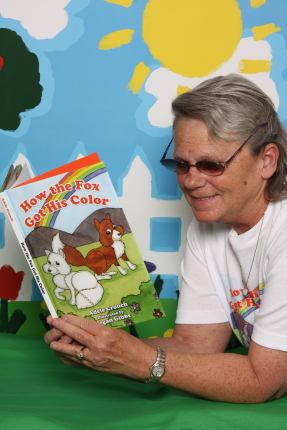
“One of the problems I’ve had is finding native speakers to provide translations,” she explained. Some languages like tribal languages are difficult to find professional translators for and others may have multiple dialects. This means that people from other dialects complain that the books are not correct. Her books have now been translated into more than 40 different languages.

“I wish I could have learned my family’s language,” says German-American author.

Like so many parents in so many ways, Crouch wanted to give future generations of her family more opportunities than she had herself.

Although Crouch is a German-American, she never learned to speak her family’s language due in part to the reputation that the German nation had earned at the end of World War II. Many German immigrants tried to hide their ancestry and they did this by making sure their children spoke only English. “My grandma didn’t want any of us to speak German,” she explained.

adelemariecrouch
Adele Marie Crouch, author of bilingual picture books in 40+ languages. Photo by Douglas Paul Crouch.


Today, many Asian and Latin American families who have been United States citizens for many generations still speak their family’s language at home. “I wish I could have learned a second language,” Crouch laments. “I wish I could have learned my family’s language. I will make sure my grandchildren and many other people’s children have the option and the opportunity to learn more languages if they want.”

Crouch is also a self-taught artist, working in: Acrylics, Oils, Colored Pencils, Graphite and Charcoal. She has been selling her work for more than 40 years. Her interest in art was inspired by a history lesson which featured Michelangelo when she was nine years old. Her artistic interest became another asset when she started writing bilingual picture books as she illustrated several of her books herself. However, in the beginning she didn’t feel confident enough to illustrate her own books so she hired a professional illustrator, Megan Gibbs. 

Megan illustrated How the Fox Got His Color and Where Hummingbirds Come From.  Within a week of completing the Hummingbird bird, Megan passed away.  Adele was at a loss at first and then decided to try doing her own illustrations and has been doing them ever since.Three of Adele’s relatives, her grandfather and two aunts, were also artists. This helped give her incentive to study and develop her skills in illustration.

Adele sits transfixed for hours just inches away from her easel. Her paint laid out in various tubs and tubes splayed around her. In the quiet room 17 miles down a dirt road, the only sounds are the wind outside and occasional sound of her brush strokes or sighs of happiness or frustration with her painting efforts. Yet, she said she loves her paintings as much as she loves her books and grandchildren.

Crouch’s bilingual language study books include:

  • How the Fox Got His Color is a delightful little story that tells of a young girl’s time with her grandmother as she relates a legend of how a mischievous little white fox with all his grand adventures going over and under and through became the red fox we all know today.
  • Where Hummingbirds Come From continues the grandmother and granddaughter characters as grandmother explains how the magic waters of a bubbling spring spray forth into magical, beautiful birds.
  • The Dance of The Caterpillars is a fun way to teach prepositions. This exciting children’s book contains twenty-two prepositions, one two-word multiple, and two three-word multiples.
  • Alphabet Alliteration puts a twist on learning the English alphabet.
  • The Gnomes of Knot-Hole Manor is a chapter book that focuses on word pairs that have the same pronunciation, but different spellings and meanings.

Crouch has always been fascinated with language and learning, including the structure of the English languages, so her books focus on the unique language elements while weaving them into entertaining stories.

Get started improving your brain today! Buy and read a bilingual book yourself or buy one for your favorite elder or young family member. Language study gives your brain a workout that improves the cognitive abilities of children, increases intelligence, and keep a mind sharp for everyone and buffer the brain against the effects of aging.

Buy Adele Marie Crouch’s bilingual books on Amazon.com or visit her website at www.CreationsByCrouch.com

BilingualBooks-Adele-Crouch.jpg
Bilingual picture books author Adele Marie Crouch at book signing event. Photo by Douglas Paul Crouch.


Helotes Honors Veterans with Live Music

Landscapes of Freedom: A Tribute to our Veterans
AFROTC.JPG
AF ROTC patch

The Helotes Area Community Band played a free concert in the city’s fire station to celebrate Veteran’s Day, which was Nov. 11. Nearly 300 people enjoyed classic military tunes such as “Yankee Doodle Dandy” and “The Star-Spangled Banner” during the Sunday afternoon concert.

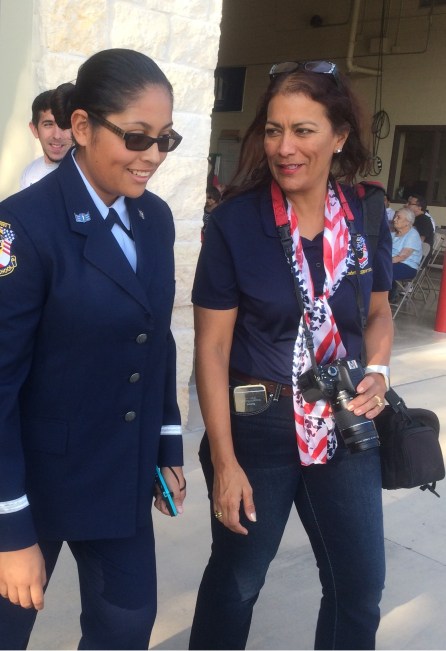
Samantha Mireya Parada, 17, a junior at Helotes High School, attended the event with her mother and a friend from high school. Parada said she participated in the color guard to open the concert as a member of the Air Force ROTC at her high school. She said she loves events like this one and noted that she just got back from an unarmed drill competition where the Helotes High School team performed well. “We’re hosting the potluck after the concert,” she added.


parada
Samantha Parada talks with a guest at the Helotes Community concert.

Like Parada, most of the spectators were locals. However, Mustafa Abdel Rahman, 43, a graduate of the American University in Cairo, came to San Antonio from Egypt to visit friends on his way to a university panel in the Midwest. Rahman also enjoyed the open air music on the breezy 75 degree day.

A Guest from Egypt

As is common in North Africa, Rahman is multilingual, so he chatted with Parada’s mother in Spanish. “It’s been a long time that I haven’t been able to use Spanish,” he said. In addition to his native language of Arabic, he also speaks his wife’s language, German as well as English and Spanish. Rahman traveled that evening to Austin, then on to Minnesota for the academic conference before returning to his work in Egypt.

According to the program, the official title of the concert was “Landscapes of Freedom: A Tribute to our Veterans.”

The 60-member band sat inside the garage of the fire station with the doors open and the fire engines parked outside. Families, retirees, children and students filled the folded chairs in the fire station to enjoy the music. A couple of on duty Helotes police officers stood outside the door of the station to enjoy the music and the community comraderie. They had to stay close to the police headquarters in the next building to be able to respond to any calls for assistance.

Kuentz Elementary School Choir Sings

The crowd seemed to enjoy the band’s rendition of “The Ballad of the Green Berets,” which was performed as an audience sing-along. The Kuentz Elementary School choir provided vocals for some of the music, including “You’re a Grand Old Flag” and “America, the Beautiful.”

The Helotes Area Community Band was formed in July 2008 as a vision of Mayor Tom Schoolcraft, according to the band website. A statement on the site announces: “We are proud that we now have over 60 members, and have advanced in ability to be able to play band literature that appeals to many different tastes.”

Membership in the band is free and open to anyone who plays a wind, brass or percussion instrument, reads music and is ready to commit to a great musical experience, according to the information in the program’s schedule of events.

The band will have a series of three performances in December to play holiday music. The next performance is Dec. 2 at 6 p.m. in the Helotes City Hall. The concerts are free to public.

Helotes is a city of 8,000 just outside the northwest side of San Antonio.

patriotic-pigtails
A member of the Kuentz Elementary School choir displays patriotic pig tails.


Childhood Memories: Country Living on Hebei Farming Plains of 1950s China

Photo caption: Mama Huang tends her San Antonio spinach garden.

Mama Huang is a country girl. Born Yong Cui Huang in 1948 in the farmlands of Jilin province, China, she still enjoys gardening.  A few months after she was born, her family moved to Xianghe County, Hebei Province, another country village. She move from rural life to urban life after she married her Beijing-born husband, Zhong Hu in 1967. After working in Beijing for 20 years, their youngest son, Bin Hu, 44, and daughter-in-law brought them to a new life in San Antonio.

When she was born, women in her village washed everything, including children, in wash tubs outside and carried water from a nearby well to their homes. During the time of Huang’s mother, women in China had been binding their feet to make them 3″ in length. Such small feet were called Lotus feet. Foot binding fell out of practice a decade before Mama Huang was born and, according to a Smithsonian magazine article, February 2015, “the last shoe factory making lotus shoes closed in 1999.” Since childhood, Mama Huang has shown a natural talent for traditional Chinese medicine, including acupressure, cupping and food as medicine. She studied on her own through government sponsored materials and offered to help neighbors. 

cupping
Mama Huang’s son Bin Hu after cupping treatment for back pain.

Huang remembers her farming days with fondness. “My home was on the Hebei plains. There was a river named ChaoBai near our village,” said Huang. The river leads to Beijing. It’s used for transporting food and goods. The river is about 50 meters wide with broad banks and giant trees on each side.  Huang said fishing boats were always on the river, and people loaded fish from a pier on the riverbank.

“I often played there when I was child,” she said.  When the water was shallow I would lead sheep to the river, walk them along the bank and let them to eat grass. It was beautiful and so peaceful. This is my earliest memory.”

Bin Hu remembered when they traveled to the village from Beijing, villagers would line up at the door to get Mama Huang’s free treatments. She prescribed food as remedies. For example, he said she would recommend eating cucumbers and pears to treat constipation. He said taking care of people is a natural extension of her Buddhist faith.

“I was born in a Buddhist family. I have been influenced by Buddhism since my earliest memories of childhood.”

Throughout all the changes, Huang has always meditated daily and constantly reads and contemplates the Sutras of Buddha. She said her deep faith in Buddhism has sustained her, nourished her and helped her maintain her powerful sense of moral values. Moral values she said she hopes to share with her American granddaughter.

“I was born in a Buddhist family,” she said. “My father is a devout Buddhist. “I have been influenced by Buddhism since my earliest memories of childhood.”

cuppingtool
Mama Huang uses the cupping tool for traditional Chinese pain relief.

Years after leaving the farmlands, she exercised daily by walking in the crowded early morning streets in a city of nearly 40 million people. Walking for fitness is something she advocates as part of her traditional Chinese medicine principles. Walking and eating fresh fruits and vegetables, make for a long, healthy life, she said. In Beijing, she walked daily to a produce seller to buy fresh fruits and vegetables for her family’s meals for that day. Before she retired, she stood on a packed bus more than an hour to commute to her job, arriving home late each day to prepare dinner for her two growing boys.

Although Huang bought a washing machine in 1989 for her fifth-story apartment in Beijing, she often continued to hand wash clothes just out of habit. The apartment already featured a shower and modern bathroom. In 1992, she stopped cooking by burning coal and transitioned to an electric stove. In 1999, she got her first air conditioner.

Most major cities in China have all the standard modern elements of big city life in the developed world today, Bin explained.

She delighted in 2006 when her oldest son, Hao Hu, nicknamed Peter, immigrated to Canada to work as an engineer and in 2008 when Bin married an American and immigrated to the U.S. Peter now works for an American company as a Canadian citizen on a NAFTA work visa to the U.S. Bin applied for an immigrant visa for Mama Huang. So, she moved to Texas, and now she walks regularly in the Texas state parks for exercise.

Last year, Mama Huang’s life passed through another drastic change. She lost Zhong, her husband of nearly 50 years. He died of a heart attack and stroke. Huang depended upon her Buddhist faith to sustain her, she said. “Especially in times of change and pain, Buddhism brings peace to my heart,” she said.

Regardless of the challenges she faces, she tries to heal people as much as she is able, she said. Of the 3 million Chinese in North America, most speak the south Chinese language of Cantonese, so Mama Huang is unable to communicate with most people she meets in Texas. Nonetheless, she has provided some relief of chemotherapy side effects for a patron at the San Antonio Cancer Start Center with her traditional medicinal treatments.