Solve For Happy: Notes for Myself

Solve for Happy

Chapter 1

Activity #1: Make your Happy List.

Activity #2: Try the Blank Brain Test. Find an unpleasant thought and focus on it. Then cause your mind to refocus by reading a few lines of text or blasting your favorite music or trying NOT to think about ice cream.

Chapter 2

Part 2: Chapters 4 through 8:

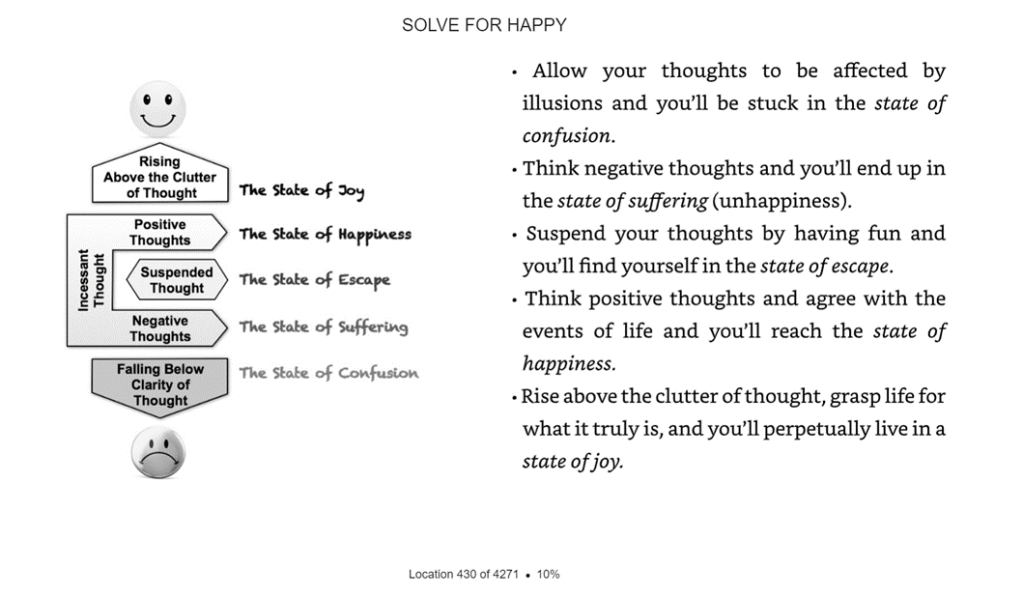
There are 6 grand illusions that keep you in confusion.

  1. Thought. The little voice in your head is not you.
  2. Self. Who are you?
  3. Knowledge
  4. Time
  5. Control
  6. Fear

Activity: Make a list of your fears

Part 3: Chapter 9

7 blind spots delude your judgement of life.

  1. Filters
  2. Assumptions
  3. Predictions
  4. Memories
  5. Labels
  6. Emotions
  7. Exaggeration

Part 4: Chapters 10 through 14

5 ultimate truths

Here and now

The Pendulum

Love

L.I.P

Who made who?

Solve for Happy

I’m listening to this amazing audiobook while walking through a shaded forest trail alone. I’m recovering from COVID. My husband and 7yo are playing in the creek. The author, Mo, haltingly describes the loss of his 21yo son, a university student. The story and his tone are heartbreaking.

Then he asks what makes me happy.

This, I thought. Listening to an audiobook while walking in the forest.

Watching the butterflies on the butterfly bush.

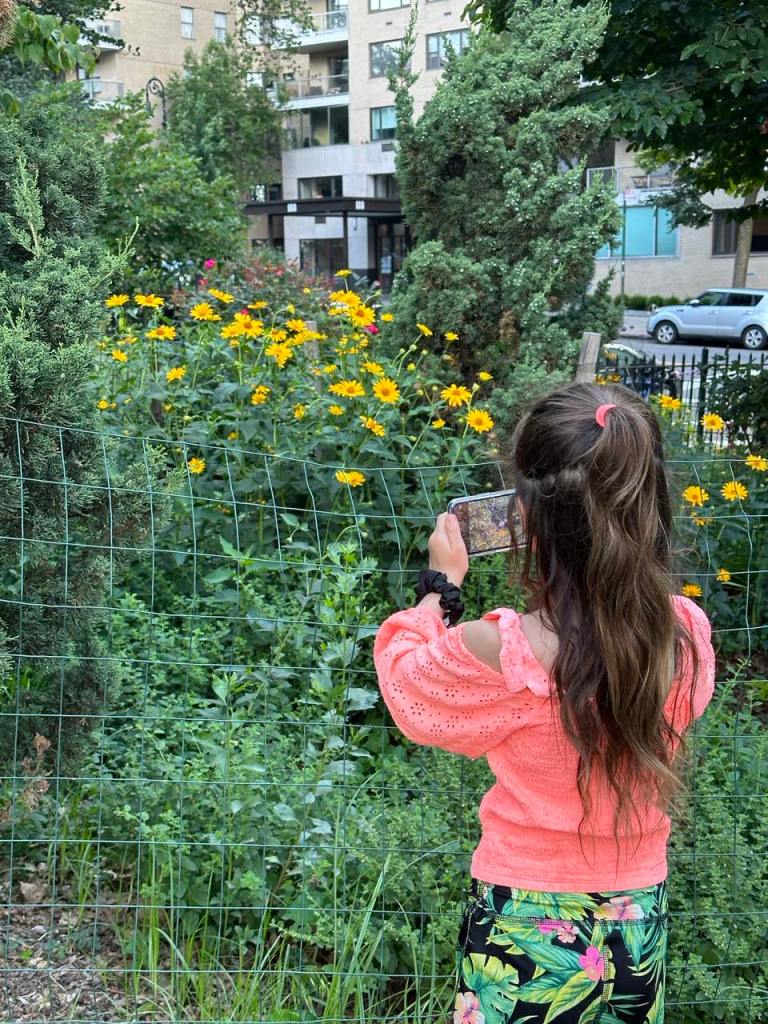
Taking photos of my mother in law’s garden.

Listening to my daughter laugh or seeing her smile.

Listening to my husband talk about his job with fascination and pride.

My daughter’s excitement today at finding a box turtle by the edge of the water.

What makes you happy?
Butterflies

My Niece was Treated Nicely in a Job Interview

AllDolledUpKimberlyTilleyMy niece was treated nicely in a job interview. Yes, it comes as a surprise. She got addicted to Meth. I’m not going to apologize and neither should she. After 3+ years clean, she had a relapse. She was caught with drug paraphernalia and spent a couple of days in prison. She explained all this to both companies that interviewed her. One brilliant hiring official said all that matters is that you got clean. Both companies hired her.
It shouldn’t be so shocking, but people have treated her terribly in the past. Some called her a junkie. I’ve heard people refer to her as garbage. According to the National Institute on Drug Abuse (NIDA), by the time individuals reach their senior year of high school, 70 percent will have tried alcohol, 50 percent will have abused an illicit drug, 40 percent will have smoked a cigarette, and 20 percent will have used a prescription drug recreationally, or for nonmedical purposes. With the OxyCotin scandal dragging down the national life expectancy and driving up the number children in foster care due to parents in rehab or worse, in morgues, we need to rethink how we classify people who are fighting addiction of any type.
Traditionally addiction has been viewed as a discipline problem, not unlike the way we fat shame people under the assumption that they have any control over their body weight. Reading the Secret Life of Fat, I learned we don’t know shit about fat. In fact, fat fights to stabilize the body’s weight and chances are pretty good, if you see anyone obese, her or she is most probably suffering from an undiagnosed and very possibly unknown medical illness. https://www.amazon.com/Secret-Life-Fat-Science-Understood/dp/0393244830
But back to addiction. Everything from alcoholism to drug addiction is generally viewed with scorn in our communities. As a part of a sociology of health undergraduate class in 1996, I visited Narcotics Anonymous groups, and what I saw were people fighting a heroic struggle. While it’s true sometimes they stumble, they can and do win, and that’s an extraordinary achievement that I think no one outside that world can truly appreciate.
Now that OxyCotin has brought to light what has actually always been true, that doctors, lawyers, dentists and other highly educated and well-paid people also fall into addiction. It’s not only those on the lower end of the economic spectrum. Everyone is susceptible. Please be kind to people who tell you they are addicts. And try to understand what an incredible achievement it is for them to get and stay clean and sober.

Concluding that humans need less than 7 hours of sleep is a tabloid myth

A short section from a book that changed my priorities and my life. Nothing is more important than high quality sleep!
De-mythifying sleep: Concluding that humans, modern-living or pre-industrial, need less than 7 hours of sleep is a tabloid myth.
“sleep study on modern day hunter-gatherers dispels notion that we’re wired to need 8 hours a day”
First, when you read the research paper, you learn that the tribes people actually give themselves a 7 to 8.5 hour sleep opportunity each day with an estimated range of 6 to 7.5 hours of sleep. The sleep opportunity that these tribes people provide themselves is therefore almost identical to what the National Sleep Foundation and Centers for Disease Control and Prevention recommend for all adult humans: 7 to 9 hours of time in bed.
The problem is that people confuse time slept with sleep opportunity. Many people conclude they only need 6 hours so they give themselves 6 hours sleep opportunity which means they will only obtain 4.5 to 6 hours of actual sleep.
Need is not defined by what is obtained (as the disorder of insomnia teaches us), but rather or not the amount of sleep is sufficient to accomplish what sleep does. The most obvious need then, would before life – and healthy life. The average lifespan of these hunter-gatherers is jut 58. Epidemiological data says any adult sleeping an average of 6.75 hours a night would be predicted to live only into their early 60s, close to the median life span of the .
More prescient, however, is what kills people in these tribes. The most common immune system failures that kill hunter-gather members are intestinal infections. This is the same fatal consequence of keeping rats alive for 15 continuous days in a lab. No sleep for 15 days kills rats by striping their immune system and killing them by infection.
Finally, one of the few universal ways of forcing animals of all kinds to sleep less than normal is to limit food. When food becomes scarce, sleep becomes scarce as animals try to stay away longer to forage. The Hadza will face days when they obtain 1,400 calories or less and routinely eat 300 to 600 fewer calories than those of us in Western cultures. A large portion of their year is therefore spent in a state of lower-level starvation, on that can trigged well-characterized biological pathways that reduce sleep even though the sleep need remains high. Concluding that humans, modern-living or pre-industrial, need less than 7 hours of sleep is a tabloid myth.

Diet Food: Fiber, Fiber & More Fiber

If you are like me and have tried to diet and failed, you’ve already observed that you can literally burn more calories than you take in and still gain weight. It’s a mathematical impossibility that is biologically doable. But why? How? I’m not a scientist so I’m just speculating, but I think one of the things that happens when we eat less, is that our bodies’ pipelines slow down.
I’m guessing that the nutritional value published on the side of all our products is only an average. If the food stays in the body longer, the body can absorb more nutrients. If it passes through quickly, the body has a relatively short opportunity to absorb the contents. There’s also the whole microbiome thing.
So, I eat Mission Carb balance whole wheat small tortillas with everything. Each tortilla is about a day’s worth of fiber.

high-fiber-mission-carb

For my standard breakfast, I usually order 2 egg white delight McMuffins at McDonald’s both with extra egg and Canadian bacon and no cheese. I’m not opposed to cheese, but I throw the muffin away and usually the cheese is clinging to the muffin, so no reason to pay for it. I put the egg whites and Canadian bacon in a Mission Carb whole wheat tortilla as a wrap.

For lunch, I usually eat 3 to 4 cups of salad. Often I find I don’t need dressing if the salad is a good combination of things like avocado to moisten it up and make it tasty. But avocado has fat, you say? I don’t actually worry about fat. or carbs. or salt. or calories. I find that I actually don’t tend to consume much that is bad if I’m focusing on getting the specific items I want which is fiber and protein. I’m especially fond of the toasted sesame organic salad from Mom’s Market. I eat one entire bag at a sitting.

ocs-toasted-sesame-transparent

For protein, I tend toward liquids. I’m fond of Premier Protein shakes and clear. These make it easy to max out on protein and they do tend to minimize any hunger or desire for food. Sometimes I splurge on a protein bar, including premier protein bars. I buy the drinks and bars from Amazon because my schedule is too crazy. I used to buy the mission carb tortillas from Amazon too, but they stopped carrying them. Pity.

Then, the microbiome. I don’t really understand microbiome because again, I’m not a scientist. I read with interest the book The Secret Life of Fat, also a lot of Noom articles try to help members understand the importance of a good gut. I think the good gut goes back to the original idea that it’s not just how many calories you eat, but how much your body is absorbing. When the book The Secret Life of Fat was published, the PhD who wrote it speculated that fecal transplants would help people lose weight in the future. It’s not longer speculation, poop transplants are now a thing. Sounds pretty yucky, but what I understand generally is that a broad variety of foods can help improve the biome as does having pets. Keeping this in mind, I add small snacks to my day like 3 blueberries from my daughter’s snack, an olives-to-go pouch or raw carrots. I try to eat a banana, a pear, some strawberries each week. One day, I bought a box of raspberries at Mom’s Market because my daughter loves them. Once I started, I couldn’t stop eating them. I was super surprised and happy when I entered them into http://www.MyFitnessPal.com because, “One cup of raspberries contains a mere 64 calories and packs in a whopping 8 grams of fiber.” I went back and bought 3 more boxes. Raspberries are delish and really good for ya.
Also for the microbiome, fermented foods are good. kimchee. sauerkraut, which is awesome because I love dogs and kraut. yogurt. kefir. I also love seeds like chia seeds and flaxseeds. I sprinkle them in the kefir or yogurt.
But basically I fill up on high fiber tortillas, fat free Taco Bell refried beans, egg white delights and protein products. Then, when there’s no much space left, I eat a little something just to boost microbiome.
The pounds keep coming off, but that’s really the high quality sleep with technology biofeedback. It’s not as much about an exercise to calorie balance. But I think folks fighting with the scale already knew that.
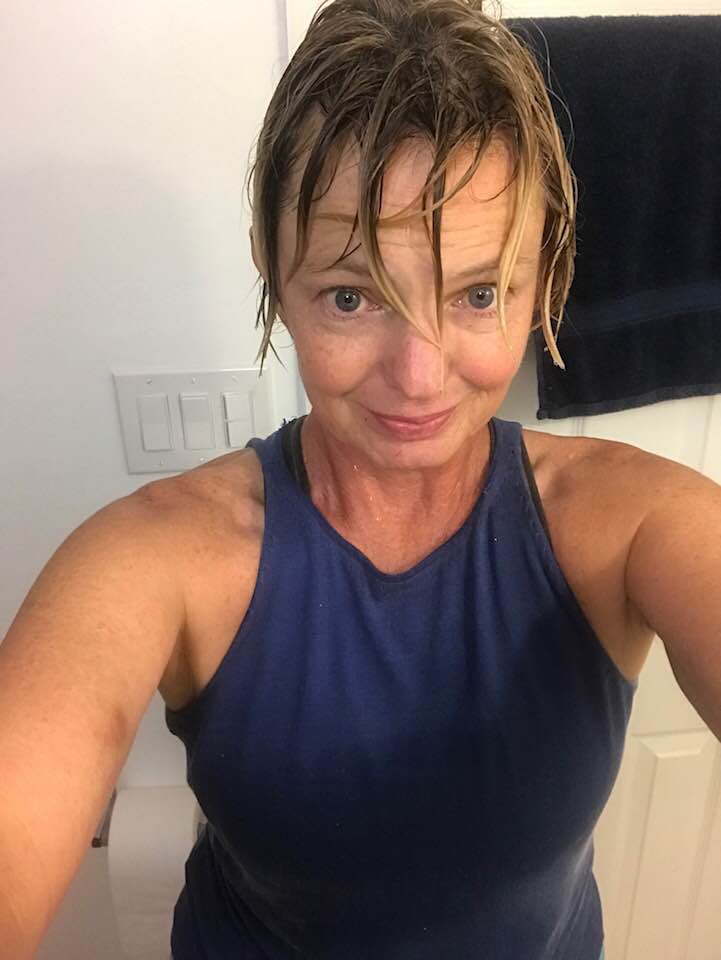
I went out for a fitness walk and got caught in one of those crazy downpours. When I posted the photo on FB, my friends congratulated me on the weight loss. That wasn’t the point of the post but it was nice.
rainedout

The no-exercise exercise

Coming of age as I did in the Marine Corps, my idea of exercise has always been synonymous with misery. “The more you sweat in peace, the less you bleed in war.” “Pain is weakness leaving the body.”

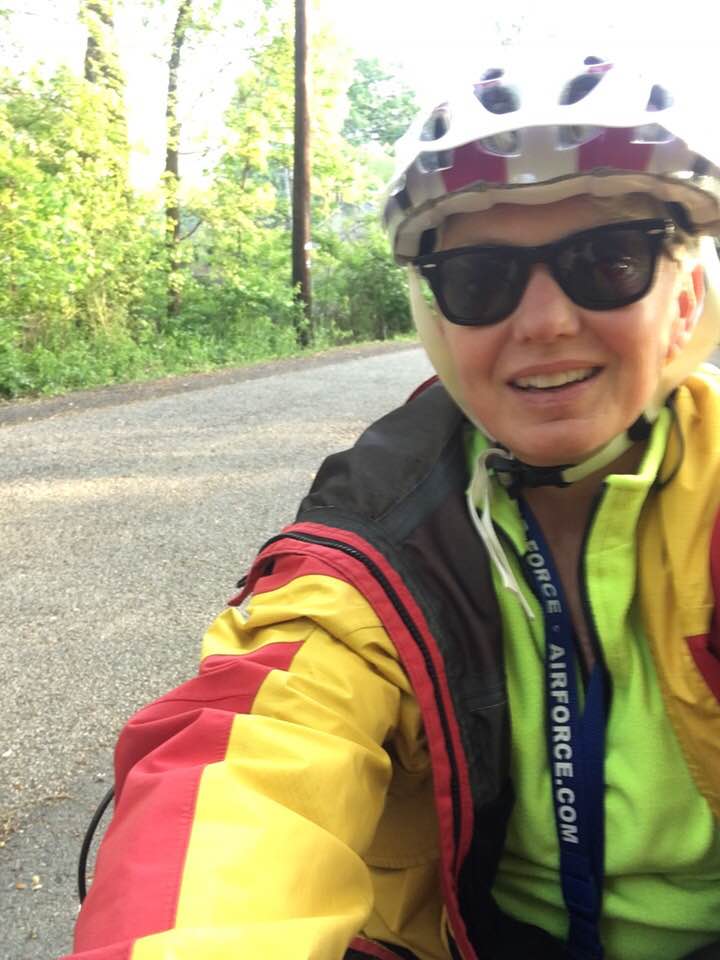
Among my failed attempts to lose weight since I moved to Washington, DC in the Spring of 2018, I decided to bike to work at the Pentagon in Arlington, VA from Hyattsville, MD. It took one to two hours each way. And when I finally got home to my toddler, I was exhausted and often in pain. The heat was overwhelming in the summer. I did lose some weight, but in the end it came back and I resorted to baggy sweaters and dark colored pants to try to cover the excess me that I didn’t want the world to see.

There’s a Noom quiz about whether running or walking is a more effective weight loss option and the trick answer is, it doesn’t matter. No one could have convinced me of this until I saw it for myself. Not only does torture not help, the Marine Corps’ mandatory 3 miles per day is NOT ENOUGH!!!

I haven’t broken a sweat working out for pretty much all of 2019. Now my “workouts” are strolls. When the weather is lovely, I walk outside my office or home. When the weather is too hot or cold, I walk inside the huge government buildings I work in or on the weekends go to a mall.

Using my wearable, I track the steps. I’ve discovered that I’m actually more successful if I do more short walks than if I commit to a 30- or 40-minute walk. A 10- to 15-minute walk once per hour is actually better since I’m too busy to spend a lot of time on a long walk. Additionally, working constantly on the computer as I do, a break every hour is a nice distraction from a screen-weary mind and screen-bleary eyes.

I actually achieved one mile running in circles in my daughter’s ballet class because the teacher was late and the girls were bored, so when a few of them started running in circles, I joined in to encourage them.

I shoot for 12,000 steps every day. Today I’m at 16,500. But the number of steps isn’t dictated by my weight loss goals, it’s actually dictated by how many steps normally correspond with the highest quality heart rate dip and best deep sleep. After monitoring my activity for a while, I realized that anything less than 12,000 steps and my sleep quality suffers. So, as counter intuitive as all this is, the steps are for sleep quality and not for operating in a caloric deficit.

I’ve been working on adding strength training, but I’ve been adding it the same way I do my endurance, without breaking a sweat or feeling any pain or torture. I have 2 10-pound weights by my desk and 2 at home. They are well within my ability to lift and my hope is to do 5 sets of bicep curls, shoulder presses and tricep presses per day, one set at a time, separated by an hour or more. I also love STEALTH Plankster Core Trainer, but I also use it lightly. Every hour or so, just one minute of planking with the video game. It’s fun, easy and involves no sweat or torture, but I see great gains from light, but constant training as opposed to 30 minutes of hard, intense training that leaves me exhausted.

Another bonus: no crazy logistics of carrying all my fitness clothes and shower gear and adding a shower after I arrive at work on the bike or after 30 minutes in the gym. I love the no-exercise exercise. It has completely upended everything I ever thought about fitness.

I do sometimes jog, but it’s only because I’m short on time and need to get more steps in. It honestly makes no difference how fast or slow I do my 12,000 steps. The deep secret is just move. Slowly, constantly throughout the day and your body and sleep will thank you. You’re quality of life will radically improve and so will your blood work.

It’s literally as easy as a walk in the park.

There’s an app for that: Weight loss & technology


It might seem crazy to talk about weight loss by talking first about sleep quality and second about technology, but they really set me up for success.

I have an iPhone with Apple Health app built in, but I don’t think this is the only technology available to provide the services it does. It’s just the one I know. The main function Apple Health serves is that it pulls in data from all the sources into a central location and then allows other apps, with my permission, to access my health data.

What health data?

Well, for starters, every morning after brushing my teeth, I step on my WeightGuru WiFi enabled scale that records my body weight, hydration level, bone density, BMI, and body fat percentage. All this information is then uploaded to the Weight Guru app and shared with Apple Health, which in turn shares the information with Noom. Subsequently, I never actually enter anything into Noom regarding my body weight. It all happens while I’m rubbing my eyes walking off into the shower.

I know have years of weight data ups and downs in the cloud that I can scan back and reflect on. Oh yes! We moved from Texas to DC, lived in hotels there and here, ate fast food. My weight went way up over those few months. And so on.

The previous post talked about how important sleep is
https://charlotteannhu.com/2019/11/16/diet-weight-loss-meditation-sleep/
And the SleepWatch app is a critical element in my ability to understand the impact and effectiveness of all my efforts to improve my sleep quality.

I have used MyFitnessPal for years on and off, but it’s a really wonderful way to track intake. The Noom staff noted that while the calories automatically transfer to Apple Health and Noom, the specific foods consumed do not, so if they are working on coaching eating habits, this automation doesn’t help. I haven’t had problems with my intake and I’ll talk about food specifically in another post, but the MyFitnessPal is critical to understanding what’s coming in and how much it’s worth in terms of calories, carbohydrates, protein, fiber, etc.

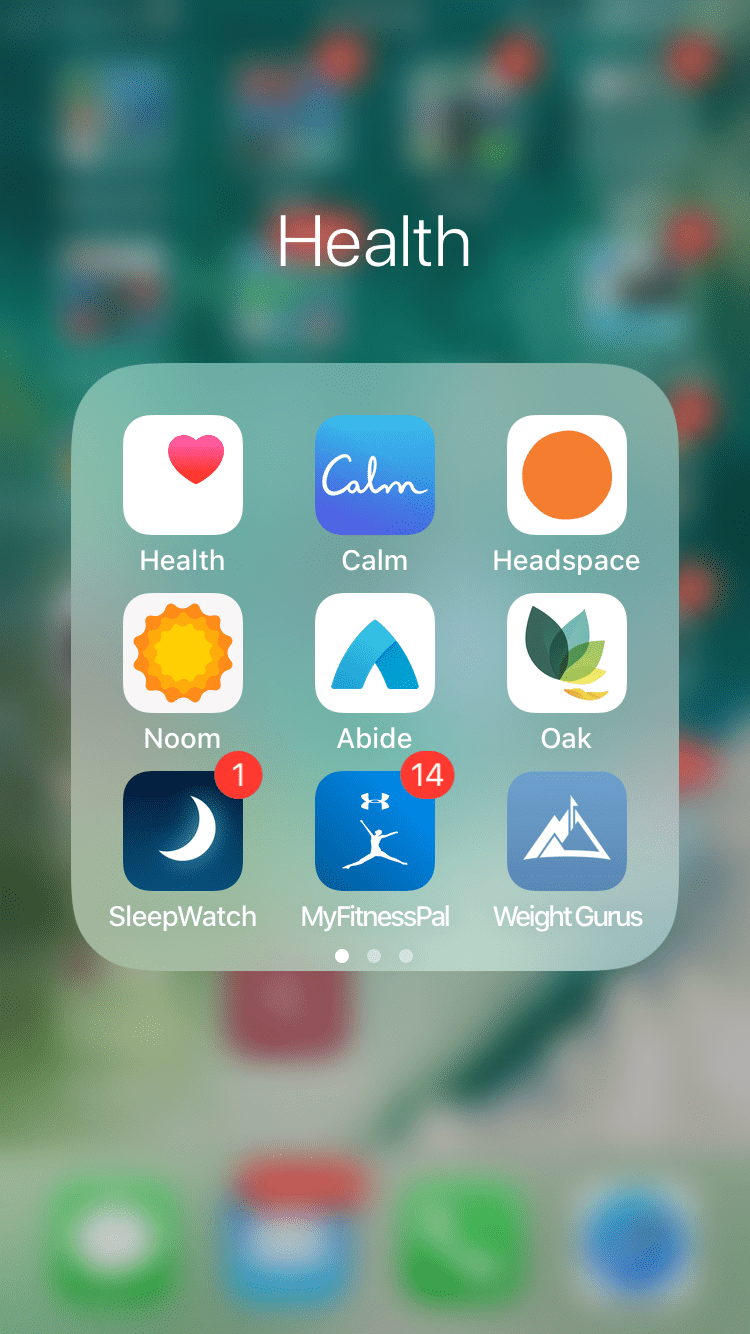
I mentioned the value of meditation in the previous post and since I had zero knowledge of meditation, I just use an app for that. I still don’t consider myself to have any understanding of meditation, but I love listening to the content on Calm, Oak, Abide, Headspace. The other night, Calm told me I had listened to their app 500+ times. Wow! I had no idea. I also love Amazon’s Audible and audiobooks. You might like podcasts, but I find that listening with my eyes closed is a great way to relax at night.

Noom exists solely in an app. Unlike other digital support systems like MyFitnessPal and WeightGuru which have corresponding websites, there is no website interface for Noom. It’s only available in an app.

So, get your tech set. Upload all your data into your apps. And even if you have zero plans to eat healthy, once you know exactly what you’re eating and how much you’re moving and how those two balance out, you almost can’t help but start tweaking it.

Early on with MyFitnessPal, I had a crazy urge to eat something delicious. But when I put it in the app, I was shocked how much calories, fat, sugar, etc. Then I considered whether a half of quarter serving of the same dessert might not hit the spot. I ate a fraction of what I was planning on eating and felt really happy with having eaten it. I undoubtedly would have eaten the whole thing if I hadn’t put it in the app first. I tend to do that a lot. I’ll think about eating something and wonder if it’s going to give me sufficient fiber or protein and if the numbers don’t add up like I want, I make another food choice.

That’s another detail. I don’t avoid carbs, fat, calories, etc. I chase protein and fiber. But that’s part of the food discussion, so I’ll cover that next time. For now, just set up your tech. Download all the apps. Tryout some meditation. Start logging food. Give your Apple Health permission to record your exercise, steps, hours standing, etc. Give it permission to share that information with your Noom app.

Buy a WiFi enabled scale. Step on it naked every day just after you wake up. Buy some kind of wearable (watch) that tracks your steps, health, heartrate, sleep quality. I talked about the options in the previous post: iWatch ($300?), FitBit ($140?) and HuaWise ($28).

Sleep & Tech 1st. Worry about food and exercise later.

Happy Health!

Diet, Weight loss, Meditation & Sleep

I didn’t take a New Year’s resolution for 2019, so I’m not exactly sure how it happened, but I dropped from 160 pounds to 135.

Let me try to recount the sequence of events not only for the readers, but because I haven’t always been cognizant of the comprehensive nature of all the interlocking decisions I’ve made.

Obviously, I was unhappy with my body weight and so was my doctor. I gave birth in early 2016. Prior to the pregnancy, I was 125 pounds. I’m 5’3 3/4″. While working with a fertility doctor, the medications I took to try to help me get pregnant caused me to gain 15 pounds. I lost 7 pounds after stopping the meds, but stopped trying to diet when it looked like our attempts at pregnancy might be successful. I didn’t want to risk losing a chance at a child. During the pregnancy, I topped out at 170 pounds and afterward while breastfeeding, the pounds melted off, dropping to 136 7 or 8 months after giving birth. However, once I stopped breastfeeding, the weight came back.

For a couple of years, I played yo-yo and tried numerous diets, the most successful of which was Jenny Craigs, but I never managed to keep the weight off. In addition to weight problems, our daughter didn’t sleep through the night until around 3 1/2 years old. We were horribly sleep deprived. I read a lot about the damaging effects, including weight gain of insufficient or bad quality sleep. I also read the book The Secret Life of Fat. Finally, I joined Noom and announced on Facebook that I was going to get 125 pounds back.

I haven’t. I’m still 10 pounds away, but I have become confident that I can. Step 1 was a wearable and a focus on sleep.

After joining Noom, the counselor asked me what I wanted to focus on and I said 8 continuous hours of sleep with 60% deep sleep and average heart rate dip, which is 20% or more. This was an odd goal for a weight loss program, but to their credit, the Noom team didn’t balk. I said I’d work on weight loss after I mastered sleep.

The Sleep Craze
I bought an iWatch. Later I wished I would have bought a $28 HuaWise Fitness Tracker, Waterproof Activity Tracker with Heart Rate Monitor and Sleep Monitor, Waterproof Pedometer, Step Counter, Calories Counter for Android & iPhone. My niece, her boyfriend and my nephew all have fitbits, which are also cheaper than an iWatch. Neither the HuaWise nor the fitbit requires a monthly cellular service charge. Also both fitbit and HuaWise only need to be charged once per week. I constantly fight to keep my iWatch charged, but regardless, some kind of wearable that tracks steps, heartrate, sleep and so on provides critical feedback for both sleep and weight loss management.

I read a lot of blogs, add a black paper accordion folded shade with super sticky glue behind my blinds. I made my room super dark and increased the air condition to make deeper sleep more likely. (Original Blackout Pleated Paper Shade Black, 36” x 72”, 6-Pack by Redi Shade) I guarded my sleep religiously, stopping all action outside the home by 6 p.m. to be able to get the toddler bathed, fed and relaxing in bed by 8 p.m. so I could consistently fall asleep between 8:30 and 9 p.m.

I quit caffeine. No shit! The most extreme part of this whole 9 month process has been eliminating my chemical dependence. It was painful. Headaches. And it took me a while to switch to Diet Sprite or 7 Up or Diet A&W root beer, but after 3 or 4 months, I had the impression that I had actually won. Another goal that Noom didn’t argue with, but simply supported.

I stock several sleep aids. Chamomile tea is the best but tastes horrible. Sleepy Time tea tastes better, but doesn’t seem to be quite as powerful. I gave up on melatonin which is great for changing time zones, but doesn’t keep me asleep. When my mind is restless and I can’t sleep within 20 minutes of laying down, I take dreamwater, luna or sleepy bear gummies. Dreamwater has melatonin with GABA and other stuff. Luna’s advertisement says: made with Herbal Extracts such as Valerian, Chamomile, Passionflower, Lemon Balm, Melatonin & More. The Amazon description for sleepy bear gummies says: Formulated with Melatonin, the berry-flavored chewable gummies also include our proprietary Rest Well Blend consisting of Lemon Balm Leaf, Passion Flower, Valerian Root, and 5-HTP.

But I started meditating. I use several apps: Calm. Oak. Headspace. There are more. I ignore the part about sitting in the lotus position imaging a string above my head holding me straight up, relaxed but alert. I lay in my bed, one leg over a body pillow with the smart phone beside my pillow and most nights I’m asleep before I finish the meditation. Of course, if the meditation works, no need for sleep aids, but if I’m still awake 20 minutes after laying down, I don’t think twice, I just sleep aid. Nothing is going to keep me from hitting that 9 p.m. deadline.

In order to hit my heart rate dip and deep sleep requirements, I discovered that I must do at least 12k steps per day. If not, my sleep quality suffers. What’s more, it doesn’t matter if I jog or stroll. However, unlike the Marines taught me, 3 miles per day is not enough. I usually log something closer to 7 miles per day in order assure quality sleep. Of course, this amount of movement also helps with weight loss. But even if operating in a caloric deficit, a sleep deprived body can hold on to weight. I don’t know why. I don’t know how. But I have seen over the last 9 months that even if I do everything else right, but my sleep isn’t good, the weight will not come off. This might be because of the incredible power of intermittent fasting. Of course, sleeping people don’t eat.

I’ll do more weight loss posts with information regarding food and daily habits, but for now, sleep well!

Childhood Memories: Country Living on Hebei Farming Plains of 1950s China

Photo caption: Mama Huang tends her San Antonio spinach garden.

Mama Huang is a country girl. Born Yong Cui Huang in 1948 in the farmlands of Jilin province, China, she still enjoys gardening.  A few months after she was born, her family moved to Xianghe County, Hebei Province, another country village. She move from rural life to urban life after she married her Beijing-born husband, Zhong Hu in 1967. After working in Beijing for 20 years, their youngest son, Bin Hu, 44, and daughter-in-law brought them to a new life in San Antonio.

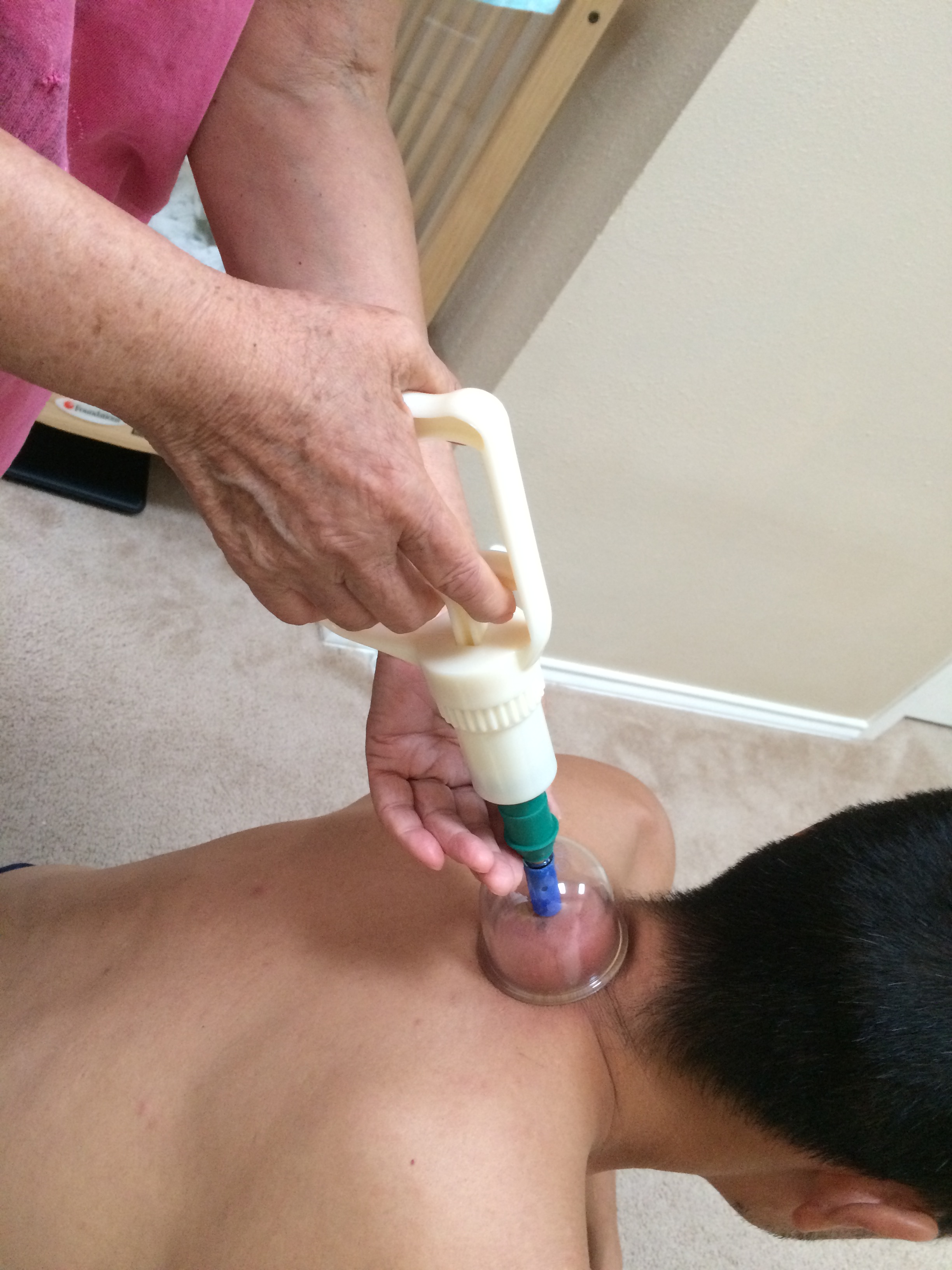
When she was born, women in her village washed everything, including children, in wash tubs outside and carried water from a nearby well to their homes. During the time of Huang’s mother, women in China had been binding their feet to make them 3″ in length. Such small feet were called Lotus feet. Foot binding fell out of practice a decade before Mama Huang was born and, according to a Smithsonian magazine article, February 2015, “the last shoe factory making lotus shoes closed in 1999.” Since childhood, Mama Huang has shown a natural talent for traditional Chinese medicine, including acupressure, cupping and food as medicine. She studied on her own through government sponsored materials and offered to help neighbors. 

cupping
Mama Huang’s son Bin Hu after cupping treatment for back pain.

Huang remembers her farming days with fondness. “My home was on the Hebei plains. There was a river named ChaoBai near our village,” said Huang. The river leads to Beijing. It’s used for transporting food and goods. The river is about 50 meters wide with broad banks and giant trees on each side.  Huang said fishing boats were always on the river, and people loaded fish from a pier on the riverbank.

“I often played there when I was child,” she said.  When the water was shallow I would lead sheep to the river, walk them along the bank and let them to eat grass. It was beautiful and so peaceful. This is my earliest memory.”

Bin Hu remembered when they traveled to the village from Beijing, villagers would line up at the door to get Mama Huang’s free treatments. She prescribed food as remedies. For example, he said she would recommend eating cucumbers and pears to treat constipation. He said taking care of people is a natural extension of her Buddhist faith.

“I was born in a Buddhist family. I have been influenced by Buddhism since my earliest memories of childhood.”

Throughout all the changes, Huang has always meditated daily and constantly reads and contemplates the Sutras of Buddha. She said her deep faith in Buddhism has sustained her, nourished her and helped her maintain her powerful sense of moral values. Moral values she said she hopes to share with her American granddaughter.

“I was born in a Buddhist family,” she said. “My father is a devout Buddhist. “I have been influenced by Buddhism since my earliest memories of childhood.”

cuppingtool
Mama Huang uses the cupping tool for traditional Chinese pain relief.

Years after leaving the farmlands, she exercised daily by walking in the crowded early morning streets in a city of nearly 40 million people. Walking for fitness is something she advocates as part of her traditional Chinese medicine principles. Walking and eating fresh fruits and vegetables, make for a long, healthy life, she said. In Beijing, she walked daily to a produce seller to buy fresh fruits and vegetables for her family’s meals for that day. Before she retired, she stood on a packed bus more than an hour to commute to her job, arriving home late each day to prepare dinner for her two growing boys.

Although Huang bought a washing machine in 1989 for her fifth-story apartment in Beijing, she often continued to hand wash clothes just out of habit. The apartment already featured a shower and modern bathroom. In 1992, she stopped cooking by burning coal and transitioned to an electric stove. In 1999, she got her first air conditioner.

Most major cities in China have all the standard modern elements of big city life in the developed world today, Bin explained.

She delighted in 2006 when her oldest son, Hao Hu, nicknamed Peter, immigrated to Canada to work as an engineer and in 2008 when Bin married an American and immigrated to the U.S. Peter now works for an American company as a Canadian citizen on a NAFTA work visa to the U.S. Bin applied for an immigrant visa for Mama Huang. So, she moved to Texas, and now she walks regularly in the Texas state parks for exercise.

Last year, Mama Huang’s life passed through another drastic change. She lost Zhong, her husband of nearly 50 years. He died of a heart attack and stroke. Huang depended upon her Buddhist faith to sustain her, she said. “Especially in times of change and pain, Buddhism brings peace to my heart,” she said.

Regardless of the challenges she faces, she tries to heal people as much as she is able, she said. Of the 3 million Chinese in North America, most speak the south Chinese language of Cantonese, so Mama Huang is unable to communicate with most people she meets in Texas. Nonetheless, she has provided some relief of chemotherapy side effects for a patron at the San Antonio Cancer Start Center with her traditional medicinal treatments.