Electrical Safety

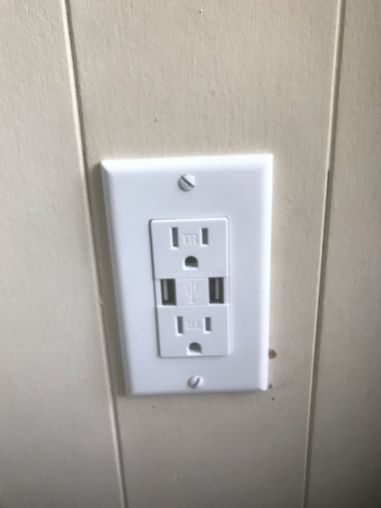
New electrical options like USB ports on outlets, USB small electrics, LED lights and solar powered items are making our homes safer.

With a 4yo around the house, I worry a lot about electrocution. Classic electrical outlets have a fundamental design flaw in which if anyone or thing were to touch both of the prongs when they were halfway into the outlet, it could go horribly wrong.

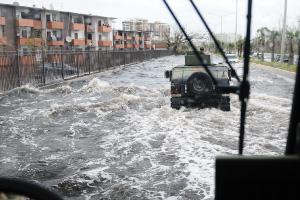
Furthermore, when I was working for USACE, DisastersRUs, I did a lot of reading about what goes horribly wrong during floods and other water related disasters like storm surge. As it turns out, good Samaritans who try to help people by slogging around in the waters, can and sometimes do get electrocuted by electrical currents from nearby houses.

And, of course, with traditional electrical home systems, there has been the possibility of home fires due to electrical shorts. Home electrical fires account for an estimated 51,000 fires each year, nearly than 500 deaths, more than 1,400 injuries, and $1.3 billion in property damage. Electrical distribution systems are the third leading cause of home structure fires.

https://www.esfi.org/resource/home-electrical-fires-184#

Electricity is scary. Especially with kids who don’t understand the risks. So as my daughter and I were stringing blinking Christmas lights on the trees, playground toys and fence in the backyard, I was happy the lights were solar powered. With a full days’ sunlight, they are colorful, but by morning, they are dim and if it rains all day, they hardly come on at night. I’m not an electrical engineer, but I assume the 4″ x 4″ solar panel connected to each strand wouldn’t be able to collect enough power to kill me or my daughter.

https://www.bobvila.com/articles/best-string-lights/

One of the advantages to modern Christmas lights is they are usually LED, especially the solar powered version, so , a 100-count string of incandescent mini lights runs at 40 watts, while a 70 count of 5mm Wide Angle LEDs is approximately 4.8 watts total. 

https://www.christmaslightsetc.com/pages/how-much-power.htm

Offhand it would seem that a shock of 10,000 volts would be more deadly than 100 volts. But this is not so! Individuals have been electrocuted by appliances using ordinary house currents of 110 volts and by electrical apparatus in industry using as little as 42 volts direct current. The real measure of shock’s intensity lies in the amount of current (amperes) forced though the body, and not the voltage. Any electrical device used on a house wiring circuit can, under certain conditions, transmit a fatal current.

https://www.asc.ohio-state.edu/physics/p616/safety/fatal_current.html

I can’t even find a reference for how much amps in a string of LED Christmas lights but it’s in the range of 3 volts. Literally like nothing. A single lemon produces about 7/10 of a volt of electricity. If you connected two lemons together, you can power an inexpensive digital watch (uses about 1.5 volts). That’s funny, so the solar powered Christmas lights my 4yo was stringing up have about as much electricity as 4 lemons.

http://www.reachoutmichigan.org/funexperiments/agesubject/lessons/energy/lemon.html

I love these electric outlets and we have had them installed throughout both our houses. They have USB ports on either side of the outlet. We have also installed a couple of outlets that have just a set of 4 USB ports and no classic outlets at all. So many new electrical devices from clocks to smart speakers, children’s night lights and other small electrics are arriving with USB cables that an increasing number of devices don’t need the standard pronged outlet.

What I love about USB ports both in the home and in the car is that I feel pretty comfortable letting my 4yo plug in the cable for her iPad. According to the Apple website, “It is totally safe. A Lightning Cable is like a powered USB. In the worst case (an iPad), it’s 5 V (and 12 W), far from enough for damaging your children.”

https://apple.stackexchange.com/questions/233673/is-the-lightning-connector-safe-for-my-children

I like the new electrical options because I think they are safer for children, safer in floods and less likely to be responsible for home fires. In short, I think in the future, we’ll see less human fatalities related to electricity. I’m hopeful. But what I’d love to see is legislation requiring the safer USB ports in new home construction and requiring small electrical devices to have USB cables if it can sufficiently power them.
Micro-farming could save humanity

My buddy Bassem said, “If the world turned vegan the emissions will be reduced by more than 60% we will save 80% of the water and 70% of the land and we will have less chronic diseases.” But, he admitted, we can’t turn everyone vegan. Still, the problem of large professional meat farming is a major issue.

My brother and his wife on The Crouch Ranch raise and process their own poultry and hogs and, of course, eggs. While some 83% of Americans do not live in apartments and therefore, theoretically could do some form of micro-farming like a backyard chicken coop, most local laws prohibit this.

Bassem agreed that grow what you eat could significantly improve our resource issue with regard to meat. But even for those who want to have a backyard poultry source, we need to push the politicians to agree to the idea.

This kind of micro-farming could address a number of issues in addition to climate change. COVID disrupted food chains. So the first thing I did was go to Home Depot and buy $115 worth of food plants which we have been eating since March. It’s cheaper to grow your own food, cleaner and there’s less doubt that it will arrive at your table. It’s also much tastier.

So write to your local legislators and ask them to allow you to have a backyard chicken coop.

Disaster Study

I’m listening to a series of audiobooks to help enlighten my understanding of the ecosystem of organizations including the U.S. Army Corps of Engineers where I started working in October last year. This constellation of government agencies including the likes of FEMA, HHS, DHS, USACE, CDC and local, state, county governments and first responder agencies come together when crisis strikes. How they manage chaos, not only that of natural disasters, but also of bureaucracy is fascinating.

The Great Influenza of 1918 demonstrates the critical value of nursing, scientific methodology and public-private partnerships. https://www.amazon.com/Great-Influenza-Deadliest-Pandemic-History-dp-0143036491/dp/0143036491/ref=mt_other?_encoding=UTF8&me=&qid=1594750104


The Next Pandemic discusses Hurricane Katrina, among other disasters, at length. One of the most fascinating problems was random people showing up saying, I want to help, but no one had credentialed them. How do you know if someone is a doctor when they show up in the middle of chaos and say, “I’m a doctor.” According to this author, this is one of the most valuable contributions of the Red Cross. https://www.amazon.com/Next-Pandemic-Against-Humankinds-Gravest-ebook/dp/B00PSSCU70/ref=tmm_kin_swatch_0?_encoding=UTF8&qid=1591819030&sr=8-2


Hurricane-update-blog

The Great Deluge illustrates the value of highly skilled and competent local government in his opening description. When Plaquemines Parish President Benny Rouselle declared a mandatory “Phase I” evacuation on August 27 – that Saturday when there was still plenty of time to flee – parish employees fanned out on pre-appointed routes, picking up residents with special needs and busing them to state-run shelters in Shreveport, Alexandria, Houma, and Lafayette. The parish not only knew which residents required special help, it knew exactly where they lived. “We were putting them on buses that Saturday morning and, you know what” Rouselle recalled. “When we ran out of drivers, I went up to evacuees, determined which ones had valid driver’s licenses and knew how to drive a stick and told them to bring folks north. They were tapped … deputized or whatever you want to call it. They were now official Parish driver. Out… Out…Out. I wanted everybody out of Plaquemines Parish. We were able to get our people out.”

Yes, there were lots of failures well-documented in Katrina, but what I’m amazed at is what went right. This is a great description of highly effective government.

The Great Deluge: Hurricane Katrina, New Orleans, and the Mississippi Gulf Coast

by Douglas Brinkley

The rising tide was a heart wrenching description of a horrific flood and the loss of hundreds of people, but it created the impetus for the Flood Control Act of 1928 which laid the initial groundwork for federal-state integration in emergency response.

Undaunted Courage about the early origins of engineering for the US Army in the science and observations of Lewis and Clark.

Undaunted Courage: Meriwether Lewis, Thomas Jefferson and the Opening of the American West: Meriwether Lewis Thomas Jefferson and the Opening

by Stephen E. Ambrose  | Sold by: Simon and Schuster Digital Sales Inc | Apr 23, 2013

I just started reading the Perfectionists. It’s a compelling look at the history of engineering.

Simultaneous, I started reading The Swamp and it’s an eye-opening text.  I love wilderness, but always considered the swampland as basically hellish, but the book deeply describes the ecosystem in all it’s beauty and amazing biodiversity. I even want to visit the Everglades after just reading the first 2 chapters.

An extraordinarily terrifying book The Big Burn centered in places where I grew up in the Northwest.

The Big Burn: Teddy Roosevelt and the Fire that Saved America

by Timothy Egan  | Sep 7, 2010


Colleagues have recommended these books, but I haven’t gotten to them yet:

Lanterns on the Levee: Recollections of a Planter’s Son (Library of Southern Civilization)

by William Alexander Percy  | Oct 1, 2006


This book is currently the #1 seller in water supply and land use:

Rivers in the Desert: William Mulholland and the Inventing of Los Angeles

by Margaret Leslie Davis  | Apr 1, 2014

Mountains, Men, & Rivers Hardcover – January 1, 1954

#1 Best Seller in Water Supply

Cadillac Desert: The American West and Its Disappearing Water, Revised Edition Kindle Edition

The King Of California: J.G. Boswell and the Making of A Secret American Empire 

The Girls of Atomic City: The Untold Story of the Women Who Helped Win World War II Kindle Edition


The Ken Burns Documentary on Lewis and Clark:

The Los Angeles River: Its Life, Death, and Possible Rebirth (Creating the North American Landscape) Paperback – April 30, 2001

Los Angeles River (Images of America: California) Paperback – January 16, 2008

Dress Right for Cold Weather Fun

I grew up in the northwest and did cold weather training in Wisconsin, but you don’t have to enlist in the Marine Corps to have fun in the sun when the world is a beautiful, blazing white covered with snow and ice. The secret is to understand that water + wind = extraordinary cooling.

Understand the different kinds of fabric, specifically the difference between natural and synthetic. Polypropylene and fleece are made from tiny plastic threads. This means while the water can get trapped between threads, the actually base element of the clothing cannot absorb water. As such, there’s no need to put a fleece jacket or pants or polypro long johns in the dryer. Just hang them over a chair and they’ll be dry within a half hour. They’ll dry even faster on your body since your body heat will help the water evaporate.

Avoid cotton and wool in the winter because the threads can trap and keep moisture for hours, even days. This moisture will rapidly cool your body. Put a moisture wicking layer against your body, like polypro. Depending on the chill factor, add a layer of fleece. Always interlock the layers. Tuck the polypro top into the polypro long johns, pull the fleece pants over the polypro top, etc.

Finally, add a wind stopper to the top. It can be Gortex, but basic near plastic windstopper will work. Be sure to layer feet, hands and head with moisture wicking and windstopping layers.

Also, see the book Mountaineering, Freedom of the Hills for indepth discussion on staying warm, happy and having fun in the wilderness. Enjoy!