https://www.youtube.com/channel/UCqjkKjtbmMr0fWfEHf6iVAw
Poor Lao Beijing Baba life in USA
https://www.youtube.com/channel/UCqjkKjtbmMr0fWfEHf6iVAw
35-Year Public Affairs & IT Professional
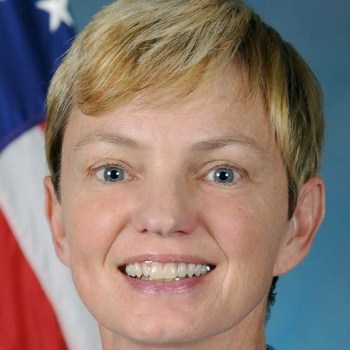
A former Marine print-photojournalist, former State Department Public Diplomacy Officer, former U.S. Air Force Supervisory Public Affairs Specialist, former USACE Public Web Lead & former Denny's waitress

https://www.youtube.com/channel/UCqjkKjtbmMr0fWfEHf6iVAw
Poor Lao Beijing Baba life in USA
https://www.youtube.com/channel/UCqjkKjtbmMr0fWfEHf6iVAw
Here we go again.
《小小智慧树》 主题歌曲 “三条鱼”
一条鱼水里游
孤孤单单水里游
两条鱼水里游
摇摇尾巴碰碰头
两条鱼水里游
摇摇尾巴碰碰头
三条鱼水里游
大家一起做朋友
大家一起做朋友
“Xiǎo xiǎo zhìhuì shù” zhǔtí gēqǔ"sāntiáo yú"
yītiáo yúshuǐ lǐ yóu
gū gūdān dān shuǐ lǐ yóu
liǎng tiáo yúshuǐ lǐ yóu
yáo yáo wěibā pèng pèngtóu

liǎng tiáo yúshuǐ lǐ yóu
yáo yáo wěibā pèng pèngtóu
sāntiáo yúshuǐ lǐ yóu
dàjiā yì qǐ zuò péngyǒu
dàjiā yì qǐ zuò péngyǒu

Little Tree of Wisdom" theme song "Three Fishes"
A fish swims in the water
Lonely swim in the water
Two fish swim in the water
Wagging his tail and meet his head
Two fish swim in the water
Wagging his tail and meet his head
Three fish swim in the water
Make friends together
Make friends together
Great Videos for my daughter.
Pocoyo in Chinese:
Peppa Pig in Chinese:
Dino in Chinese:
Much discussion about whether the U.S. and China are destined for war ignores classical Chinese strategic texts about playing the barbarians against each other for the benefit of China. The Korean Conflict may be the Chinese greatest accomplishment with regard to the Chinese methodology for waging war. To truly accomplish one’s objectives with the least amount of loss to the home country is the ultimate Chinese military strategic accomplishment. If it’s true that Mao engineered the Korean Conflict, the U.S. and China have been at war since before my mom was born.
A close reading of Kissinger’s On China includes solid data regarding the Chinese deception of Moscow. The Chinese Army was already marching south on the peninsula when Mao cabled Moscow to tell them the Chinese would not interfere in the war between North and South Korea. Moscow and Beijing both blame the other for having originated the idea of North Korea invading South Korea.
Kissinger documents Chinese history, philosophy and tactics which include playing the barbarians against each other and using chess-like or Goban-like political moves to diminish an enemy’s national funds, national clout and domestic popularity. Kissinger notes clearly that the real winner in the Korean Conflict was China. At the end of WWII, the two most powerful global forces were Washington, DC and Moscow. At the end of the Korean Conflict, both had lost considerable domestic confidence, national financial reserves, human lives and global confidence.
However, Kissinger stops short of blaming the creation of the Korean Conflict on Mao. If Mao was able to manufacture a global event that cost, by some estimates 3 million lives both civilian and military, it was his crowning achievement as the ultimate political manipulator. It’s hard to imagine from a JudeoChristian ethic that someone could care so little for human lives as to use 3 million people as pawns in a political maneuver. However, in the military strategic view of classic Chinese texts, rather than be a horrific violation of ethics on a near genocidal level, it could be viewed as a master stroke of genius.
Terrifying to think of, really.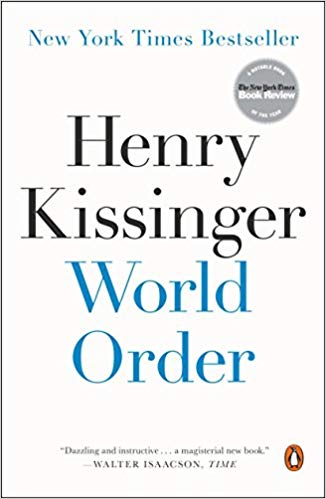
I haven’t yet seen any news reports or research or thought leadership books by techies about the impact of smart speakers on the fundamental structure of our social fabric. I think Alexa is a technical revolution as radical as Gutenberg’s press.
In 1436, Johaness Gutenberg, a German goldsmith, created the printing press. Before then, all texts had to be laboriously copied by hand. Corresponding this critical new technology, born in Eisleben, Germany, in 1483, Martin Luther disrupted religion by translating the Bible and removing control from the hands of the clergy. Since that time, the ability to read text on paper has largely determined economic potential and earning capability in the job market.
Right now, in 2018, there remain some 20% of the world’s population who are illiterate. Others born or who later became blind or severely sight impaired have also been limited in their economic potential due to their inability to access information.
Alexa and other technologies like her, Siri and Google Home, but more importantly, the computing power that has made text to speech and speech to text capability possible will make reading letters on paper altogether irrelevant with regard to accessing information.
I read a book by Microsoft MVP Ben Clothier who explained how to integrate Access and Sharepoint nearly 10 years ago. He seemed at that time to be the only person in the world who knew how to do what we wanted to do with our information. I reached out to him on the web and he said he worked for a consulting firm. I reached out to them and contracted him to help our project. I also contracted two American sign language translators because this brilliant expert was severely hearing impaired and had very limited sight. I offered to pick him up from his home on my way to work, because I learned from a tour at the Lighthouse for the Blind that getting to work every day is one of the biggest challenges in a car culture like ours for sight-impaired professionals.
Centuries or even decades ago, Ben would never have been able to access all the knowledge that put him at the top of his specialty. While limited options were available, like braille, few of the worlds books were available in braille. Because of the digital revolution, information is now available to almost anyone and the final wall is coming down with voice user interface.
At the end of this holiday season, some 50% of American homes will have a smart speaker. Amazon’s website likens it to Star Trek ship communication technology. Ease of use has never been more fluid. No manual required. Even my two-year old can activate Alexa, although she has yet to correctly format a request to get a response. Alexa’s ring turns blue, delighting my toddler when she says, “Alexa.” Amazon just announced Alexa is available in Mexico.
Once this technology is available worldwide and once the world is online, Gutenberg will finally be truly just a note in the history books. The world he created of text will no longer determine one individual’s economic potential by serving as the only path to knowledge and information and ultimately professional expertise.
I have long loved books, and I will miss Gutenberg dearly. Still I can see that Alexa joins the Internet as the most powerful flattening forces of my lifetime.
Photo caption: Mama Huang tends her San Antonio spinach garden.
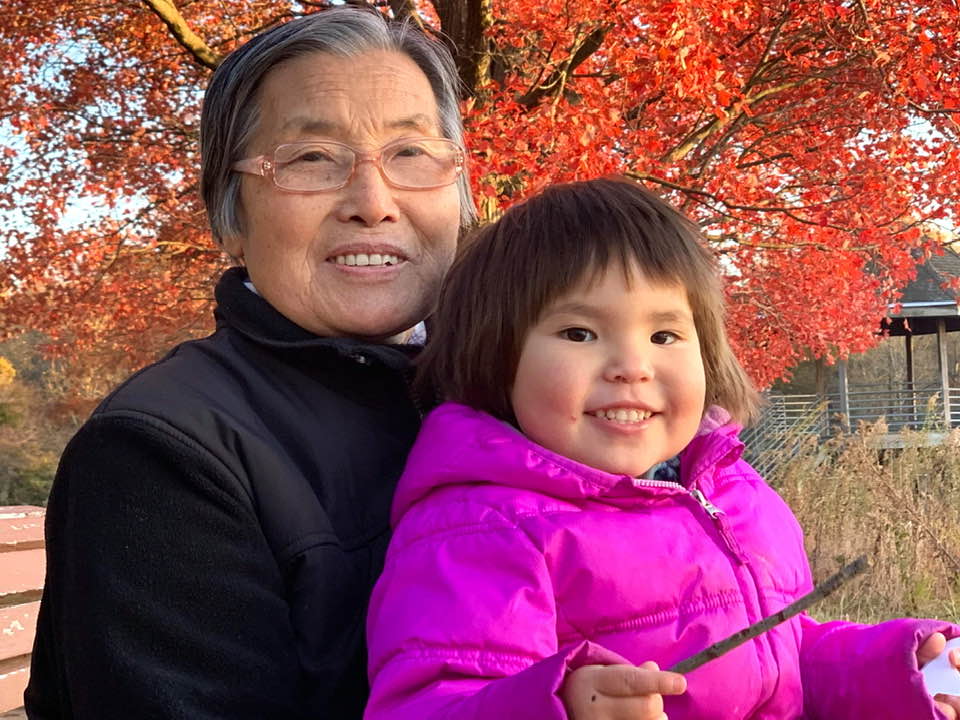
Mama Huang is a country girl. Born Yong Cui Huang in 1948 in the farmlands of Jilin province, China, she still enjoys gardening. A few months after she was born, her family moved to Xianghe County, Hebei Province, another country village. She move from rural life to urban life after she married her Beijing-born husband, Zhong Hu in 1967. After working in Beijing for 20 years, their youngest son, Bin Hu, 44, and daughter-in-law brought them to a new life in San Antonio.
When she was born, women in her village washed everything, including children, in wash tubs outside and carried water from a nearby well to their homes. During the time of Huang’s mother, women in China had been binding their feet to make them 3″ in length. Such small feet were called Lotus feet. Foot binding fell out of practice a decade before Mama Huang was born and, according to a Smithsonian magazine article, February 2015, “the last shoe factory making lotus shoes closed in 1999.” Since childhood, Mama Huang has shown a natural talent for traditional Chinese medicine, including acupressure, cupping and food as medicine. She studied on her own through government sponsored materials and offered to help neighbors.

Huang remembers her farming days with fondness. “My home was on the Hebei plains. There was a river named ChaoBai near our village,” said Huang. The river leads to Beijing. It’s used for transporting food and goods. The river is about 50 meters wide with broad banks and giant trees on each side. Huang said fishing boats were always on the river, and people loaded fish from a pier on the riverbank.
“I often played there when I was child,” she said. When the water was shallow I would lead sheep to the river, walk them along the bank and let them to eat grass. It was beautiful and so peaceful. This is my earliest memory.”
Bin Hu remembered when they traveled to the village from Beijing, villagers would line up at the door to get Mama Huang’s free treatments. She prescribed food as remedies. For example, he said she would recommend eating cucumbers and pears to treat constipation. He said taking care of people is a natural extension of her Buddhist faith.
“I was born in a Buddhist family. I have been influenced by Buddhism since my earliest memories of childhood.”
Throughout all the changes, Huang has always meditated daily and constantly reads and contemplates the Sutras of Buddha. She said her deep faith in Buddhism has sustained her, nourished her and helped her maintain her powerful sense of moral values. Moral values she said she hopes to share with her American granddaughter.
“I was born in a Buddhist family,” she said. “My father is a devout Buddhist. “I have been influenced by Buddhism since my earliest memories of childhood.”

Years after leaving the farmlands, she exercised daily by walking in the crowded early morning streets in a city of nearly 40 million people. Walking for fitness is something she advocates as part of her traditional Chinese medicine principles. Walking and eating fresh fruits and vegetables, make for a long, healthy life, she said. In Beijing, she walked daily to a produce seller to buy fresh fruits and vegetables for her family’s meals for that day. Before she retired, she stood on a packed bus more than an hour to commute to her job, arriving home late each day to prepare dinner for her two growing boys.
Although Huang bought a washing machine in 1989 for her fifth-story apartment in Beijing, she often continued to hand wash clothes just out of habit. The apartment already featured a shower and modern bathroom. In 1992, she stopped cooking by burning coal and transitioned to an electric stove. In 1999, she got her first air conditioner.
Most major cities in China have all the standard modern elements of big city life in the developed world today, Bin explained.
She delighted in 2006 when her oldest son, Hao Hu, nicknamed Peter, immigrated to Canada to work as an engineer and in 2008 when Bin married an American and immigrated to the U.S. Peter now works for an American company as a Canadian citizen on a NAFTA work visa to the U.S. Bin applied for an immigrant visa for Mama Huang. So, she moved to Texas, and now she walks regularly in the Texas state parks for exercise.
Last year, Mama Huang’s life passed through another drastic change. She lost Zhong, her husband of nearly 50 years. He died of a heart attack and stroke. Huang depended upon her Buddhist faith to sustain her, she said. “Especially in times of change and pain, Buddhism brings peace to my heart,” she said.
Regardless of the challenges she faces, she tries to heal people as much as she is able, she said. Of the 3 million Chinese in North America, most speak the south Chinese language of Cantonese, so Mama Huang is unable to communicate with most people she meets in Texas. Nonetheless, she has provided some relief of chemotherapy side effects for a patron at the San Antonio Cancer Start Center with her traditional medicinal treatments.


 35-Year Public Affairs & IT Professional