

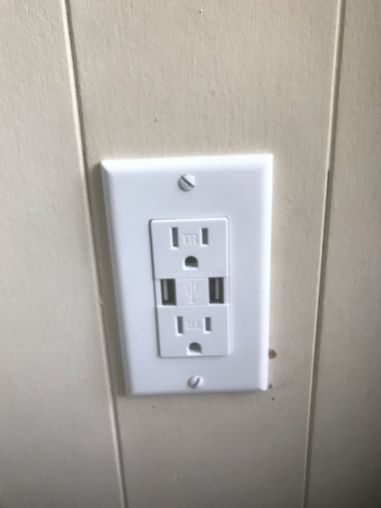
With a 4yo around the house, I worry a lot about electrocution. Classic electrical outlets have a fundamental design flaw in which if anyone or thing were to touch both of the prongs when they were halfway into the outlet, it could go horribly wrong.
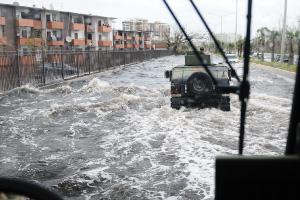
Furthermore, when I was working for USACE, DisastersRUs, I did a lot of reading about what goes horribly wrong during floods and other water related disasters like storm surge. As it turns out, good Samaritans who try to help people by slogging around in the waters, can and sometimes do get electrocuted by electrical currents from nearby houses.
And, of course, with traditional electrical home systems, there has been the possibility of home fires due to electrical shorts. Home electrical fires account for an estimated 51,000 fires each year, nearly than 500 deaths, more than 1,400 injuries, and $1.3 billion in property damage. Electrical distribution systems are the third leading cause of home structure fires.
https://www.esfi.org/resource/home-electrical-fires-184#
Electricity is scary. Especially with kids who don’t understand the risks. So as my daughter and I were stringing blinking Christmas lights on the trees, playground toys and fence in the backyard, I was happy the lights were solar powered. With a full days’ sunlight, they are colorful, but by morning, they are dim and if it rains all day, they hardly come on at night. I’m not an electrical engineer, but I assume the 4″ x 4″ solar panel connected to each strand wouldn’t be able to collect enough power to kill me or my daughter.
https://www.bobvila.com/articles/best-string-lights/
One of the advantages to modern Christmas lights is they are usually LED, especially the solar powered version, so , a 100-count string of incandescent mini lights runs at 40 watts, while a 70 count of 5mm Wide Angle LEDs is approximately 4.8 watts total.
https://www.christmaslightsetc.com/pages/how-much-power.htm
Offhand it would seem that a shock of 10,000 volts would be more deadly than 100 volts. But this is not so! Individuals have been electrocuted by appliances using ordinary house currents of 110 volts and by electrical apparatus in industry using as little as 42 volts direct current. The real measure of shock’s intensity lies in the amount of current (amperes) forced though the body, and not the voltage. Any electrical device used on a house wiring circuit can, under certain conditions, transmit a fatal current.
https://www.asc.ohio-state.edu/physics/p616/safety/fatal_current.html
I can’t even find a reference for how much amps in a string of LED Christmas lights but it’s in the range of 3 volts. Literally like nothing. A single lemon produces about 7/10 of a volt of electricity. If you connected two lemons together, you can power an inexpensive digital watch (uses about 1.5 volts). That’s funny, so the solar powered Christmas lights my 4yo was stringing up have about as much electricity as 4 lemons.
http://www.reachoutmichigan.org/funexperiments/agesubject/lessons/energy/lemon.html
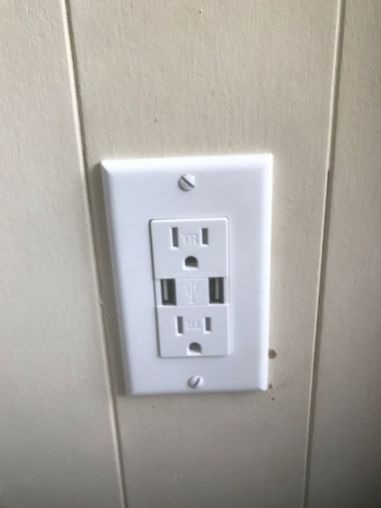
I love these electric outlets and we have had them installed throughout both our houses. They have USB ports on either side of the outlet. We have also installed a couple of outlets that have just a set of 4 USB ports and no classic outlets at all. So many new electrical devices from clocks to smart speakers, children’s night lights and other small electrics are arriving with USB cables that an increasing number of devices don’t need the standard pronged outlet.
What I love about USB ports both in the home and in the car is that I feel pretty comfortable letting my 4yo plug in the cable for her iPad. According to the Apple website, “It is totally safe. A Lightning Cable is like a powered USB. In the worst case (an iPad), it’s 5 V (and 12 W), far from enough for damaging your children.”
https://apple.stackexchange.com/questions/233673/is-the-lightning-connector-safe-for-my-children
I like the new electrical options because I think they are safer for children, safer in floods and less likely to be responsible for home fires. In short, I think in the future, we’ll see less human fatalities related to electricity. I’m hopeful. But what I’d love to see is legislation requiring the safer USB ports in new home construction and requiring small electrical devices to have USB cables if it can sufficiently power them.


 35-Year Public Affairs & IT Professional