Leveraging Augmented Reality Games for the National Park Service

I wonder if a public-private partnership with Niantic that creates a whole new game where people can collect real flora and fauna and learn about science rather than the Pikachu.

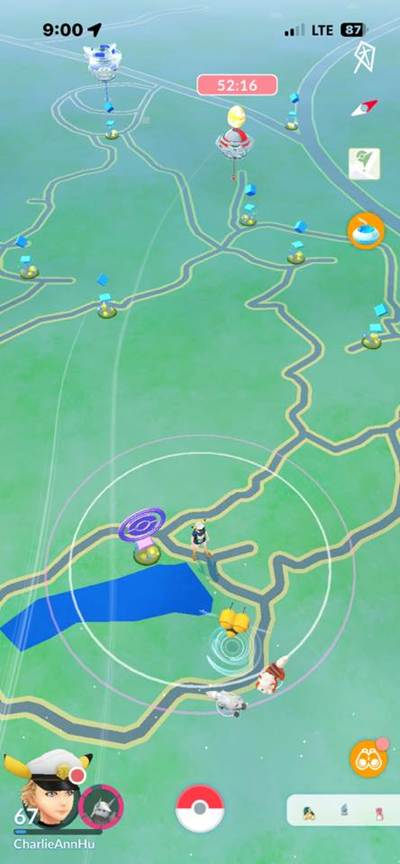
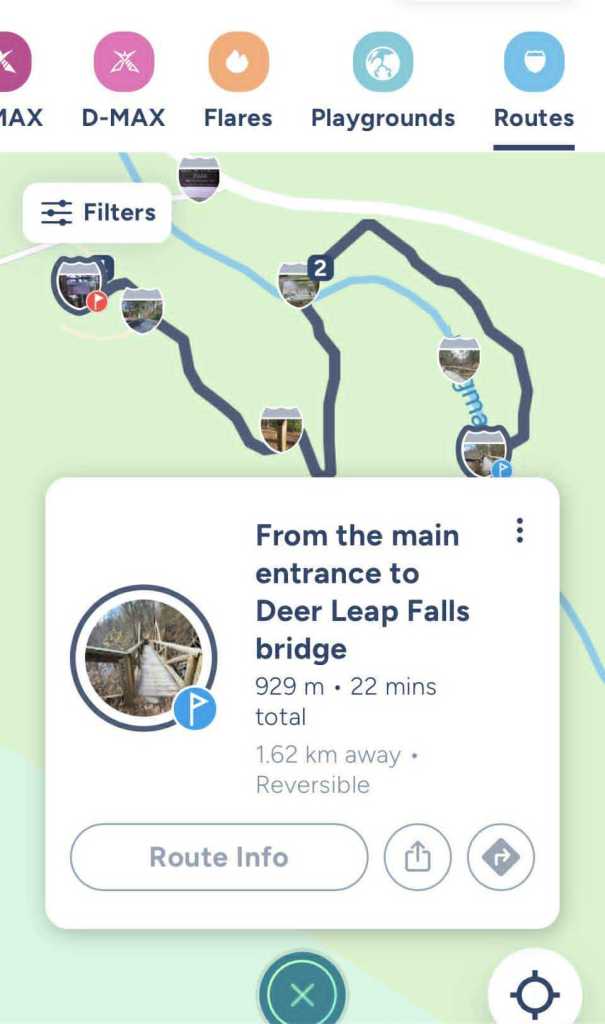
At the beginning of the furlough, the George W. Childs Park, two minutes from my home, had only 3 Pokémon Go stops and only one route. I wanted to use the furlough productively, so I walked the park trails daily for fitness. I discovered that users above a certain level can recommend new poke stops, so I tried. I was able to add nearly 10 new poke stops and a half dozen routes.

More than one billion people have played Pokémon Go worldwide. It is an augmented reality game, which means it is played on a map that mimics the world we live in. Players can collect goodies by spinning poke stops, incubate and hatch eggs by walking, jogging, biking, or riding a skateboard or scooter. Driving in a car does not contribute. The game encourages exploration and movement. The game prioritizes poke stops with unique historical, artistic or cultural value. As such National Parks Service sites are perfectly aligned with the goals of the game.

Today, the pocket park (a little less than a mile from the parking lot to the bottom of three waterfalls) has a nice concentration of poke stops, poke gyms and Pokémon routes which I hope would encourage more visitors to visit more often and help parents like me get their kids off the sofa.

Currently the most popular videos games for my daughter’s age group are Minecraft and Roblox. However, both are sedentary games that require no movement. My daughter’s latest eye exam indicated that she is spending too much time looking at objects too close to her. The eye doctor recommended she at least take breaks and focus on distant objects.

Although 350 million active users play Roblox regularly and the bulk of them are ages 9 to 15, I’d prefer my daughter play an augmented reality game like Pokémon Go or Monster Hunters, both by Niantic, because these games encourage movement, exploration and only require users to glance at the screen instead of staying glued to it.

I wonder if this increase in poke stops will increase traffic to the park. I wonder if it will help parents get kids into the wilderness. I wonder if a public-private partnership with Niantic that creates a whole new game where people can collect real flora and fauna and learn about science rather than the Pikachu.

This is the website where Pokémon Go players track their poke stop recommendations.

Here are the 10 poke stops at Childs Park now. They just added one more at the bottom left of this image at the bottom of the pond.

George W. Childs National Park which is located in the Delaware Gap Water Recreation Area is a stunningly beautiful place to enjoy nature.

The Human Condition

Why Governments Fail adds a note to an ongoing global conversation about human existence regarding life, liberty and the pursuit of happiness. The authors argue that in contrast to Montesquieu’s theory that certain regions of the world are too hot to allow for human productivity or the Protestant Ethic theory that only Christians can excel as superior humans, the real contribution to optimal communities is good governance. Or rather that, bad governance is to blame for poverty. He says unlike Jared Diamond’s claim that guns, germs and steel gave Euro America a leg up on Latin, African and Asian cultures, a political structure that allows people to effectively express themselves is the key to nation state success. In short, a government that doesn’t “extract” from or exploit (Karl Marx) the public but rather provides the means such as protections to build companies, including anti-monopoly and intellectual property protections, secures banking structures and provides law enforcement is the fertilizer for take-off.

Certainly, Fukuyama’s writings on governments’ usurpation of violence, endorsing Max Weber’s theory that the state’s legitimate use of violence, suggest that law enforcement has improved social Trust (another Fukuyama book), helping people focus on positive contributions to society.

While Daron Acemoglu and James Robinson, the authors of Why Nations Fail agree that trust is a factor in an effective social structure, they reason that trust is the result of effective governmental institutions like police, courts and laws.

I certainly agree that our social contracts, beginning with the Magna Carta and moving forward through the U.S. Constitution and the Constitutions of many other nations has made a positive contribution to our current state of peace.

Stephen Pinker makes a compelling argument mostly mathematically in his Better Angels of our Nature that we’re living in the most peaceful time in human history. However, he stops short of saying precisely why that is and he might agree with the authors of Why Nations Fail that effective governance provides a positive contribution.

However, I’m not convinced government is the fulcrum from which all other social structures hang. While I don’t believe that Christians have a monopoly on work ethic, I do think spirituality encompassing all philosophies and dogmas including atheism contributes positively to people’s voluntary self-control. After all, all the policies and police we could muster wouldn’t stop humanity if we all wanted to destroy each other. Religion or personal philosophy is at the heart of our public conduct.

Government policy is one of numerous nodes that balance the reality of the human condition in coordination with spirituality, innovation and technological development, creativity and drive. While government can augment or inhibit human nature, our species’ unique intellectual, spiritual and emotional drives are at the heart of the numerous social forces creating our communities.

https://www.britannica.com/topic/state-monopoly-on-violence

Overcoming Employment Barriers: Literacy, Language, and Professional CDL Written Test Requirements

We need to remove the literacy barrier to one of the top areas of employment in the United States.

I’d like to talk about Universal basic income UBI. There are two key problems with UBI. One is pride and the other is personal finance skills. But before I explain all of this, I want to say upfront that people need and want a living wage.

Universal basic income is a political-economic theory that our society would be better if we simply gave every family one or two grand from the government that they could use in any way they want.

The number one problem with UBI is pride. People want to feel proud of earning their wages and UBI robs people of that pride. According to a book called “Drive,” most people want three things: autonomy and mastery and purpose. UBI might give folks autonomy, but not mastery and purpose.

Work is more than just salary. This ability to be proud as well as earn a living wage, and to feel a part of the community is critical. We need everyone contributing to our society. This is the number one reason why universal basic income is a bad idea.

Another reason why universal basic income is a bad idea is because the vast majority of American citizens do not have enough skill with personal finance. I found this to be particularly true growing up in crushing poverty. I noted with interest reading J.D. Vance’s book Hillbilly Elegy that he described the same dysfunctional relationship with the material world that I grew up with. There was always enough money for cigarettes. Maybe for tattoos or cheap jewelry or bad makeup. But I often wondered whether there would be any food for breakfast when I woke up.

There are reasons that we have problems with personal finance. One of the reasons is because we don’t have enough education so that we can understand things like interest rates and saving and credit ratings. One solution, obviously, is to add personal finance to the curriculum starting in elementary school.

Another problem with personal finance in United States is truth in advertising. A lot of major companies advertise only the monthly payment required for an item purchased on credit. But people need to know the total cost of ownership. This should apply to everything purchased on credit, including vehicles, furniture or appliances, as well as student loans.

Because we lack an understanding of personal finance, giving every family $1,000 or $2000 of universal basic income will not necessarily guarantee each family and their children will have food, clothing and housing. If the money isn’t sufficiently managed, issues like food insecurity and homelessness will persist.

Of course, many of these problems are directly related to mental health and substance abuse, which is a form of debilitating mental health in its own right. There are spirals that go up or down. Unemployed people with or without preexisting mental health problems may become depressed. Depression and its cousin anxiety regardless of whether they are caused by life’s struggles or genetic inherited mental illness can inspired self-medication. Self-medication is often a form of substance abuse if people use illegal drugs. But even legal drugs like alcohol can lead to substance abuse when used as a form of self-medication to treat depression or anxiety.

Of course, people with substance abuse and its comorbid cousin mental illness can struggle in gaining and keeping a job. Difficulties in gaining or keeping a job result in financial problems. Financial problems result in depression or anxiety. And so, the spiral goes on.

The better solution is to break down the barriers to employment to help people earn a living wage. Ideally, a wage that include health benefits so they can get help, if necessary, with substance abuse or other health issues. We need to help people get good quality jobs. We need to help companies who desperately need good employees.

Recently, I asked the governor of the state of Maryland to please make the many CDL tests and study materials available in languages other than English. These tests are required for professional driver jobs. There are two dominate career fields where the bulk of Americans work: retail and professional drivers.

Because people who speak English as a second language or having literacy issues in their own language, they struggle to understand the CDL test materials. This not only robs them of a living wage, but also robs are companies and our schools of having enough professional drivers.

The language included in the CDL test, and the basic driving test uses terms we rarely use in conversations. Words like pedestrian aren’t commonly used anywhere else. We should change the content to more simplified English communication so that everyone can understand it better.

21% of adults in the US read below a 5th-grade level.
75% of Americans who get food stamps struggle with literacy.
43% of adults with the lowest literacy skills live in poverty.

There are many reasons as to why people struggle with literacy. They may have dyslexia or other learning related problems. ADHD. We can make educational materials for professional drivers available in an audio format. Reading shouldn’t be a barrier to entry into a job where they need to look outside the windshield and avoid collisions. Except for passing the test, these professionals are not Supreme Court justices. They don’t read for living.

We can and should help folks with literacy challenges gain effective employment and help the companies and schools who need professional drivers.

We need to remove the literacy barrier to one of the top areas of employment in the United States.

The last barrier I would remove is the test fee. I would waive the test fee professional driving exams for anyone who is not working as well as for anyone who qualifies for food stamps. We need to get people off unemployment and into companies that desperately need professional drivers. And if people can pass the test, the $40 entrance fee is not important.

For companies that give free drivers training to potential employees in exchange for a contract that requires a certain time employed, they should get a tax break.

The photo used with this post is a generative AI image. The person doesn’t exist.

Intimate Internet Violence – It All Started with Revenge Porn

Marines United led to many investigations and the first modification of the Uniformed Code of Military Justice in decades.  “Article 117a, UCMJ, colloquially referred to as the UCMJ’s “revenge porn” article, criminalizes the wrongful broadcast or distribution of intimate visual images. Article 117a was codified in response to the 2017 “Marines United” scandal in which nude images of female service members and civilians were posted on Facebook by military members

It all started with revenge porn. Intimate Internet violence. That no laws could stop.

When I began serving as the Public Web lead for the USAF in 2011, I became aware of a bizarre, but serious problem on official government social media accounts. Some couples who broke up practiced what was referred to as “revenge porn.” But they leveled up the game because publishing on their own social media accounts might only reach a few hundred followers. Since the goal was public shaming as a blood sport, many tried to leverage official government social media accounts for the military base or installation where they and their friends lived. So, the admins of the official social media sites of government organizations were playing virtual whack-a-mole denying the publication of insidious invasions of deeply private moments.

Revenge porn is the nonconsensual distribution of sexually explicit images or videos and sometimes without their knowledge that the images or videos exist.

Early Isolated Examples of “Revenge Porn”

A theater manager and photographer secretly took a revealing photo of Marion Manola, a Broadway star, and turned it into an erotic postcard in 1890. Manola sued the men, not wanting to be depicted as a sexual object. “Manola’s case was used as an example by jurists Samuel Warren and Louis Brandeis when they argued for a new legal “right to privacy” in their landmark Harvard Law Review article that same year. https://groups.csail.mit.edu/mac/classes/6.805/articles/privacy/Privacy_brand_warr2.html

In 1903, because of another case involving the unauthorized use of a woman’s photograph, the New York Legislature enacted the first right to privacy in the US and across the common law world, including Australia and the United Kingdom.” https://theconversation.com/in-the-19th-century-a-man-was-busted-for-pasting-photos-of-womens-heads-on-naked-bodies-sound-familiar-168081

In the 1950s when Marilyn Monroe agreed to be photographed nude, but the photos were published in Playboy magazine without her consent in 1953. https://www.biography.com/actors/marilyn-monroe-playboy-first-issue-didnt-pose

In the 1980s, Hustler magazine ran a monthly feature called “Beaver Hunt” which featured nude photos of women submitted by readers. The images often included personal details about the women, such as their hobbies, sexual fantasies, or names, and some women sued the magazine for publishing their photos without permission.

Of course, when the ability to publish was limited by people who had money, means and magazines, the amount of revenge porn was relatively limited. Its explosive growth grew with the Internet. While the individual efforts to post partner porn on official Facebook accounts were usually successfully squashed by the admins or algorithms, the Marines United private Facebook group managed to slide under the radar for a while.

Marines United Facebook – Sharing Sexual Secret Braggadocio Videos

The Marines United scandal became national news in the spring of 2017. A closed Facebook group of some 40,000 members sharing bragging rights by sharing explicit images of their mostly female partners, many of whom were unaware their most intimate moments had been recorded. I wonder if they got their inspiration from the 1990s film Flatliners where one guy records a series of tristes and his fiancé discovers the video evidence of his indiscretions.

Marines United led to many investigations and the first modification of the Uniformed Code of Military Justice in decades.  “Article 117a, UCMJ, colloquially referred to as the UCMJ’s “revenge porn” article, criminalizes the wrongful broadcast or distribution of intimate visual images. Article 117a was codified in response to the 2017 “Marines United” scandal in which nude images of female service members and civilians were posted on Facebook by military members,” according to an article on MilitaryJusticeAttorneys.com https://www.militaryjusticeattorneys.com/blog/2019/october/ucmj-article-117a-criminalizes-revenge-porn-/

The victims from Marines United indicated horrible results from their undesired fame, including stalkers.

Intimate Internet violence through public shame and embarrassment didn’t stop there. It has resulted, not surprisingly, in several suicides.

Fatal Fallout From Publishing Private Sexual Secret Videos

Tyler Clementi’s suicide in the fall of 2022 was a tragic event that brought attention to the issue of cyberbullying and harassment of LGBTQ+ youth. He jumped to his death after his roommate secretly recorded a kiss between Tyler and another young man and posted the covert video to Twitter. His death sparked national conversations about privacy, bullying, and the need for greater acceptance and understanding.

His story also led to increased efforts to prevent bullying and support LGBTQ+ individuals. The Tyler Clementi Foundation, founded by his family, works to prevent bullying and promote safe and inclusive spaces for LGBTQ+ youth.

In 2024, Generative AI became a force for “mutilating” people’s images, creating fake pornographic images of them. This was a new “deep fake” twist on revenge porn, but the public shaming as a blood sport remained overwhelmingly painfully real.

Mia Janin, 14, took her own life after a group of boys bullied her, reportedly pasting girls’ faces on porn stars’ bodies and calling her and her friends the “suicide squad.” https://www.eviemagazine.com/post/girl-14-commits-suicide-boys-shared-fake-nude-photo-suicide-squad

Producing Porn Stars from Public Pics of Random People

In April 2024, Laguna Beach High School administrators launched an investigation after a student allegedly created and circulated “inappropriate images” of other students using artificial intelligence.

While some states have made laws specific to nonconsensual sharing of intimate images and the military’s Uniformed Code of Military Justice has criminalized this act, it seems like we could use better federal criminal law to cover this nationally trending trouble.

PJ Generation

Things that are changing: Rural to Urban Migration
Up to 40% could telework fulltime
More neighborly
More Walking, Fitness, Less Car, Gas & Pollution?
Death of the Office Building
Death of the Dry Cleaners and Business Suits
Increased Productivity, More Energy Focused on Work/Family, Less Driving
Possible Rise in Domestic Violence
Increased Learning Curve for Middle Class Kids
More Home Office, Home Improvement, IOT and More Screen Time
More eCommerce

We had a great opportunity to chat with Dror Shaked of Wix this week and asked him what the future of digital publishing holds. He said his latest public presentation was titled the pajama era. I started thinking what does that really mean across the social spectrum?

Urban to Rural Migration

For a dozen generations or more, the world’s population has been moving from rural to urban. The PJ Generation may reverse that. A new poll shows that nearly 40% of urbanites are considering fleeing the city as the coronavirus pandemic rages on. https://www.millersd.org/news/article/people-are-on-the-move-to-rural-251-415/ In the simple map above lies a stark spatial imbalance: half the people in the world cram into just 1 percent of the Earth’s surface. https://www.businessinsider.com/maps-show-worlds-insane-population-concentration-cities-2016-1

Historically, rural poor move to concentrated areas of population to find better employment. This includes the American farmer and the Chinese factory girls. Even in Egypt, where some 90+ percent of the population lives in that nation’s capital.

One of the many socio-economic elements that the rural to urban migration has had around the world is a shockingly high real estate cost in areas of concentration like Tokyo, Shanghai, London, San Francisco, Vancouver and DC. Obviously, the lure of cheap and spacious housing is attractive, but historically, rural areas with low cost housing had no industrial base, and thus, no substantive income opportunities.

As much as 40% of the workforce could telework fulltime

COVID-19 may yet do what years of advocacy have failed to: Make telework a benefit available to more than a relative handful of U.S. workers. Only 7% of civilian workers in the United States, or roughly 9.8 million of the nation’s approximately 140 million civilian workers, have access to a “flexible workplace” benefit, or telework, according to the 2019 National Compensation Survey (NCS) from the federal Bureau of Labor Statistics. And those workers who have access to it are largely managers, other white-collar professionals and the highly paid. (“Civilian workers” refers to private industry workers and state and local government workers combined.) https://www.pewresearch.org/fact-tank/2020/03/20/before-the-coronavirus-telework-was-an-optional-benefit-mostly-for-the-affluent-few/

However, according to a Bureau of Labor Statistics report, “The authors find that 37 percent of U.S. jobs can be performed entirely at home—a number that greatly exceeds any recent estimate of how many workers telecommute on an average day. According to the 2018 American Time Use Survey, ‘less than a quarter of all full-time workers work from home on an average day, and even those workers typically spend well less than half of their working hours at home.'” https://www.bls.gov/opub/mlr/2020/beyond-bls/the-number-of-people-who-can-telework-is-higher-than-was-estimated.htm

We May See More of Our Neighbors

I’m scratching my brain trying to remember which book I read in grad school talked about the elimination of the neighborhood as a result of women joining the work force. It might have been one of those Bowling Alone dystopian view books. I read Turkle’s Alone Together and wasn’t impressed. I was more impressed by Clay Shirky Here Comes Everybody, Cognitive Surplus and Don Tapscott’s Growing Up Digital because they focused on how technology was remaking our social connections based on passions and shared interests. This seemed more compelling to me than just hanging out with whoever happened to be born in a geographically co-located residence.

But the dystopian authors bemoaned the time lost in face to face interactions. This summer and fall, I’ve seen a LOT of my neighbors. We are all walking circles around the same blocks and hanging out with kids and dogs at the same neighborhood parks. I’m learning names of neighbors and kids and dogs. This is the kind of community that was apparently lost when women joined the work force because the book whose name I can’t recall talked about how housewives used to spend time together watching kids, sharing recipes, pantry items, etc.

So work from home, some 40-ish percent who may also be moving to rural areas for cheaper, more spacious housing could change the national landscape, including house prices and social fabric, allowing for more awareness of neighbor’s names and lives.

More Walking, Fitness, Less Car, Gas & Pollution?

For me and from what I hear, many of my coworkers, often walk around the neighborhood while on teleconference discussions. I do it mainly so I can resist the temptation to read that email that just popped up. I find I remain more deeply engaged in telephonic conversations or Google Meets if I’m not sitting at a computer. And like many of my peers, I’ve become an obedient slave to my smart watch that complains if I sit too long, warns me that I haven’t yet walked as many steps as I had yesterday at this time and I need 30 minutes of elevated heart rate, so I should get moving. Walking around the neighborhood while teleworking means I see and wave at more neighbors, their kids and dogs.

The PJ Generation almost certainly means a sharp reduction in gas use and car mileage, cleaner air and less pollution. It means less cafeteria food. It might even mean a reduction in our nation’s growing waist lines. My iWatch often complained at me while I was driving home from the Pentagon that I’d been stationary for too long, but I couldn’t very well get up and walk around while stuck in beltway traffic.

Death of the Office Building

And corporations and local, state and federal governments don’t need huge buildings. We don’t need all those wider highways.

Death of the Dry Cleaners and Business Suits

Obviously, less suits, which means the decline of the dry cleaner and Ann Taylor, the only real women’s professional suit maker. Yesterday, Bloomberg featured an article: Work from Home Crushes Dry Cleaners. If you want to know the state of the return to office, take a look at U.S. dry cleaners. 1 in 6 have closed or gone bankrupt as more people work in their sweatpants instead of freshly pressed dress slacks.

https://www.bloomberg.com/news/videos/2020-11-25/work-from-home-crushes-u-s-dry-cleaners-video

Of course, Zuckerberg and Bezos had already changed the nation’s social expectations of the dress code for the smartest guys (and gals) in the room. So, Americans go even more casual that we always were. I think this is great. Since I was a kid in a Catholic Church, I hated the pageantry and wealth displayed in our clothes.

So we down-cost our homes and dress down our clothes. Get out and see our neighbors. What else?

Increased Productivity, More Energy Focused on Work/Family, Less Driving

I think the workplace is going to gain a significant boost in productivity. Some reports have already talked about this. Since people aren’t spending an average of an hour each way in traffic, they have more energy to focus on work and home. There has been some discussion about the lack of work/life balance because work never ends, but I find that something like a split shift works well for our household. I hit the computer as soon as I wake up, sometimes as early at 5:30, when had I been driving to the Pentagon, I would have wasted time, showering, suiting up and driving. I work until my daughter takes a break from her teleschool and we do something together – eat lunch, LEGOs, tennis, read a book. Then back to work until she’s finished with school. Another break until she goes to tae kwon do or pony riding class or when she hits the bath. Then just before bed, I hit the computer again.

The previous work day was 8 hours at the office, 1 hour of lunchbreak that I couldn’t share with my family or neighbors and at least an hour each way driving, sometimes more. Even if work infringes a bit outside of the 8 hours required, I should still get more family time. After all, the total work day used to require 12 hours outside the house.

Possible Rise in Domestic Violence

One possibly negative impact of all the PJ Generation is domestic violence. https://www.webmd.com/lung/news/20200818/radiology-study-suggests-horrifying-rise-in-domestic-violence-during-pandemic#1

For kids in healthy families, more time with parents could help increase their learning curves. However, some kids, myself included, saw school as an escape from an uncomfortable home life. We’re already seeing an increase in the income gap as a result of COVID. The PJ Generation might see a greater separation between low and upper middle income which is exasperated by triumvirate of income, mental and physical wellness, and substance abuse. It’s a well know and understood element of life for people struggling with debilitating illnesses like depression and PTSD that “self medication” is often a logical extension of the mental misery. Domestic violence is often related to alcohol or other substance consumption. Additionally, mental and physical illnesses can interfere with a person’s income generating capabilities. As a result the 3 elements interact together in a terrible way to bring people and families down.

One possibility is that people who suffer might be able to find gainful online employment and/or education that they would never have been able to engage in due to their illness. But another possibility is this cohort falls further away from the social fabric.

Increased Learning Curve for Middle Class Kids

For my daughter, she loves having all 3 adults in the house with her – grandma, dad and mom. And it allows us to tag team with her insatiable need for attention that is exhausting for any one person. So, for the middle class, I think kids will benefit from the PJ generation.

More Home Office, Home Improvement, IOT and More Screen Time

More time at home means more IOT. More voice interactive speakers, TVs, lights and thermostats. More smart homes and more home offices. We’ve already seen a sharp uptick in home improvement during COVID. Americans spent over $6B more dollars this year than previously on home improvement at Home Depot alone. https://thehill.com/policy/finance/526305-home-depot-sales-surge-as-americans-spend-on-home-improvement-amid-covid-19

We’ll probably see an increase in screen time. “Zoom meetings. Distance learning. Online shopping. The coronavirus pandemic has caused us to spend more hours than ever facing a screen. While that allows us to carry on many of our daily activities safely, it may also bring with it some concerns.” https://www.rivertowns.net/news/education/6749222-Screen-time-increases-with-pandemic-adjustments

More eCommerce

During the first two quarters of 2020, stores like Ulta, Macy’s and Kohl’s experienced dramatic spikes in their ecommerce revenue, rising roughly 200%, 53% and 60% respectively. The International Council of Shopping Centers predicts a 25% rise in ecommerce sales in 2020. https://insights.digitalmediasolutions.com/news/ecommerce-transactions-rising

Laws on govt publishing eGov Act 2002

(4) To improve the ability of the Government to achieve 
        agency missions and program performance goals.
            (5) To promote the use of the Internet and emerging 
        technologies within and across Government agencies to provide 
        citizen-centric Government information and services.
            (6) To reduce costs and burdens for businesses and other 
        Government entities.
            (7) To promote better informed decisionmaking by policy 
        makers.
            (8) To promote access to high quality Government information 
        and services across multiple channels.
            (9) To make the Federal Government more transparent and 
        accountable.
            (10) To transform agency operations by utilizing, where 
        appropriate, best practices from public and private sector 
        organizations.
            (11) To provide enhanced access to Government information 
        and services in a manner consistent with laws regarding 
        protection of personal privacy, national security, records 
        retention, access for persons with disabilities, and other 
        relevant laws.

https://www.congress.gov/bill/107th-congress/house-bill/2458/text

Laws on government agency digital publishing – mobile friendly

Government websites are required bylaw to be mobile friendly

This Act may be cited as the ``Connected Government Act''.
SEC. 2. FEDERAL WEBSITES REQUIRED TO BE MOBILE FRIENDLY.

    (a) Amendment.--Subchapter II of chapter 35 of title 44, United 
States Code, is amended by adding at the end the following new section:
``Sec. 3559. <<NOTE: 44 USC 3559.>>  Federal websites required to 
                  be mobile friendly

    ``(a) <<NOTE: Time period.>>  In General.--If, on or after the date 
that is 180 days after the date of the enactment of this section, an 
agency creates a website that is intended for use by the public or 
conducts a redesign of an existing legacy website that is intended for 
use by the public, the agency shall ensure to the greatest extent 
practicable that the website is mobile friendly.

    ``(b) Definitions.--In this section:
            ``(1) Agency.--The term `agency' has the meaning given that 
        term in section 551 of title 5.
            ``(2) Mobile friendly.--The term `mobile friendly' means, 
        with respect to a website, that the website is configured in 
        such a way that the website may be navigated, viewed, and 
        accessed on a smartphone, tablet computer, or similar mobile 
        device.''.

https://www.congress.gov/bill/115th-congress/house-bill/2331/text

Micro-farming could save humanity

My buddy Bassem said, “If the world turned vegan the emissions will be reduced by more than 60% we will save 80% of the water and 70% of the land and we will have less chronic diseases.” But, he admitted, we can’t turn everyone vegan. Still, the problem of large professional meat farming is a major issue.

My brother and his wife on The Crouch Ranch raise and process their own poultry and hogs and, of course, eggs. While some 83% of Americans do not live in apartments and therefore, theoretically could do some form of micro-farming like a backyard chicken coop, most local laws prohibit this.

Bassem agreed that grow what you eat could significantly improve our resource issue with regard to meat. But even for those who want to have a backyard poultry source, we need to push the politicians to agree to the idea.

This kind of micro-farming could address a number of issues in addition to climate change. COVID disrupted food chains. So the first thing I did was go to Home Depot and buy $115 worth of food plants which we have been eating since March. It’s cheaper to grow your own food, cleaner and there’s less doubt that it will arrive at your table. It’s also much tastier.

So write to your local legislators and ask them to allow you to have a backyard chicken coop.

Direct Democracy Regulatory Reform

I just wrote this for a university post and I loved it, so I thought I’d share it here.

How I got here

I love democracy. I want to further the cause of democracy by helping illustrate the specific realities of the United States of America, one of the most bodacious democratic experiments in human history. So, I became a government journalist and learned how to put words and photos in a weekly newspaper.

Then I realized that to write anything meaningful for those words and photos in the newspaper, you have to know stuff, a lot of stuff. I promised myself I would take at least one college class per semester, and I have since the early 1980s. I did more than 60 credit hours in search of a bachelor’s degree from more than a dozen different colleges and universities and finally cobbled it all together for a BA in Sociology from Chapman University. Then all but dissertation in the master’s degree from the American University in Cairo (Cultural Anthropology). Then an AAS in computer programming from Cochise Community College. Along the way, I have studied six languages, achieving scores of 3/3 in Spanish, 2/2 in Japanese, 2/2+ in Portuguese and 1+ in Arabic and Korean on the State Department evaluation system, which considers 3/3 equal to a native speaker who has a high school education. I have also studied my husband’s language of Mandarin Chinese.

But I also realized that college isn’t enough. So I read and read and read. I have read dozens of books on national histories, including the history of Chile in Spanish, and Egyptian and Japanese classic works of literature in translation, critical philosophers like Sun Tzu from China and my personal favorite, Plato. I wanted to put the world in context.

Since my earliest days, I’ve tried to find ways to cram more time into a single day or at least more information absorption. Reading a book is slow, cumbersome work. In the early days, when I took home less than a $1000 per month as a enlisted Marine in the 1980s, I would still spend as much as $100 for a book on cassette. I even went to the library to check out books on cassettes or DVDs and listened to them during commutes to work or while waiting for anything – a doctor, an airplane, whatever.

The first time I went overseas, I was limited to two pieces of luggage to sustain me for a year or two. My number one problem was which books to take. I couldn’t take my complete collection of the Encyclopedia Britannica Great Thinkers of the Western World, they were too heavy.

Of course, books on cassettes or DVDs were lighter and if I burned them all onto a hard drive, lighter still. Then one day, I met audible and the iPod classic and my life changed forever.

I could keep a virtually unlimited number of books in my pocket, weighing less than my wallet. I could let the information, including foreign languages, streaming into my ears day and night, even while drifting off to sleep.

Then I saw a presentation with Jeff Bezos talking about the effects of dual modality. That reading the text of a book, something I often did when I wasn’t driving, while simultaneously listening to an audio version of the same book increased comprehension and retention. In a 2016 journal article, authors Rogowsky, Calhoun and Tall explain and explore the value of dual modality. (Rogowsky, Calhoun, & Tall, 2016)

My audiobook collection is just over 800 books, mostly nonfiction, scholarly and history with a smattering of classical literature and science fiction. According to the audible website, I’ve been a member since August 30, 2008. Amazon bought Audible in March 2008, so I’m guessing I was one of the first on the platform. The app on my current iPhone says I’ve listened to audiobooks for a total time equivalent to one month, 14 days, 15 hours and 12 minutes. However, this doesn’t track the fact that I can and do listen to my Amazon audiobooks on my Alexa Smart Speaker, on my government computer using Amazon’s website and from my laptop computer. In fact, I can access my audiobooks from pretty much any internet-based platform, including my daughter’s iPad. I wish the website tracked total reading time across all devices. I listen to audiobooks using my iPhone connected to CarPlay in my SUV but have to use an aux cable in my subcompact car because it doesn’t have CarPlay yet. I called BestBuy and learned they can install CarPlay in my car along with a rearview camera. I plan to get them both installed this winter in addition to buying the Alexa device for autos, one for each car. At that point, it won’t matter if I forgot the cable to connect my iPhone to CarPlay, my car will have a copy of my audiobook downloaded in a device and with WhisperSync technology, it will know where I left off reading on my Kindle or iPhone, so I don’t have to reread the material I’ve already consumed.

Since I’m in the news business, I want to know what’s going in the news, but I want serious news – markets, global events, world political changes, etc., not just the local weather and updates on social media influencers. So I have news apps installed on my cell phone that bring me reports on the Dow Jones, CNN Money, BBC, China Daily, Al Jazeera in English, Fox News, the Washington Post, NPR, CGTN (Chinese government official news channel), Reuters, AF Connect, Asahi Shimbun (the Tokyo daily), and Canberra News. These apps push information to me, scrolling across the screen with the latest in hot news from around the world, often telling the same story from wildly different angles.

According to an article in Political Communication by Zhongdang Pan, all parties, including the news media, politicians and lobbyists work to frame news in a light that best suits their goals. As such, reading diverse content improves topic comprehension and undermines the various authors hope to imprint on me a framing they prefer the public consume. (Pan, 1993)

Where I’m going

When the Air Force hired me as the chief of the public web in 2011, I panicked. I was, in my own assessment, in no way qualified for the job. I was not sufficiently tech savvy. This is why I picked up an AAS in computer programming. I asked my office to pay for a dozen courses in website design, website programming, Microsoft Access programming, and I read all the technology books I could find. Thankfully many if not most of them are available in an audible format.

I started to experiment. I bought programmable thermostats and a programmable vacuum cleaner robot. I bought a smart home security system with an online video camera and smart light switches and smart TVs. And of course, smart speakers. Two. Alexa and Google Home. I wanted to understand the Internet of Things, not just from Forbes articles and the like, although I read those too, but from a lived experience. (Morgan, 2014)

I wanted to understand exactly what the technology was capable of and where it could take us. With a background in sociology, I wanted to understand what would best serve the people and my first love, democracy. I realized voice user interface from smart speakers would smash the centuries-old hierarchy of knowledge that he who reads the most text on paper earns the most money and social clout. I wrote a blog about this idea. (Hu, 2018)

I realized that the extraordinary democratic experience we have had combined with the new crowd sourcing technology could create a reality from the fiction of a direct democracy. (Gardels, 2018) After a job interview with the Alcohol, Tobacco and Tax Bureau, which will most likely be responsible for drafting new regulations regarding recently legalized cannabis, I began developing a concept for an online platform to crowd source the development of government regulations. It is based on an idea cobbled together from Clay Shirky’s books Here Comes Everybody (Shirky, 2008) and Cognitive Surplus (Shirky, 2010). I realized that rather than spending copious hours of time for the limited 480-person staff that runs this remarkably small agency, we could build a website that collects regulation suggestions from the public, allows them to vote them up or down and comment on them. It should be able to allow them to mashup a proposal, meaning copy another citizens proposal and modify it sufficiently that it becomes a different legislative proposal. Then run the finalists through a set of government lawyers to vet them for consistency and publish.

The government agency will significantly reduce its workload. It will completely change the equation of the public comment period. And the remarkably enthusiastic producers and consumers will have a direct say in how their world is governed. Direct democracy has always seemed like a little piece of mythological fiction from ancient Greece at a time when people were in no way equal.

I’m excited by the idea that I might be able to use technology to help my country create a system that allows the general public direct access to policy making. Of course, first, I have to get hired. Still, regardless where I go, I’m always looking for ways to bend the technology to my ambitions, which as one previous supervisor wrote in my annual review, “is more for the organization and humanity than for herself.”

Bibliography

Gardels, N. (2018, October 5). Direct Democracy: Renovating Democracy from the Ground Up. Retrieved from Washington Post: https://www.washingtonpost.com/news/theworldpost/wp/2018/10/05/direct-democracy-2/?utm_term=.0f0049366d52

Hu, C. A. (2018, November 9). New Literacy: Eulogy for Gutenberg. Retrieved from Charlotte Ann Hu: https://charlotteannhu.com/2018/11/09/new-literacy-eulogy-for-gutenberg/

Morgan, J. (2014, May 13). A Simple Explanation of the Internet of Things. Retrieved from Forbes: https://www.forbes.com/sites/jacobmorgan/2014/05/13/simple-explanation-internet-things-that-anyone-can-understand/#206d2edb1d09

Pan, Z. (1993). Framing Analysis:An Approach to News Discourse. Political Communications, 55-75. Retrieved from https://s3.amazonaws.com/academia.edu.documents/45567926/Pan_Kosicki_1993.pdf?AWSAccessKeyId=AKIAIWOWYYGZ2Y53UL3A&Expires=1542319483&Signature=IZRHRLe2lmUemWF2UnoDaUmxzsg%3D&response-content-disposition=inline%3B%20filename%3DFraming_Analysis_An_Approach_

Rogowsky, B. A., Calhoun, B. M., & Tall, P. (2016, September 1). Does Modality Matter? The Effects of Reading, Listening, and Dual Modality on Comprehension. SAGE, 6(3), online. Retrieved November 11, 2018, from https://journals.sagepub.com/doi/full/10.1177/2158244016669550

Shirky, C. (2008). Here Comes Everybody: The Power of Organizing Without Organizations. New York: A Perigee Book/Penguin Group.

Shirky, C. (2010). Cognitive Surplus. New York: A Perigee Book/Penguin Group.