A former Marine print-photojournalist, former State Department Public Diplomacy Officer, former U.S. Air Force Supervisory Public Affairs Specialist, former USACE Public Web Lead & former Denny's waitress
I wonder if a public-private partnership with Niantic that creates a whole new game where people can collect real flora and fauna and learn about science rather than the Pikachu.
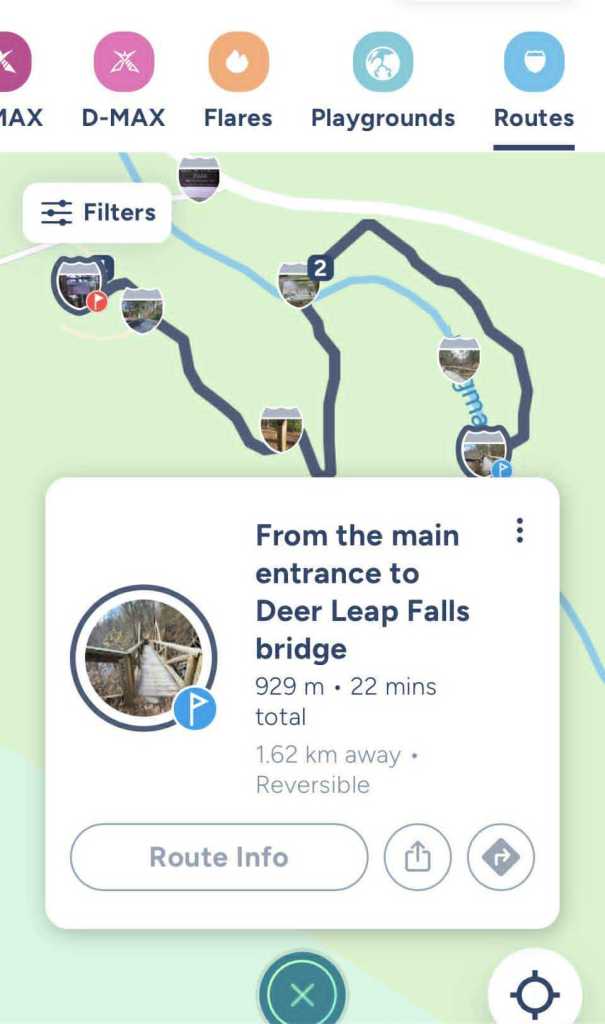
At the beginning of the furlough, the George W. Childs Park, two minutes from my home, had only 3 Pokémon Go stops and only one route. I wanted to use the furlough productively, so I walked the park trails daily for fitness. I discovered that users above a certain level can recommend new poke stops, so I tried. I was able to add nearly 10 new poke stops and a half dozen routes.
More than one billion people have played Pokémon Go worldwide. It is an augmented reality game, which means it is played on a map that mimics the world we live in. Players can collect goodies by spinning poke stops, incubate and hatch eggs by walking, jogging, biking, or riding a skateboard or scooter. Driving in a car does not contribute. The game encourages exploration and movement. The game prioritizes poke stops with unique historical, artistic or cultural value. As such National Parks Service sites are perfectly aligned with the goals of the game.
Today, the pocket park (a little less than a mile from the parking lot to the bottom of three waterfalls) has a nice concentration of poke stops, poke gyms and Pokémon routes which I hope would encourage more visitors to visit more often and help parents like me get their kids off the sofa.
Currently the most popular videos games for my daughter’s age group are Minecraft and Roblox. However, both are sedentary games that require no movement. My daughter’s latest eye exam indicated that she is spending too much time looking at objects too close to her. The eye doctor recommended she at least take breaks and focus on distant objects.
Although 350 million active users play Roblox regularly and the bulk of them are ages 9 to 15, I’d prefer my daughter play an augmented reality game like Pokémon Go or Monster Hunters, both by Niantic, because these games encourage movement, exploration and only require users to glance at the screen instead of staying glued to it.
I wonder if this increase in poke stops will increase traffic to the park. I wonder if it will help parents get kids into the wilderness. I wonder if a public-private partnership with Niantic that creates a whole new game where people can collect real flora and fauna and learn about science rather than the Pikachu.
This is the website where Pokémon Go players track their poke stop recommendations.
Here are the 10 poke stops at Childs Park now. They just added one more at the bottom left of this image at the bottom of the pond.
George W. Childs National Park which is located in the Delaware Gap Water Recreation Area is a stunningly beautiful place to enjoy nature.
Things that are changing: Rural to Urban Migration
Up to 40% could telework fulltime
More neighborly
More Walking, Fitness, Less Car, Gas & Pollution?
Death of the Office Building
Death of the Dry Cleaners and Business Suits
Increased Productivity, More Energy Focused on Work/Family, Less Driving
Possible Rise in Domestic Violence
Increased Learning Curve for Middle Class Kids
More Home Office, Home Improvement, IOT and More Screen Time
More eCommerce
We had a great opportunity to chat with Dror Shaked of Wix this week and asked him what the future of digital publishing holds. He said his latest public presentation was titled the pajama era. I started thinking what does that really mean across the social spectrum?
Historically, rural poor move to concentrated areas of population to find better employment. This includes the American farmer and the Chinese factory girls. Even in Egypt, where some 90+ percent of the population lives in that nation’s capital.
One of the many socio-economic elements that the rural to urban migration has had around the world is a shockingly high real estate cost in areas of concentration like Tokyo, Shanghai, London, San Francisco, Vancouver and DC. Obviously, the lure of cheap and spacious housing is attractive, but historically, rural areas with low cost housing had no industrial base, and thus, no substantive income opportunities.
As much as 40% of the workforce could telework fulltime
COVID-19 may yet do what years of advocacy have failed to: Make telework a benefit available to more than a relative handful of U.S. workers. Only 7% of civilian workers in the United States, or roughly 9.8 million of the nation’s approximately 140 million civilian workers, have access to a “flexible workplace” benefit, or telework, according to the 2019 National Compensation Survey (NCS) from the federal Bureau of Labor Statistics. And those workers who have access to it are largely managers, other white-collar professionals and the highly paid. (“Civilian workers” refers to private industry workers and state and local government workers combined.) https://www.pewresearch.org/fact-tank/2020/03/20/before-the-coronavirus-telework-was-an-optional-benefit-mostly-for-the-affluent-few/
However, according to a Bureau of Labor Statistics report, “The authors find that 37 percent of U.S. jobs can be performed entirely at home—a number that greatly exceeds any recent estimate of how many workers telecommute on an average day. According to the 2018 American Time Use Survey, ‘less than a quarter of all full-time workers work from home on an average day, and even those workers typically spend well less than half of their working hours at home.'” https://www.bls.gov/opub/mlr/2020/beyond-bls/the-number-of-people-who-can-telework-is-higher-than-was-estimated.htm
We May See More of Our Neighbors
I’m scratching my brain trying to remember which book I read in grad school talked about the elimination of the neighborhood as a result of women joining the work force. It might have been one of those Bowling Alone dystopian view books. I read Turkle’s Alone Together and wasn’t impressed. I was more impressed by Clay Shirky Here Comes Everybody, Cognitive Surplus and Don Tapscott’s Growing Up Digital because they focused on how technology was remaking our social connections based on passions and shared interests. This seemed more compelling to me than just hanging out with whoever happened to be born in a geographically co-located residence.
But the dystopian authors bemoaned the time lost in face to face interactions. This summer and fall, I’ve seen a LOT of my neighbors. We are all walking circles around the same blocks and hanging out with kids and dogs at the same neighborhood parks. I’m learning names of neighbors and kids and dogs. This is the kind of community that was apparently lost when women joined the work force because the book whose name I can’t recall talked about how housewives used to spend time together watching kids, sharing recipes, pantry items, etc.
So work from home, some 40-ish percent who may also be moving to rural areas for cheaper, more spacious housing could change the national landscape, including house prices and social fabric, allowing for more awareness of neighbor’s names and lives.
More Walking, Fitness, Less Car, Gas & Pollution?
For me and from what I hear, many of my coworkers, often walk around the neighborhood while on teleconference discussions. I do it mainly so I can resist the temptation to read that email that just popped up. I find I remain more deeply engaged in telephonic conversations or Google Meets if I’m not sitting at a computer. And like many of my peers, I’ve become an obedient slave to my smart watch that complains if I sit too long, warns me that I haven’t yet walked as many steps as I had yesterday at this time and I need 30 minutes of elevated heart rate, so I should get moving. Walking around the neighborhood while teleworking means I see and wave at more neighbors, their kids and dogs.
The PJ Generation almost certainly means a sharp reduction in gas use and car mileage, cleaner air and less pollution. It means less cafeteria food. It might even mean a reduction in our nation’s growing waist lines. My iWatch often complained at me while I was driving home from the Pentagon that I’d been stationary for too long, but I couldn’t very well get up and walk around while stuck in beltway traffic.
Death of the Office Building
And corporations and local, state and federal governments don’t need huge buildings. We don’t need all those wider highways.
Death of the Dry Cleaners and Business Suits
Obviously, less suits, which means the decline of the dry cleaner and Ann Taylor, the only real women’s professional suit maker. Yesterday, Bloomberg featured an article: Work from Home Crushes Dry Cleaners. If you want to know the state of the return to office, take a look at U.S. dry cleaners. 1 in 6 have closed or gone bankrupt as more people work in their sweatpants instead of freshly pressed dress slacks.
Of course, Zuckerberg and Bezos had already changed the nation’s social expectations of the dress code for the smartest guys (and gals) in the room. So, Americans go even more casual that we always were. I think this is great. Since I was a kid in a Catholic Church, I hated the pageantry and wealth displayed in our clothes.
So we down-cost our homes and dress down our clothes. Get out and see our neighbors. What else?
Increased Productivity, More Energy Focused on Work/Family, Less Driving
I think the workplace is going to gain a significant boost in productivity. Some reports have already talked about this. Since people aren’t spending an average of an hour each way in traffic, they have more energy to focus on work and home. There has been some discussion about the lack of work/life balance because work never ends, but I find that something like a split shift works well for our household. I hit the computer as soon as I wake up, sometimes as early at 5:30, when had I been driving to the Pentagon, I would have wasted time, showering, suiting up and driving. I work until my daughter takes a break from her teleschool and we do something together – eat lunch, LEGOs, tennis, read a book. Then back to work until she’s finished with school. Another break until she goes to tae kwon do or pony riding class or when she hits the bath. Then just before bed, I hit the computer again.
The previous work day was 8 hours at the office, 1 hour of lunchbreak that I couldn’t share with my family or neighbors and at least an hour each way driving, sometimes more. Even if work infringes a bit outside of the 8 hours required, I should still get more family time. After all, the total work day used to require 12 hours outside the house.
For kids in healthy families, more time with parents could help increase their learning curves. However, some kids, myself included, saw school as an escape from an uncomfortable home life. We’re already seeing an increase in the income gap as a result of COVID. The PJ Generation might see a greater separation between low and upper middle income which is exasperated by triumvirate of income, mental and physical wellness, and substance abuse. It’s a well know and understood element of life for people struggling with debilitating illnesses like depression and PTSD that “self medication” is often a logical extension of the mental misery. Domestic violence is often related to alcohol or other substance consumption. Additionally, mental and physical illnesses can interfere with a person’s income generating capabilities. As a result the 3 elements interact together in a terrible way to bring people and families down.
One possibility is that people who suffer might be able to find gainful online employment and/or education that they would never have been able to engage in due to their illness. But another possibility is this cohort falls further away from the social fabric.
Increased Learning Curve for Middle Class Kids
For my daughter, she loves having all 3 adults in the house with her – grandma, dad and mom. And it allows us to tag team with her insatiable need for attention that is exhausting for any one person. So, for the middle class, I think kids will benefit from the PJ generation.
More Home Office, Home Improvement, IOT and More Screen Time
We’ll probably see an increase in screen time. “Zoom meetings. Distance learning. Online shopping. The coronavirus pandemic has caused us to spend more hours than ever facing a screen. While that allows us to carry on many of our daily activities safely, it may also bring with it some concerns.” https://www.rivertowns.net/news/education/6749222-Screen-time-increases-with-pandemic-adjustments
More eCommerce
During the first two quarters of 2020, stores like Ulta, Macy’s and Kohl’s experienced dramatic spikes in their ecommerce revenue, rising roughly 200%, 53% and 60% respectively. The International Council of Shopping Centers predicts a 25% rise in ecommerce sales in 2020. https://insights.digitalmediasolutions.com/news/ecommerce-transactions-rising
(4) To improve the ability of the Government to achieve
        agency missions and program performance goals.
            (5) To promote the use of the Internet and emerging
        technologies within and across Government agencies to provide
        citizen-centric Government information and services.
            (6) To reduce costs and burdens for businesses and other
        Government entities.
            (7) To promote better informed decisionmaking by policy
        makers.
            (8) To promote access to high quality Government information
        and services across multiple channels.
            (9) To make the Federal Government more transparent and
        accountable.
            (10) To transform agency operations by utilizing, where
        appropriate, best practices from public and private sector
        organizations.
            (11) To provide enhanced access to Government information
        and services in a manner consistent with laws regarding
        protection of personal privacy, national security, records
        retention, access for persons with disabilities, and other
        relevant laws.
Government websites are required bylaw to be mobile friendly
This Act may be cited as the ``Connected Government Act''.
SEC. 2. FEDERAL WEBSITES REQUIRED TO BE MOBILE FRIENDLY.

    (a) Amendment.--Subchapter II of chapter 35 of title 44, United
States Code, is amended by adding at the end the following new section:
``Sec. 3559. <<NOTE: 44 USC 3559.>>  Federal websites required to
                  be mobile friendly

    ``(a) <<NOTE: Time period.>>  In General.--If, on or after the date
that is 180 days after the date of the enactment of this section, an
agency creates a website that is intended for use by the public or
conducts a redesign of an existing legacy website that is intended for
use by the public, the agency shall ensure to the greatest extent
practicable that the website is mobile friendly.

    ``(b) Definitions.--In this section:
            ``(1) Agency.--The term `agency' has the meaning given that
        term in section 551 of title 5.
            ``(2) Mobile friendly.--The term `mobile friendly' means,
        with respect to a website, that the website is configured in
        such a way that the website may be navigated, viewed, and
        accessed on a smartphone, tablet computer, or similar mobile
        device.''.
SEC. 601. REQUIREMENT FOR DISCLOSURE OF FEDERAL SPONSORSHIP OF ALL FEDERAL ADVERTISING OR OTHER COMMUNICATIONS. (a) Requirement.—Except as provided for in subsection (b), each advertisement or other communication paid for by an agency, either directly or through a contract awarded by the agency, shall include a prominent notice informing the target audience that the advertisement or other communication is paid for by that agency. (b) Exceptions.—The requirement in subsection (a) shall not apply to an advertisement or other communication— (1) that is 200 characters or less; or (2) that is distributed through a short message service. (c) Advertisement Or Other Communications Defined.—In this section, the term “advertisement or other communication” includes— (1) an advertisement disseminated in any form, including print or by any electronic means; and (2) a communication by an individual in any form, including speech, print, or by any electronic means.
Budgets and Budget justification
SEC. 603. PUBLIC AVAILABILITY OF BUDGET JUSTIFICATIONS AND APPROPRIATION REQUESTS.
(a) In General.—Section 3 of the Federal Funding Accountability and Transparency Act of 2006 (31 U.S.C. 6101 note) is amended to read as follows:
“SEC. 3. FULL DISCLOSURE OF FEDERAL FUNDS.
“(a) In General.—Not less frequently than monthly when practicable, and in any event not less frequently than quarterly, the Secretary (in consultation with the Director and, with respect to information described in subsection (b)(2), the head of the applicable Federal agency) shall ensure that updated information with respect to the information described in subsection (b) is posted on the website established under section 2.
“(b) Information To Be Posted.—
“(1) FUNDS.—For any funds made available to or expended by a Federal agency or component of a Federal agency, the information to be posted shall include—
“(A) for each appropriations account, including an expired or unexpired appropriations account, the amount—
“(i) of budget authority appropriated;
“(ii) that is obligated;
“(iii) of unobligated balances; and
“(iv) of any other budgetary resources;
“(B) from which accounts and in what amount—
“(i) appropriations are obligated for each program activity; and
“(ii) outlays are made for each program activity;
“(C) from which accounts and in what amount—
“(i) appropriations are obligated for each object class; and
“(ii) outlays are made for each object class; and
“(D) for each program activity, the amount—
“(i) obligated for each object class; and
“(ii) of outlays made for each object class.
“(2) BUDGET JUSTIFICATIONS.—
“(A) DEFINITIONS.—In this paragraph—
“(i) the term ‘agency’ has the meaning given that term in section 101 of title 31, United States Code; and
“(ii) the term ‘budget justification materials’ means the annual budget justification materials of an agency that are submitted to Congress in support of the budget of the agency, in conjunction with the budget of the United States Government submitted under section 1105(a) of title 31, United States Code, but does not include budget justification materials that are classified.
“(B) INFORMATION.—The information to be posted shall include the budget justification materials of each agency—
“(i) for the second fiscal year beginning after the date of enactment of this paragraph, and each fiscal year thereafter; and
“(ii) to the extent practicable, that were released for any fiscal year before the date of enactment of this paragraph.
“(C) FORMAT.—Budget justification materials shall be posted under subparagraph (B)—
“(i) in an open format machine readable and text searchable;
“(ii) in a manner that enables users to download individual reports, download all reports in bulk, and download in bulk the results of a search, to the extent practicable; and
“(iii) in a structured data format, to the extent practicable.
“(D) DEADLINE.—The budget justification materials required to be posted under subparagraph (B)(i) shall be posted not later than 2 weeks after the date on which the budget justification materials are first submitted to Congress.
SEC. 604. IMPROVING RULEMAKING DISCLOSURE FOR THE OFFICE OF INFORMATION AND REGULATORY AFFAIRS.
(a) Inclusion In The Rulemaking Docket Of Documents And Communications Related To The Implementation Of Centralized Regulatory Review.—As soon as practicable, and not later than 15 days after the conclusion of centralized regulatory review for a draft proposed or draft final rule, the Administrator of the Office of Information and Regulatory Affairs shall include in the rulemaking docket the following:
(1) A copy of the draft proposed or draft final rule and supporting analyses submitted to the Office of Information and Regulatory Affairs for review.
(2) A copy of the draft proposed or draft final rule that incorporates substantive changes, if any, made to the rule as part of implementing centralized regulatory review.
(3) A document describing in a complete, clear, and simple manner all substantive changes made by the Office of Information and Regulatory Affairs to the draft proposed or draft final rule submitted by the agency to Office for review.
(4) A copy of all documents and written communications (including all electronic mail and electronic mail file attachments), and a summary of all oral communications (including phone calls, phone conferences, and meetings), exchanged as part of the implementation of the centralized regulatory review between or among any of the following:
(A) The agency responsible for the rule.
(B) The Office of Information and Regulatory Affairs.
(C) Any other office or entity within the Executive Office of the President.
(D) An agency that is not the agency responsible for the rule.
(E) An individual who is not employed by—
(i) the executive branch of the Federal Government; or
(ii) an agency that is not the agency responsible for the rule.
(b) Definitions.—In this section:
(1) CENTRALIZED REGULATORY REVIEW.—The term “centralized regulatory review” means the institutional process of Presidential oversight of individual agency rules governed by Executive Order 12866 (58 Fed. Reg. 51735; relating to regulatory planning and review), or any successor to such Executive order.
(2) RULE.—The term “rule” has the meaning given that term in section 551 of title 5, United States Code.
(c) Rule Of Construction.—Nothing in this section shall be construed to preempt or displace the disclosure requirements under any other provision of law affecting administrative procedure, if such requirements are not inconsistent with the requirements of this section.
(c) Publication Of Information Categorized Using Government-Wide Entity Identifier.—Each agency shall, to the extent practicable, publish all public regulatory, procurement, assistance, and other reported information categorized using the unique entity identifier required under this section.








 35-Year Public Affairs & IT Professional