Diet, Weight loss, Meditation & Sleep

I didn’t take a New Year’s resolution for 2019, so I’m not exactly sure how it happened, but I dropped from 160 pounds to 135.

Let me try to recount the sequence of events not only for the readers, but because I haven’t always been cognizant of the comprehensive nature of all the interlocking decisions I’ve made.

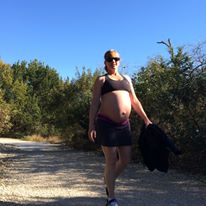
Obviously, I was unhappy with my body weight and so was my doctor. I gave birth in early 2016. Prior to the pregnancy, I was 125 pounds. I’m 5’3 3/4″. While working with a fertility doctor, the medications I took to try to help me get pregnant caused me to gain 15 pounds. I lost 7 pounds after stopping the meds, but stopped trying to diet when it looked like our attempts at pregnancy might be successful. I didn’t want to risk losing a chance at a child. During the pregnancy, I topped out at 170 pounds and afterward while breastfeeding, the pounds melted off, dropping to 136 7 or 8 months after giving birth. However, once I stopped breastfeeding, the weight came back.

For a couple of years, I played yo-yo and tried numerous diets, the most successful of which was Jenny Craigs, but I never managed to keep the weight off. In addition to weight problems, our daughter didn’t sleep through the night until around 3 1/2 years old. We were horribly sleep deprived. I read a lot about the damaging effects, including weight gain of insufficient or bad quality sleep. I also read the book The Secret Life of Fat. Finally, I joined Noom and announced on Facebook that I was going to get 125 pounds back.

I haven’t. I’m still 10 pounds away, but I have become confident that I can. Step 1 was a wearable and a focus on sleep.

After joining Noom, the counselor asked me what I wanted to focus on and I said 8 continuous hours of sleep with 60% deep sleep and average heart rate dip, which is 20% or more. This was an odd goal for a weight loss program, but to their credit, the Noom team didn’t balk. I said I’d work on weight loss after I mastered sleep.

The Sleep Craze
I bought an iWatch. Later I wished I would have bought a $28 HuaWise Fitness Tracker, Waterproof Activity Tracker with Heart Rate Monitor and Sleep Monitor, Waterproof Pedometer, Step Counter, Calories Counter for Android & iPhone. My niece, her boyfriend and my nephew all have fitbits, which are also cheaper than an iWatch. Neither the HuaWise nor the fitbit requires a monthly cellular service charge. Also both fitbit and HuaWise only need to be charged once per week. I constantly fight to keep my iWatch charged, but regardless, some kind of wearable that tracks steps, heartrate, sleep and so on provides critical feedback for both sleep and weight loss management.

I read a lot of blogs, add a black paper accordion folded shade with super sticky glue behind my blinds. I made my room super dark and increased the air condition to make deeper sleep more likely. (Original Blackout Pleated Paper Shade Black, 36” x 72”, 6-Pack by Redi Shade) I guarded my sleep religiously, stopping all action outside the home by 6 p.m. to be able to get the toddler bathed, fed and relaxing in bed by 8 p.m. so I could consistently fall asleep between 8:30 and 9 p.m.

I quit caffeine. No shit! The most extreme part of this whole 9 month process has been eliminating my chemical dependence. It was painful. Headaches. And it took me a while to switch to Diet Sprite or 7 Up or Diet A&W root beer, but after 3 or 4 months, I had the impression that I had actually won. Another goal that Noom didn’t argue with, but simply supported.

I stock several sleep aids. Chamomile tea is the best but tastes horrible. Sleepy Time tea tastes better, but doesn’t seem to be quite as powerful. I gave up on melatonin which is great for changing time zones, but doesn’t keep me asleep. When my mind is restless and I can’t sleep within 20 minutes of laying down, I take dreamwater, luna or sleepy bear gummies. Dreamwater has melatonin with GABA and other stuff. Luna’s advertisement says: made with Herbal Extracts such as Valerian, Chamomile, Passionflower, Lemon Balm, Melatonin & More. The Amazon description for sleepy bear gummies says: Formulated with Melatonin, the berry-flavored chewable gummies also include our proprietary Rest Well Blend consisting of Lemon Balm Leaf, Passion Flower, Valerian Root, and 5-HTP.

But I started meditating. I use several apps: Calm. Oak. Headspace. There are more. I ignore the part about sitting in the lotus position imaging a string above my head holding me straight up, relaxed but alert. I lay in my bed, one leg over a body pillow with the smart phone beside my pillow and most nights I’m asleep before I finish the meditation. Of course, if the meditation works, no need for sleep aids, but if I’m still awake 20 minutes after laying down, I don’t think twice, I just sleep aid. Nothing is going to keep me from hitting that 9 p.m. deadline.

In order to hit my heart rate dip and deep sleep requirements, I discovered that I must do at least 12k steps per day. If not, my sleep quality suffers. What’s more, it doesn’t matter if I jog or stroll. However, unlike the Marines taught me, 3 miles per day is not enough. I usually log something closer to 7 miles per day in order assure quality sleep. Of course, this amount of movement also helps with weight loss. But even if operating in a caloric deficit, a sleep deprived body can hold on to weight. I don’t know why. I don’t know how. But I have seen over the last 9 months that even if I do everything else right, but my sleep isn’t good, the weight will not come off. This might be because of the incredible power of intermittent fasting. Of course, sleeping people don’t eat.

I’ll do more weight loss posts with information regarding food and daily habits, but for now, sleep well!

Mental Wellness is More than Absence of Mental Illness

Meditation4Survival

I have a theory that we think of mental health in a way that is too black and white. We are either fully mentally functional or broken. Of course, if we think about this at all, we can see it’s clearly not accurate, but generally, we simply don’t contemplate our own mental health as much as we think about about our muffin top waistline.

We know what moves us down the spectrum of mental: tragedy. It could be a death in the family, a shocking illness like cancer or a violent crime. What we don’t think much about is what moves us up the spectrum of mental wellness and what we could do daily to improve our mental wellness.

We know we should drink 6 cups of water daily, eat our greens and lean proteins, do cardio 3x per week. We know we should do an annual physical with blood tests, cholesterol, blood pressure and a flu shot every year. So, what should we do daily, weekly, annually for mental wellness?

How about:

Daily:

  • 10 minutes of mindfulness breathing
  • Write 3 things we feel grateful for in our journal
  • Get out into nature for at least 10 minutes
  • Talk with at least one person just for the joy of talking with them
  • Use an app to monitor sleep quality & quantity
  • Turn on Do Not Disturb smart phone function to protect sleep quality
  • Use a Haptic smart alarm to wake up when it’s most advantageous for our brain health

Weekly:

  •  Volunteer
  •  Engage in a spiritual community event

Annually:

  • Emotional Intelligence testing & training


Childhood Memories: Country Living on Hebei Farming Plains of 1950s China

Photo caption: Mama Huang tends her San Antonio spinach garden.

Mama Huang is a country girl. Born Yong Cui Huang in 1948 in the farmlands of Jilin province, China, she still enjoys gardening.  A few months after she was born, her family moved to Xianghe County, Hebei Province, another country village. She move from rural life to urban life after she married her Beijing-born husband, Zhong Hu in 1967. After working in Beijing for 20 years, their youngest son, Bin Hu, 44, and daughter-in-law brought them to a new life in San Antonio.

When she was born, women in her village washed everything, including children, in wash tubs outside and carried water from a nearby well to their homes. During the time of Huang’s mother, women in China had been binding their feet to make them 3″ in length. Such small feet were called Lotus feet. Foot binding fell out of practice a decade before Mama Huang was born and, according to a Smithsonian magazine article, February 2015, “the last shoe factory making lotus shoes closed in 1999.” Since childhood, Mama Huang has shown a natural talent for traditional Chinese medicine, including acupressure, cupping and food as medicine. She studied on her own through government sponsored materials and offered to help neighbors. 

cupping
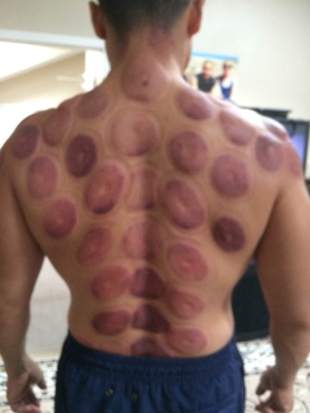
Mama Huang’s son Bin Hu after cupping treatment for back pain.

Huang remembers her farming days with fondness. “My home was on the Hebei plains. There was a river named ChaoBai near our village,” said Huang. The river leads to Beijing. It’s used for transporting food and goods. The river is about 50 meters wide with broad banks and giant trees on each side.  Huang said fishing boats were always on the river, and people loaded fish from a pier on the riverbank.

“I often played there when I was child,” she said.  When the water was shallow I would lead sheep to the river, walk them along the bank and let them to eat grass. It was beautiful and so peaceful. This is my earliest memory.”

Bin Hu remembered when they traveled to the village from Beijing, villagers would line up at the door to get Mama Huang’s free treatments. She prescribed food as remedies. For example, he said she would recommend eating cucumbers and pears to treat constipation. He said taking care of people is a natural extension of her Buddhist faith.

“I was born in a Buddhist family. I have been influenced by Buddhism since my earliest memories of childhood.”

Throughout all the changes, Huang has always meditated daily and constantly reads and contemplates the Sutras of Buddha. She said her deep faith in Buddhism has sustained her, nourished her and helped her maintain her powerful sense of moral values. Moral values she said she hopes to share with her American granddaughter.

“I was born in a Buddhist family,” she said. “My father is a devout Buddhist. “I have been influenced by Buddhism since my earliest memories of childhood.”

cuppingtool
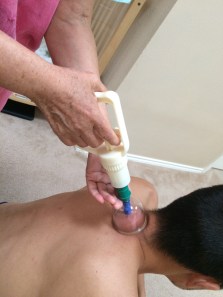
Mama Huang uses the cupping tool for traditional Chinese pain relief.

Years after leaving the farmlands, she exercised daily by walking in the crowded early morning streets in a city of nearly 40 million people. Walking for fitness is something she advocates as part of her traditional Chinese medicine principles. Walking and eating fresh fruits and vegetables, make for a long, healthy life, she said. In Beijing, she walked daily to a produce seller to buy fresh fruits and vegetables for her family’s meals for that day. Before she retired, she stood on a packed bus more than an hour to commute to her job, arriving home late each day to prepare dinner for her two growing boys.

Although Huang bought a washing machine in 1989 for her fifth-story apartment in Beijing, she often continued to hand wash clothes just out of habit. The apartment already featured a shower and modern bathroom. In 1992, she stopped cooking by burning coal and transitioned to an electric stove. In 1999, she got her first air conditioner.

Most major cities in China have all the standard modern elements of big city life in the developed world today, Bin explained.

She delighted in 2006 when her oldest son, Hao Hu, nicknamed Peter, immigrated to Canada to work as an engineer and in 2008 when Bin married an American and immigrated to the U.S. Peter now works for an American company as a Canadian citizen on a NAFTA work visa to the U.S. Bin applied for an immigrant visa for Mama Huang. So, she moved to Texas, and now she walks regularly in the Texas state parks for exercise.

Last year, Mama Huang’s life passed through another drastic change. She lost Zhong, her husband of nearly 50 years. He died of a heart attack and stroke. Huang depended upon her Buddhist faith to sustain her, she said. “Especially in times of change and pain, Buddhism brings peace to my heart,” she said.

Regardless of the challenges she faces, she tries to heal people as much as she is able, she said. Of the 3 million Chinese in North America, most speak the south Chinese language of Cantonese, so Mama Huang is unable to communicate with most people she meets in Texas. Nonetheless, she has provided some relief of chemotherapy side effects for a patron at the San Antonio Cancer Start Center with her traditional medicinal treatments.