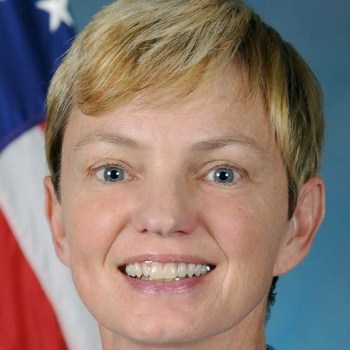


Photo caption: Mama Huang tends her San Antonio spinach garden.
Mama Huang is a country girl. Born Yong Cui Huang in 1948 in the farmlands of Jilin province, China, she still enjoys gardening. A few months after she was born, her family moved to Xianghe County, Hebei Province, another country village. She move from rural life to urban life after she married her Beijing-born husband, Zhong Hu in 1967. After working in Beijing for 20 years, their youngest son, Bin Hu, 44, and daughter-in-law brought them to a new life in San Antonio.
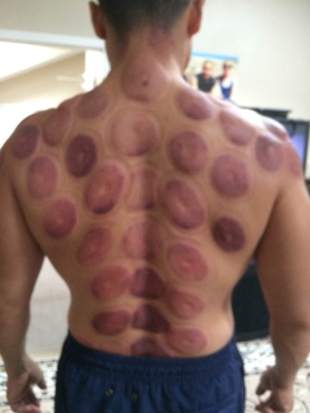
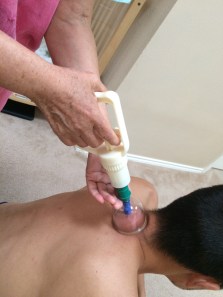
When she was born, women in her village washed everything, including children, in wash tubs outside and carried water from a nearby well to their homes. During the time of Huang’s mother, women in China had been binding their feet to make them 3″ in length. Such small feet were called Lotus feet. Foot binding fell out of practice a decade before Mama Huang was born and, according to a Smithsonian magazine article, February 2015, “the last shoe factory making lotus shoes closed in 1999.” Since childhood, Mama Huang has shown a natural talent for traditional Chinese medicine, including acupressure, cupping and food as medicine. She studied on her own through government sponsored materials and offered to help neighbors.
Huang remembers her farming days with fondness. “My home was on the Hebei plains. There was a river named ChaoBai near our village,” said Huang. The river leads to Beijing. It’s used for transporting food and goods. The river is about 50 meters wide with broad banks and giant trees on each side. Huang said fishing boats were always on the river, and people loaded fish from a pier on the riverbank.
“I often played there when I was child,” she said. When the water was shallow I would lead sheep to the river, walk them along the bank and let them to eat grass. It was beautiful and so peaceful. This is my earliest memory.”
Bin Hu remembered when they traveled to the village from Beijing, villagers would line up at the door to get Mama Huang’s free treatments. She prescribed food as remedies. For example, he said she would recommend eating cucumbers and pears to treat constipation. He said taking care of people is a natural extension of her Buddhist faith.
“I was born in a Buddhist family. I have been influenced by Buddhism since my earliest memories of childhood.”
Throughout all the changes, Huang has always meditated daily and constantly reads and contemplates the Sutras of Buddha. She said her deep faith in Buddhism has sustained her, nourished her and helped her maintain her powerful sense of moral values. Moral values she said she hopes to share with her American granddaughter.
“I was born in a Buddhist family,” she said. “My father is a devout Buddhist. “I have been influenced by Buddhism since my earliest memories of childhood.”
Years after leaving the farmlands, she exercised daily by walking in the crowded early morning streets in a city of nearly 40 million people. Walking for fitness is something she advocates as part of her traditional Chinese medicine principles. Walking and eating fresh fruits and vegetables, make for a long, healthy life, she said. In Beijing, she walked daily to a produce seller to buy fresh fruits and vegetables for her family’s meals for that day. Before she retired, she stood on a packed bus more than an hour to commute to her job, arriving home late each day to prepare dinner for her two growing boys.
Although Huang bought a washing machine in 1989 for her fifth-story apartment in Beijing, she often continued to hand wash clothes just out of habit. The apartment already featured a shower and modern bathroom. In 1992, she stopped cooking by burning coal and transitioned to an electric stove. In 1999, she got her first air conditioner.
Most major cities in China have all the standard modern elements of big city life in the developed world today, Bin explained.
She delighted in 2006 when her oldest son, Hao Hu, nicknamed Peter, immigrated to Canada to work as an engineer and in 2008 when Bin married an American and immigrated to the U.S. Peter now works for an American company as a Canadian citizen on a NAFTA work visa to the U.S. Bin applied for an immigrant visa for Mama Huang. So, she moved to Texas, and now she walks regularly in the Texas state parks for exercise.
Last year, Mama Huang’s life passed through another drastic change. She lost Zhong, her husband of nearly 50 years. He died of a heart attack and stroke. Huang depended upon her Buddhist faith to sustain her, she said. “Especially in times of change and pain, Buddhism brings peace to my heart,” she said.
Regardless of the challenges she faces, she tries to heal people as much as she is able, she said. Of the 3 million Chinese in North America, most speak the south Chinese language of Cantonese, so Mama Huang is unable to communicate with most people she meets in Texas. Nonetheless, she has provided some relief of chemotherapy side effects for a patron at the San Antonio Cancer Start Center with her traditional medicinal treatments.
 35-Year Public Affairs & IT Professional