
Can Trauma Empower Us?

I was reflecting on my life with my PTSD counselor and we considered the following three books:

A man who had a rough rural childhood and survived the Batan Death March:

A man who survived the Holocaust and reflects how even in the concentration camps there were unexpected moments of happiness:

An a Google technician who unexpected lost his 21yo son to a tragic medical error:
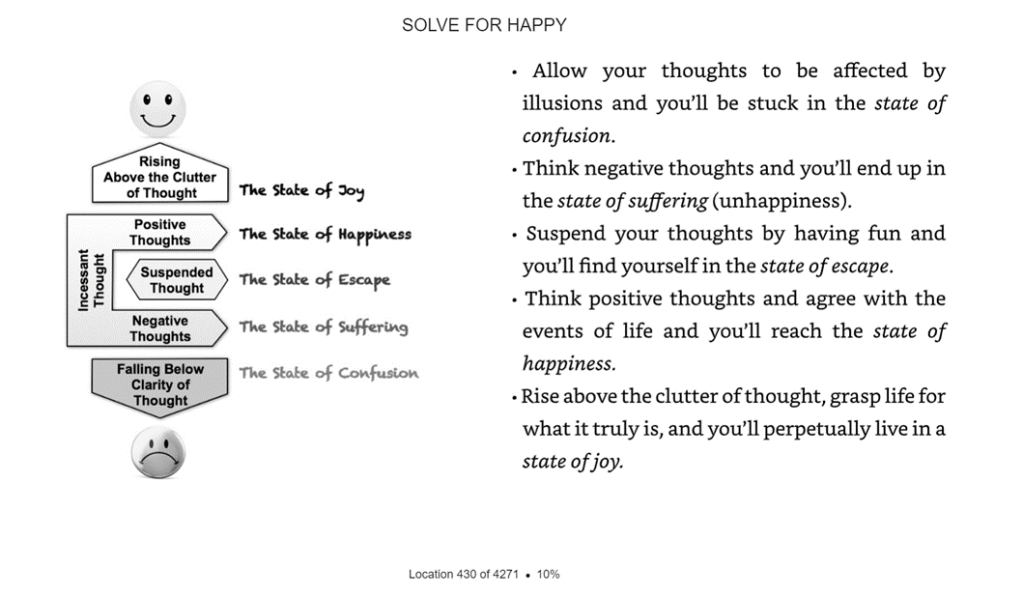
Solve For Happy: Notes for Myself

Solve for Happy

Chapter 1

Activity #1: Make your Happy List.

Activity #2: Try the Blank Brain Test. Find an unpleasant thought and focus on it. Then cause your mind to refocus by reading a few lines of text or blasting your favorite music or trying NOT to think about ice cream.

Chapter 2

Part 2: Chapters 4 through 8:

There are 6 grand illusions that keep you in confusion.

  1. Thought. The little voice in your head is not you.
  2. Self. Who are you?
  3. Knowledge
  4. Time
  5. Control
  6. Fear

Activity: Make a list of your fears

Part 3: Chapter 9

7 blind spots delude your judgement of life.

  1. Filters
  2. Assumptions
  3. Predictions
  4. Memories
  5. Labels
  6. Emotions
  7. Exaggeration

Part 4: Chapters 10 through 14

5 ultimate truths

Here and now

The Pendulum

Love

L.I.P

Who made who?

Solve for Happy

I’m listening to this amazing audiobook while walking through a shaded forest trail alone. I’m recovering from COVID. My husband and 7yo are playing in the creek. The author, Mo, haltingly describes the loss of his 21yo son, a university student. The story and his tone are heartbreaking.

Then he asks what makes me happy.

This, I thought. Listening to an audiobook while walking in the forest.

Watching the butterflies on the butterfly bush.

Taking photos of my mother in law’s garden.

Listening to my daughter laugh or seeing her smile.

Listening to my husband talk about his job with fascination and pride.

My daughter’s excitement today at finding a box turtle by the edge of the water.

What makes you happy?
Butterflies