Leveraging Augmented Reality Games for the National Park Service

I wonder if a public-private partnership with Niantic that creates a whole new game where people can collect real flora and fauna and learn about science rather than the Pikachu.

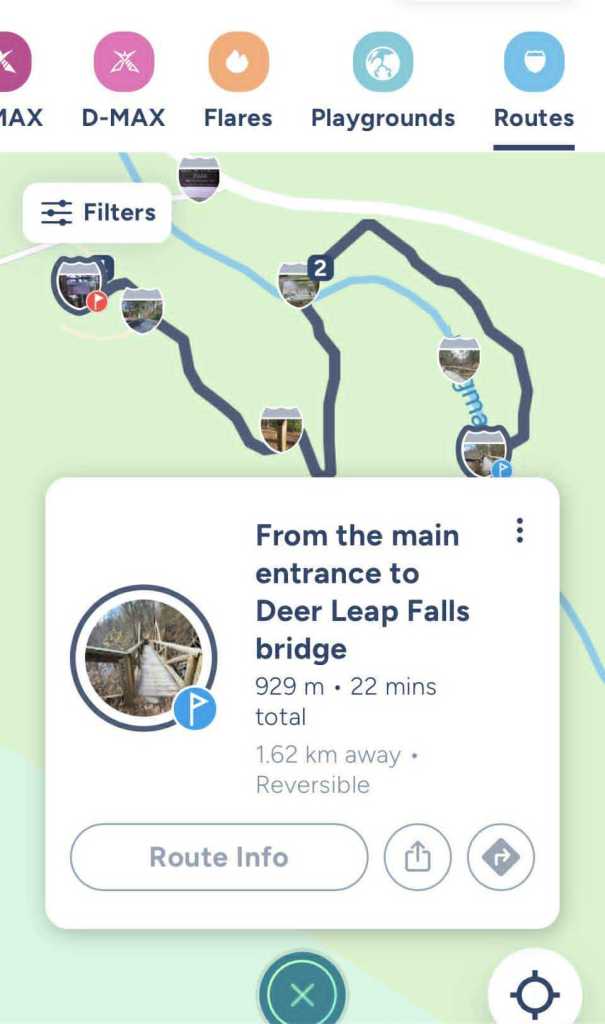
At the beginning of the furlough, the George W. Childs Park, two minutes from my home, had only 3 Pokémon Go stops and only one route. I wanted to use the furlough productively, so I walked the park trails daily for fitness. I discovered that users above a certain level can recommend new poke stops, so I tried. I was able to add nearly 10 new poke stops and a half dozen routes.

More than one billion people have played Pokémon Go worldwide. It is an augmented reality game, which means it is played on a map that mimics the world we live in. Players can collect goodies by spinning poke stops, incubate and hatch eggs by walking, jogging, biking, or riding a skateboard or scooter. Driving in a car does not contribute. The game encourages exploration and movement. The game prioritizes poke stops with unique historical, artistic or cultural value. As such National Parks Service sites are perfectly aligned with the goals of the game.

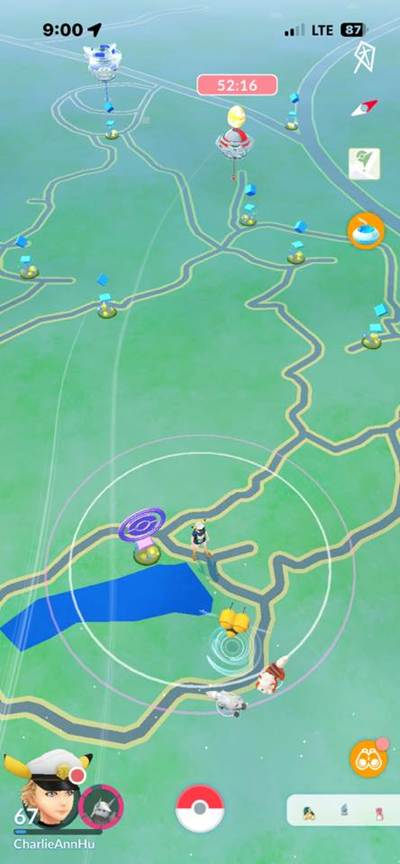
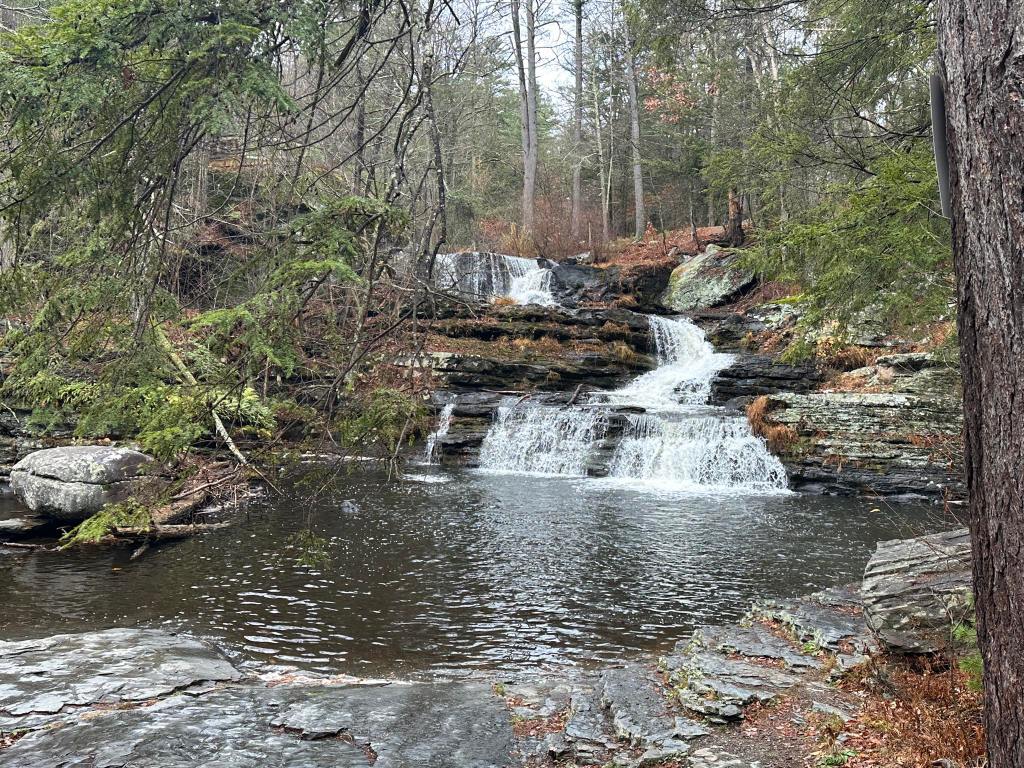
Today, the pocket park (a little less than a mile from the parking lot to the bottom of three waterfalls) has a nice concentration of poke stops, poke gyms and Pokémon routes which I hope would encourage more visitors to visit more often and help parents like me get their kids off the sofa.

Currently the most popular videos games for my daughter’s age group are Minecraft and Roblox. However, both are sedentary games that require no movement. My daughter’s latest eye exam indicated that she is spending too much time looking at objects too close to her. The eye doctor recommended she at least take breaks and focus on distant objects.

Although 350 million active users play Roblox regularly and the bulk of them are ages 9 to 15, I’d prefer my daughter play an augmented reality game like Pokémon Go or Monster Hunters, both by Niantic, because these games encourage movement, exploration and only require users to glance at the screen instead of staying glued to it.

I wonder if this increase in poke stops will increase traffic to the park. I wonder if it will help parents get kids into the wilderness. I wonder if a public-private partnership with Niantic that creates a whole new game where people can collect real flora and fauna and learn about science rather than the Pikachu.

This is the website where Pokémon Go players track their poke stop recommendations.

Here are the 10 poke stops at Childs Park now. They just added one more at the bottom left of this image at the bottom of the pond.

George W. Childs National Park which is located in the Delaware Gap Water Recreation Area is a stunningly beautiful place to enjoy nature.

The Human Condition

Why Governments Fail adds a note to an ongoing global conversation about human existence regarding life, liberty and the pursuit of happiness. The authors argue that in contrast to Montesquieu’s theory that certain regions of the world are too hot to allow for human productivity or the Protestant Ethic theory that only Christians can excel as superior humans, the real contribution to optimal communities is good governance. Or rather that, bad governance is to blame for poverty. He says unlike Jared Diamond’s claim that guns, germs and steel gave Euro America a leg up on Latin, African and Asian cultures, a political structure that allows people to effectively express themselves is the key to nation state success. In short, a government that doesn’t “extract” from or exploit (Karl Marx) the public but rather provides the means such as protections to build companies, including anti-monopoly and intellectual property protections, secures banking structures and provides law enforcement is the fertilizer for take-off.

Certainly, Fukuyama’s writings on governments’ usurpation of violence, endorsing Max Weber’s theory that the state’s legitimate use of violence, suggest that law enforcement has improved social Trust (another Fukuyama book), helping people focus on positive contributions to society.

While Daron Acemoglu and James Robinson, the authors of Why Nations Fail agree that trust is a factor in an effective social structure, they reason that trust is the result of effective governmental institutions like police, courts and laws.

I certainly agree that our social contracts, beginning with the Magna Carta and moving forward through the U.S. Constitution and the Constitutions of many other nations has made a positive contribution to our current state of peace.

Stephen Pinker makes a compelling argument mostly mathematically in his Better Angels of our Nature that we’re living in the most peaceful time in human history. However, he stops short of saying precisely why that is and he might agree with the authors of Why Nations Fail that effective governance provides a positive contribution.

However, I’m not convinced government is the fulcrum from which all other social structures hang. While I don’t believe that Christians have a monopoly on work ethic, I do think spirituality encompassing all philosophies and dogmas including atheism contributes positively to people’s voluntary self-control. After all, all the policies and police we could muster wouldn’t stop humanity if we all wanted to destroy each other. Religion or personal philosophy is at the heart of our public conduct.

Government policy is one of numerous nodes that balance the reality of the human condition in coordination with spirituality, innovation and technological development, creativity and drive. While government can augment or inhibit human nature, our species’ unique intellectual, spiritual and emotional drives are at the heart of the numerous social forces creating our communities.

https://www.britannica.com/topic/state-monopoly-on-violence

Unrestricted Warfare Targets Civilians

Historically, targeting civilians as a part of conflict has been considered immoral. This dates to Sun Tzu, centuries BC, “to besiege cities is the worst form of warfare.” But under the new “unrestricted warfare” rules of Russia, China and others, targeting average Americans has become the forward edge of the battle area. Hacking into the DNC servers, creating FB accounts labeled BlackLivesUSA and urging protests and counter-protests, presumably with the hope of inciting violence, injury, deaths and arrests (Mueller Report) and creating fake news stories that Taiwan stranded their citizens during an outage at the airport in Japan, resulting in a suicide (DOD Strategy for Operations in the Information Environment). How do we fight these immoral efforts that capitalize on of our fundamental freedoms of speech and assembly? https://media.defense.gov/2023/Nov/17/2003342901/-1/-1/1/2023-DEPARTMENT-OF-DEFENSE-STRATEGY-FOR-OPERATIONS-IN-THE-INFORMATION-ENVIRONMENT.PDF

Overcoming Employment Barriers: Literacy, Language, and Professional CDL Written Test Requirements

We need to remove the literacy barrier to one of the top areas of employment in the United States.

I’d like to talk about Universal basic income UBI. There are two key problems with UBI. One is pride and the other is personal finance skills. But before I explain all of this, I want to say upfront that people need and want a living wage.

Universal basic income is a political-economic theory that our society would be better if we simply gave every family one or two grand from the government that they could use in any way they want.

The number one problem with UBI is pride. People want to feel proud of earning their wages and UBI robs people of that pride. According to a book called “Drive,” most people want three things: autonomy and mastery and purpose. UBI might give folks autonomy, but not mastery and purpose.

Work is more than just salary. This ability to be proud as well as earn a living wage, and to feel a part of the community is critical. We need everyone contributing to our society. This is the number one reason why universal basic income is a bad idea.

Another reason why universal basic income is a bad idea is because the vast majority of American citizens do not have enough skill with personal finance. I found this to be particularly true growing up in crushing poverty. I noted with interest reading J.D. Vance’s book Hillbilly Elegy that he described the same dysfunctional relationship with the material world that I grew up with. There was always enough money for cigarettes. Maybe for tattoos or cheap jewelry or bad makeup. But I often wondered whether there would be any food for breakfast when I woke up.

There are reasons that we have problems with personal finance. One of the reasons is because we don’t have enough education so that we can understand things like interest rates and saving and credit ratings. One solution, obviously, is to add personal finance to the curriculum starting in elementary school.

Another problem with personal finance in United States is truth in advertising. A lot of major companies advertise only the monthly payment required for an item purchased on credit. But people need to know the total cost of ownership. This should apply to everything purchased on credit, including vehicles, furniture or appliances, as well as student loans.

Because we lack an understanding of personal finance, giving every family $1,000 or $2000 of universal basic income will not necessarily guarantee each family and their children will have food, clothing and housing. If the money isn’t sufficiently managed, issues like food insecurity and homelessness will persist.

Of course, many of these problems are directly related to mental health and substance abuse, which is a form of debilitating mental health in its own right. There are spirals that go up or down. Unemployed people with or without preexisting mental health problems may become depressed. Depression and its cousin anxiety regardless of whether they are caused by life’s struggles or genetic inherited mental illness can inspired self-medication. Self-medication is often a form of substance abuse if people use illegal drugs. But even legal drugs like alcohol can lead to substance abuse when used as a form of self-medication to treat depression or anxiety.

Of course, people with substance abuse and its comorbid cousin mental illness can struggle in gaining and keeping a job. Difficulties in gaining or keeping a job result in financial problems. Financial problems result in depression or anxiety. And so, the spiral goes on.

The better solution is to break down the barriers to employment to help people earn a living wage. Ideally, a wage that include health benefits so they can get help, if necessary, with substance abuse or other health issues. We need to help people get good quality jobs. We need to help companies who desperately need good employees.

Recently, I asked the governor of the state of Maryland to please make the many CDL tests and study materials available in languages other than English. These tests are required for professional driver jobs. There are two dominate career fields where the bulk of Americans work: retail and professional drivers.

Because people who speak English as a second language or having literacy issues in their own language, they struggle to understand the CDL test materials. This not only robs them of a living wage, but also robs are companies and our schools of having enough professional drivers.

The language included in the CDL test, and the basic driving test uses terms we rarely use in conversations. Words like pedestrian aren’t commonly used anywhere else. We should change the content to more simplified English communication so that everyone can understand it better.

21% of adults in the US read below a 5th-grade level.
75% of Americans who get food stamps struggle with literacy.
43% of adults with the lowest literacy skills live in poverty.

There are many reasons as to why people struggle with literacy. They may have dyslexia or other learning related problems. ADHD. We can make educational materials for professional drivers available in an audio format. Reading shouldn’t be a barrier to entry into a job where they need to look outside the windshield and avoid collisions. Except for passing the test, these professionals are not Supreme Court justices. They don’t read for living.

We can and should help folks with literacy challenges gain effective employment and help the companies and schools who need professional drivers.

We need to remove the literacy barrier to one of the top areas of employment in the United States.

The last barrier I would remove is the test fee. I would waive the test fee professional driving exams for anyone who is not working as well as for anyone who qualifies for food stamps. We need to get people off unemployment and into companies that desperately need professional drivers. And if people can pass the test, the $40 entrance fee is not important.

For companies that give free drivers training to potential employees in exchange for a contract that requires a certain time employed, they should get a tax break.

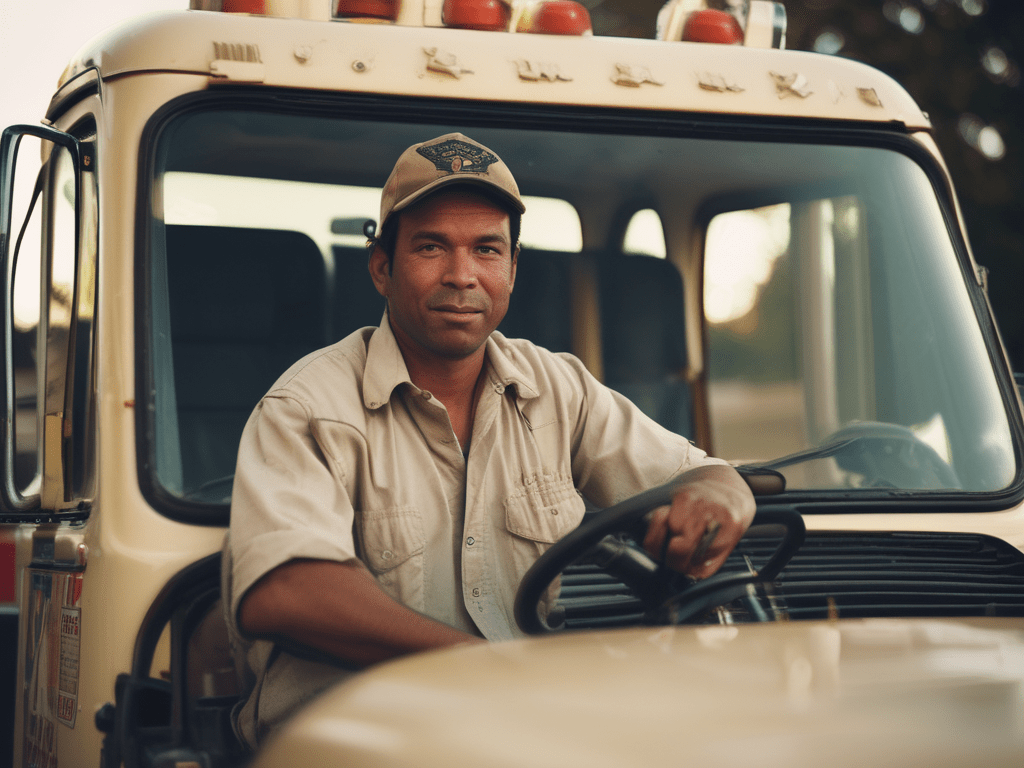
The photo used with this post is a generative AI image. The person doesn’t exist.
Intimate Internet Violence – It All Started with Revenge Porn

Marines United led to many investigations and the first modification of the Uniformed Code of Military Justice in decades.  “Article 117a, UCMJ, colloquially referred to as the UCMJ’s “revenge porn” article, criminalizes the wrongful broadcast or distribution of intimate visual images. Article 117a was codified in response to the 2017 “Marines United” scandal in which nude images of female service members and civilians were posted on Facebook by military members

It all started with revenge porn. Intimate Internet violence. That no laws could stop.

When I began serving as the Public Web lead for the USAF in 2011, I became aware of a bizarre, but serious problem on official government social media accounts. Some couples who broke up practiced what was referred to as “revenge porn.” But they leveled up the game because publishing on their own social media accounts might only reach a few hundred followers. Since the goal was public shaming as a blood sport, many tried to leverage official government social media accounts for the military base or installation where they and their friends lived. So, the admins of the official social media sites of government organizations were playing virtual whack-a-mole denying the publication of insidious invasions of deeply private moments.

Revenge porn is the nonconsensual distribution of sexually explicit images or videos and sometimes without their knowledge that the images or videos exist.

Early Isolated Examples of “Revenge Porn”

A theater manager and photographer secretly took a revealing photo of Marion Manola, a Broadway star, and turned it into an erotic postcard in 1890. Manola sued the men, not wanting to be depicted as a sexual object. “Manola’s case was used as an example by jurists Samuel Warren and Louis Brandeis when they argued for a new legal “right to privacy” in their landmark Harvard Law Review article that same year. https://groups.csail.mit.edu/mac/classes/6.805/articles/privacy/Privacy_brand_warr2.html

In 1903, because of another case involving the unauthorized use of a woman’s photograph, the New York Legislature enacted the first right to privacy in the US and across the common law world, including Australia and the United Kingdom.” https://theconversation.com/in-the-19th-century-a-man-was-busted-for-pasting-photos-of-womens-heads-on-naked-bodies-sound-familiar-168081

In the 1950s when Marilyn Monroe agreed to be photographed nude, but the photos were published in Playboy magazine without her consent in 1953. https://www.biography.com/actors/marilyn-monroe-playboy-first-issue-didnt-pose

In the 1980s, Hustler magazine ran a monthly feature called “Beaver Hunt” which featured nude photos of women submitted by readers. The images often included personal details about the women, such as their hobbies, sexual fantasies, or names, and some women sued the magazine for publishing their photos without permission.

Of course, when the ability to publish was limited by people who had money, means and magazines, the amount of revenge porn was relatively limited. Its explosive growth grew with the Internet. While the individual efforts to post partner porn on official Facebook accounts were usually successfully squashed by the admins or algorithms, the Marines United private Facebook group managed to slide under the radar for a while.

Marines United Facebook – Sharing Sexual Secret Braggadocio Videos

The Marines United scandal became national news in the spring of 2017. A closed Facebook group of some 40,000 members sharing bragging rights by sharing explicit images of their mostly female partners, many of whom were unaware their most intimate moments had been recorded. I wonder if they got their inspiration from the 1990s film Flatliners where one guy records a series of tristes and his fiancé discovers the video evidence of his indiscretions.

Marines United led to many investigations and the first modification of the Uniformed Code of Military Justice in decades.  “Article 117a, UCMJ, colloquially referred to as the UCMJ’s “revenge porn” article, criminalizes the wrongful broadcast or distribution of intimate visual images. Article 117a was codified in response to the 2017 “Marines United” scandal in which nude images of female service members and civilians were posted on Facebook by military members,” according to an article on MilitaryJusticeAttorneys.com https://www.militaryjusticeattorneys.com/blog/2019/october/ucmj-article-117a-criminalizes-revenge-porn-/

The victims from Marines United indicated horrible results from their undesired fame, including stalkers.

Intimate Internet violence through public shame and embarrassment didn’t stop there. It has resulted, not surprisingly, in several suicides.

Fatal Fallout From Publishing Private Sexual Secret Videos

Tyler Clementi’s suicide in the fall of 2022 was a tragic event that brought attention to the issue of cyberbullying and harassment of LGBTQ+ youth. He jumped to his death after his roommate secretly recorded a kiss between Tyler and another young man and posted the covert video to Twitter. His death sparked national conversations about privacy, bullying, and the need for greater acceptance and understanding.

His story also led to increased efforts to prevent bullying and support LGBTQ+ individuals. The Tyler Clementi Foundation, founded by his family, works to prevent bullying and promote safe and inclusive spaces for LGBTQ+ youth.

In 2024, Generative AI became a force for “mutilating” people’s images, creating fake pornographic images of them. This was a new “deep fake” twist on revenge porn, but the public shaming as a blood sport remained overwhelmingly painfully real.

Mia Janin, 14, took her own life after a group of boys bullied her, reportedly pasting girls’ faces on porn stars’ bodies and calling her and her friends the “suicide squad.” https://www.eviemagazine.com/post/girl-14-commits-suicide-boys-shared-fake-nude-photo-suicide-squad

Producing Porn Stars from Public Pics of Random People

In April 2024, Laguna Beach High School administrators launched an investigation after a student allegedly created and circulated “inappropriate images” of other students using artificial intelligence.

While some states have made laws specific to nonconsensual sharing of intimate images and the military’s Uniformed Code of Military Justice has criminalized this act, it seems like we could use better federal criminal law to cover this nationally trending trouble.

DC Dystopian Drift

The tax and revenue paying population of DC has been cut severely, while crime, homelessness, rent, school absenteeism are going up. All trends lead to dystopia. A body in motion at a constant velocity will remain in motion in a straight line unless acted upon by an outside force. Unless there’s a powerful, decisive action, this trend will continue.

We can tell the future. Isaac Asimov wrote a series of books called The Foundation Trilogy that suggested it would be possible to use math and science to predict the future not of any one individual but of major movements of socioeconomic movements. When you think about it, we already do this with things like the Federal Reserve Board trying to adjust inflation. When I do the math, the neighborhoods of our nation’s capital are heading for dystopia.

Let’s look at some of the math for the District of Columbia. In 1999, the population of DC was 521,000 people. In 2022, the population was 672,000. Over those 2 decades, the city increased by 151,000 or nearly 30%. This is just the residents. It does not include everyone who commuted daily to sit in the office buildings. Commuters from the city’s Maryland and Virginia suburbs used to raise the city’s daytime population to more than one million during the workweek.

However, during COVID all the federal employees left the office buildings in DC bringing the office vacancy rate in the District to a record high of just under 20%. The mayor of DC repeatedly asked the President of the U.S. to bring back the federal employees and he made an executive order, but by that time, the federal agencies had already created fully remote policies, coordinated them with a plethora of unions, and published them. Then they documented the positions that could be fully remote and codified them. Then they released building leases, reducing the various organizations’ expenses. It’s impossible to turn back the tide.

Total overall commercial bankruptcies in the U.S. increased 22% in the first quarter of 2024. Hundreds, probably thousands of small businesses in the district relied on those federal employees who have since left the district to remote work from the suburbs and many have moved out of the suburbs into remote areas. A total of 76% of establishments in DC (or a total of 18,224) were small businesses. When the commuters used to come in from the suburbs swelling the district population to more than 1M daily, they/we used to eat lunch there, often breakfast, and sometimes even dinner. We used to shop at pharmacies, and grocery stores, get gas, or do dry cleaning in the district. But that swell of commuters has significantly decreased, robbing thousands of businesses of life-sustaining revenues.

Taxes are also leaving the district. IRS data shows a pandemic-era exodus of mid-to-high earners aged 26-44 from DC, leading to taxable income loss. Migration data from the Internal Revenue Service shows that between 2019 and 2021, during the height of the pandemic, the District of Columbia experienced a net loss of over 16,000 tax-filing households, which equates to approximately 31,000 people leaving the city. This migration resulted in a net loss of more than $3B in annual taxable income so far.

While tax and business revenues are going down, while mid-to-high earners are leaving the city, violent crime is going up. As most major U.S. cities recorded decreases in murders last year, killings in the nation’s capital headed in the other direction: 274 homicides in 2023, the highest number in a quarter century, amounting to a nearly 50 percent increase since 2015. Killing is just one part of the crime spike story. Other violent crimes like carjackings are stealing headlines. Homicides, carjackings, and robberies across Washington, DC, have affected prominent politicians and regular residents alike, leaving many in the nation’s capital fearful of the rising crime. While other major cities saw a drop in a variety of violent crimes, the nation’s capital suffered a 39% increase last year.

Homelessness is also increasing in the nation’s capital. Last year’s data revealed roughly 9,000 people were experiencing homelessness– an 18% increase from 2022.

Rent is going up. Two real estate sites, Zumper and RentCafe, place the median rent for a one-bedroom apartment in D.C. at just below $2,400. Zillow pegs it at more than $2,600.

Absenteeism among DC students is on the rise. Here’s a jaw-dropping number: 60% of D.C. high school students were chronically absent last school year.

Sadly, my conclusion of these trends is an irreversible spiral toward a dystopian community. However, that’s just for the nation’s capital and perhaps some other major cities. For the middle class and upper middle class who are taking on remote work, staying at home, and homeschooling their kids, life will begin to evolve more around their neighborhood in a way that it hasn’t since before women/mothers joined the workforce creating the dual-income household that is ubiquitous today, but that is another blog post.

https://ora-cfo.dc.gov/blog/irs-data-shows-pandemic-era-exodus-mid-high-earners-aged-26-44-dc-leading-taxable-income-loss

https://www.axios.com/local/washington-dc/2024/03/07/high-school-student-absences

https://www.cnn.com/2024/02/05/us/washington-dc-crime-carjackings/index.html

Our Future Looks Rosy, Remote, Revolutionary

A decade from now, our lives will be simply more enjoyable, more friendly, more pleasant completely independent of any change or increase in income of material wealth. Do you think I’m overly optimistic?

There have been so many sociological shifts from COVID. Among the most fascinating to me is the reversal of the centuries old rural to urban migration. Prior to COVID, more than 80% of the world’s population lived in metropolitan areas. While the reversal has only just begun, it will be interesting to see the residential preferences of people who can remote work and don’t need to crowd into urban areas.

First, let’s put RTO to bed.  “Return-to-office died in ‘23,” said Nick Bloom, an economics professor at Stanford University and work-from-home expert.  Yes, large companies like Meta and Zoom made headlines by ordering workers back to the office. But, Bloom said, just as many other companies were quietly reducing office attendance to cut costs.  https://www.usatoday.com/story/money/2023/12/21/remote-work-from-home-trends-2024/71991203007/

In addition to the fact that it’s cheaper for companies not to pay for office space, heating and cooling, Internet and electricity, remote workers report being happier and workers report they are more interested in remote work than in a raise. https://stackoverflow.blog/2023/11/27/are-remote-workers-more-productive-that-s-the-wrong-question/

The demand pull for remote work is going to put increased pressure on companies looking for talent. Where corporations can, they will be pushed to convert positions to remote work eligible over the coming decade. Some 40% of the current jobs can be done from home. https://www.washingtonpost.com/business/2023/05/23/post-poll-remote-work-hybrid-future/ The COVID surge followed by the slower, but continuing trend for remote positions, will free people up to move away from the metropolitan areas. 

Nearly 83 percent of the U.S. population lived in an urban area in 2020, and that number was expected to reach nearly 90 percent by 2050, https://www.statista.com/topics/7313/metropolitan-areas-in-the-us/#:~:text=Nearly%2083%20percent%20of%20the,nearly%2090%20percent%20by%202050.

But wait.

The data showed more residents moved out of the Golden State than into it in 2023, with 58% of California moves being outbound in 2023. California saw its first-ever population decline in 2020 when the state imposed rigid lockdowns during the COVID-19 pandemic. Housing prices are falling in cities like Phoenix, Pittsburg, Salt Lake City, San Francisco, New York City, Austin, Texas and Chicago where people are moving out toward areas with cheaper costs of living. https://www.gobankingrates.com/investing/real-estate/cities-where-home-prices-are-falling-most-this-year/ 

“Connecticut is gaining a huge bonus from the remote work and the pandemic flight from New York City,” says Dowell Myers, a professor and director of the Population Dynamics Research Group at the University of Southern California. 

Some people leaving concentrated areas are moving to traditional retirement states like Arizona and Florida for the year round summer experience. But many are moving to states that aren’t known for their metropolitan centers including North and South Carolina, North Dakota, Montana, Oklahoma and Idaho.

But the service industry still exists. Even though computer programmers, project managers and accountants can do their jobs from anywhere, people working in retail and service industries still have to go to brick and mortar locations. However, the services will have to follow the migrant herds leaving the cities and going to the outback of Montana. So even those jobs will be exiting the populated centers, albeit slowly. 

How will all these changes impact the social fabric of our country? 

People in cities often ignore each other, but people in the country greet each other. This sociological change may be amplified by the sitting-is-the-new-smoking reality. Remote working office etiquette will change. One possibility is that meetings can be labeled screen visibility required meaning the participants will be best served by sitting at a screen. But more abstract theoretical discussion meetings will be labeled “walk-friendly.”  Since remote workers on discussion meetings can and will walk around their neighborhood, we’ll see a renaissance of the local community. We’ll have an increased ability to recognize our neighbors. 

The homeschooling trend that started with COVID will continue to increase both because parents are in the house remote working so they can provide security, such as calling 911 if there were an emergency, and because a new industry is growing up around the new demand for homeschooling. Online live or webapp courses will allow elementary, middle and high school students to study what they want, when they want and as long as they can show sufficient progress that parents can focus on remote work, kids will get more autonomy, mastery and purpose. 

https://www.washingtonpost.com/education/interactive/2023/homeschooling-growth-data-by-district/

School will become a series of day camps and activities like Singapore Math classes, Mathnasium and Coding camps, focused on interactive and entertaining activities as well as educational activities because the students have a say in what they are being taught and how and they can vote with their feet.

The dictatorship of being involuntarily committed to a particular school district and classroom based on a zip code will be replaced with choice.  Consumer choice has been a trend in the U.S. starting in the 1920s as documented in Jason Voiovich’s Booze, Babe and the Little Black Dress, but elementary education has so far managed to escape the conversion of choice. Not any more. The rise of homeschooling and unschooling is doing more than private schools or charter schools ever could. 

Backyard vegetable gardens, raising chickens and mason bees have all received a surge as a result of the remote work move. People who are at home and who are migrating to more remote locations with more space have the option of growing their own food. And they are both because it tastes good and because gardening is a great hobby. Homesteading YouTubers are making bank on this new trend with websites like “3 Mississippi” about a family that left San Diego to move to Houston … I mean Houston, MS and 30+ acre farm.

A decade from now, our lives will be simply more enjoyable, more friendly, more pleasant completely independent of any change or increase in income of material wealth.

Do you think I’m overly optimistic?

The future of education will be choice, characterized by an industry focused on live online or webapp courses and homeschooling local activities the way kids do sports activities now. There will be Singapore Math and coding camp and these will be the bulk of self selected courses for a significant number of American kids.

Can Trauma Empower Us?

I was reflecting on my life with my PTSD counselor and we considered the following three books:

A man who had a rough rural childhood and survived the Batan Death March:

A man who survived the Holocaust and reflects how even in the concentration camps there were unexpected moments of happiness:

An a Google technician who unexpected lost his 21yo son to a tragic medical error:

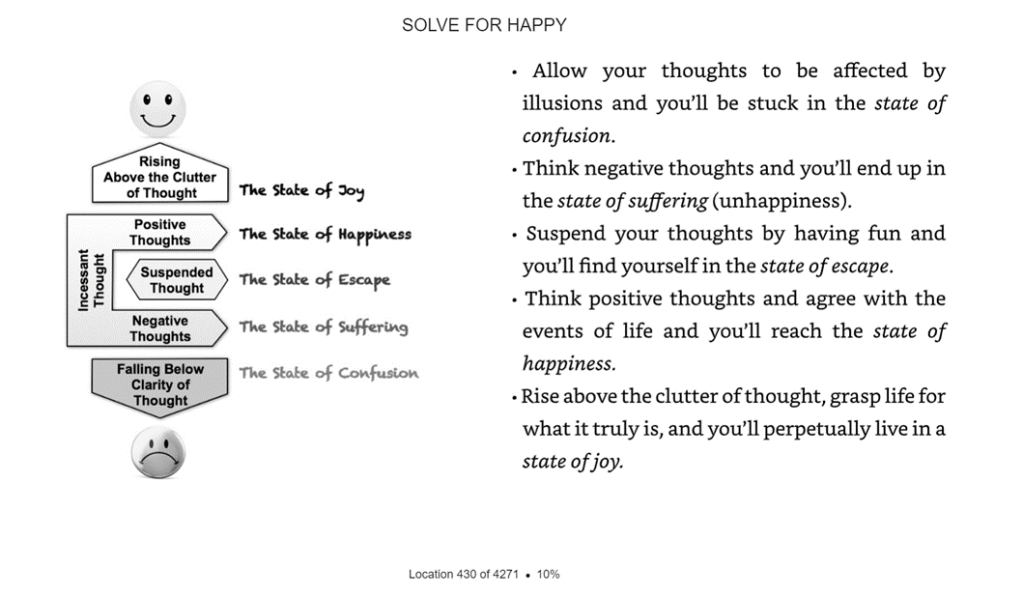
Solve For Happy: Notes for Myself

Solve for Happy

Chapter 1

Activity #1: Make your Happy List.

Activity #2: Try the Blank Brain Test. Find an unpleasant thought and focus on it. Then cause your mind to refocus by reading a few lines of text or blasting your favorite music or trying NOT to think about ice cream.

Chapter 2

Part 2: Chapters 4 through 8:

There are 6 grand illusions that keep you in confusion.

  1. Thought. The little voice in your head is not you.
  2. Self. Who are you?
  3. Knowledge
  4. Time
  5. Control
  6. Fear

Activity: Make a list of your fears

Part 3: Chapter 9

7 blind spots delude your judgement of life.

  1. Filters
  2. Assumptions
  3. Predictions
  4. Memories
  5. Labels
  6. Emotions
  7. Exaggeration

Part 4: Chapters 10 through 14

5 ultimate truths

Here and now

The Pendulum

Love

L.I.P

Who made who?