Our Daughter’s Chinese Class Starts Tomorrow

Here we go again.

《小小智慧树》 主题歌曲 “三条鱼”
一条鱼水里游
孤孤单单水里游
两条鱼水里游
摇摇尾巴碰碰头

两条鱼水里游
摇摇尾巴碰碰头
三条鱼水里游
大家一起做朋友
大家一起做朋友

“Xiǎo xiǎo zhìhuì shù” zhǔtí gēqǔ"sāntiáo yú"
yītiáo yúshuǐ lǐ yóu
gū gūdān dān shuǐ lǐ yóu
liǎng tiáo yúshuǐ lǐ yóu
yáo yáo wěibā pèng pèngtóu

liǎng tiáo yúshuǐ lǐ yóu
yáo yáo wěibā pèng pèngtóu
sāntiáo yúshuǐ lǐ yóu
dàjiā yì qǐ zuò péngyǒu

Little Tree of Wisdom" theme song "Three Fishes" 
A fish swims in the water 
Lonely swim in the water 
Two fish swim in the water 
Wagging his tail and meet his head 
Two fish swim in the water 
Wagging his tail and meet his head 
Three fish swim in the water 
Make friends together 
Make friends together

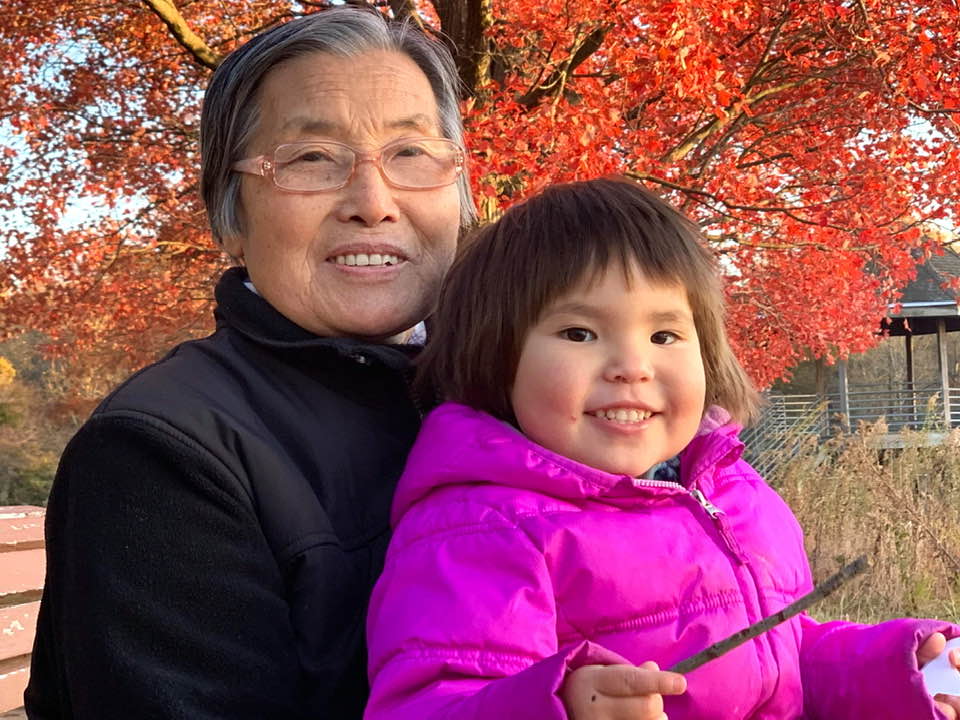
San Antonio born “V” and her rural Chinese grandma.

What Can We Do About the Information War?

I’ve been reading a lot about “fake news.” I read the Mueller Report.

I read Enemies where the FBI and JFK told MLK that his speechwriter was on the Moscow payroll.

I’m reading Information War that talks about Russian efforts to divide and conquer the US using racial tension going back as far as the 1930s.

I asked Oshawn Jefferson what else to read. This is what he added to my list:

This one, Disinformation by LtGen Pacepa which Oshawn recommended, was already in my iPhone, and I had started reading it, been shocked by it, but moved on to study disasters for my new USACE job. Looks like it’s back to information warfare.

This one, I read in grad school, but I think I could use to read it again. A companion book, I won’t need to re-read as it left an indelible mark is Dr. Cialdini.

This one looks amazing. Published by Defense Press.

This one published this year wasn’t on the list, but looks good.

Also looks interesteding.

I read this one a couple of years ago and it was really good.

I also read lies my history teacher told me which, of course, is about how we in the USA fail to tell the truth, the whole truth and nothing but the truth about ourselves. But there’s also this, which looks really good.

This one looks a lot like Buzz which I read for grad school and it was quite insightful.

Here’s the Anatomy of Buzz, which I highly recommend.

This one from the Oshawn Jefferson list:

I do wonder how much of our current problem is due to Facebook and Google ads which killed the ad revenue of newspapers and news rooms and depleted bone fide journalists who have been replaced by the citizen journalist. While I love the rise of the citizen journalist, I bemoan the loss of the Dan Rathers of the world.

Disaster Study

I’m listening to a series of audiobooks to help enlighten my understanding of the ecosystem of organizations including the U.S. Army Corps of Engineers where I started working in October last year. This constellation of government agencies including the likes of FEMA, HHS, DHS, USACE, CDC and local, state, county governments and first responder agencies come together when crisis strikes. How they manage chaos, not only that of natural disasters, but also of bureaucracy is fascinating.

The Great Influenza of 1918 demonstrates the critical value of nursing, scientific methodology and public-private partnerships. https://www.amazon.com/Great-Influenza-Deadliest-Pandemic-History-dp-0143036491/dp/0143036491/ref=mt_other?_encoding=UTF8&me=&qid=1594750104


The Next Pandemic discusses Hurricane Katrina, among other disasters, at length. One of the most fascinating problems was random people showing up saying, I want to help, but no one had credentialed them. How do you know if someone is a doctor when they show up in the middle of chaos and say, “I’m a doctor.” According to this author, this is one of the most valuable contributions of the Red Cross. https://www.amazon.com/Next-Pandemic-Against-Humankinds-Gravest-ebook/dp/B00PSSCU70/ref=tmm_kin_swatch_0?_encoding=UTF8&qid=1591819030&sr=8-2


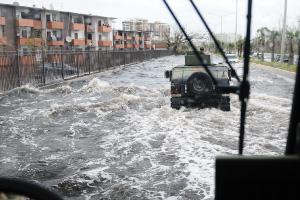
Hurricane-update-blog

The Great Deluge illustrates the value of highly skilled and competent local government in his opening description. When Plaquemines Parish President Benny Rouselle declared a mandatory “Phase I” evacuation on August 27 – that Saturday when there was still plenty of time to flee – parish employees fanned out on pre-appointed routes, picking up residents with special needs and busing them to state-run shelters in Shreveport, Alexandria, Houma, and Lafayette. The parish not only knew which residents required special help, it knew exactly where they lived. “We were putting them on buses that Saturday morning and, you know what” Rouselle recalled. “When we ran out of drivers, I went up to evacuees, determined which ones had valid driver’s licenses and knew how to drive a stick and told them to bring folks north. They were tapped … deputized or whatever you want to call it. They were now official Parish driver. Out… Out…Out. I wanted everybody out of Plaquemines Parish. We were able to get our people out.”

Yes, there were lots of failures well-documented in Katrina, but what I’m amazed at is what went right. This is a great description of highly effective government.

The Great Deluge: Hurricane Katrina, New Orleans, and the Mississippi Gulf Coast

by Douglas Brinkley

The rising tide was a heart wrenching description of a horrific flood and the loss of hundreds of people, but it created the impetus for the Flood Control Act of 1928 which laid the initial groundwork for federal-state integration in emergency response.

Undaunted Courage about the early origins of engineering for the US Army in the science and observations of Lewis and Clark.

Undaunted Courage: Meriwether Lewis, Thomas Jefferson and the Opening of the American West: Meriwether Lewis Thomas Jefferson and the Opening

by Stephen E. Ambrose  | Sold by: Simon and Schuster Digital Sales Inc | Apr 23, 2013

I just started reading the Perfectionists. It’s a compelling look at the history of engineering.

Simultaneous, I started reading The Swamp and it’s an eye-opening text.  I love wilderness, but always considered the swampland as basically hellish, but the book deeply describes the ecosystem in all it’s beauty and amazing biodiversity. I even want to visit the Everglades after just reading the first 2 chapters.

An extraordinarily terrifying book The Big Burn centered in places where I grew up in the Northwest.

The Big Burn: Teddy Roosevelt and the Fire that Saved America

by Timothy Egan  | Sep 7, 2010


Colleagues have recommended these books, but I haven’t gotten to them yet:

Lanterns on the Levee: Recollections of a Planter’s Son (Library of Southern Civilization)

by William Alexander Percy  | Oct 1, 2006


This book is currently the #1 seller in water supply and land use:

Rivers in the Desert: William Mulholland and the Inventing of Los Angeles

by Margaret Leslie Davis  | Apr 1, 2014

Mountains, Men, & Rivers Hardcover – January 1, 1954

#1 Best Seller in Water Supply

Cadillac Desert: The American West and Its Disappearing Water, Revised Edition Kindle Edition

The King Of California: J.G. Boswell and the Making of A Secret American Empire 

The Girls of Atomic City: The Untold Story of the Women Who Helped Win World War II Kindle Edition


The Ken Burns Documentary on Lewis and Clark:

The Los Angeles River: Its Life, Death, and Possible Rebirth (Creating the North American Landscape) Paperback – April 30, 2001

Los Angeles River (Images of America: California) Paperback – January 16, 2008

Ann has discovered how to make Alexa read her a story – Her Choices

The Dance of the Caterpillars (Chinese Edition) audiobook cover art

3m
Listen now
You downloaded this title

The Dance of the Caterpillars audiobook cover art

3m
Listen now
You downloaded this title

Clifford the Big Red Dog (Portuguese Edition) audiobook cover art

3m
Listen now
You downloaded this title

The Very Hungry Caterpillar audiobook cover art

Finished
Listen now
You downloaded this title

Alphabet Alliteration audiobook cover art

4m
Listen now
You downloaded this title

The Dance of the Caterpillars (Bilingual German-English) audiobook cover art

4m
Listen now
You downloaded this title

The Very Quiet Cricket audiobook cover art

Finished
Listen now
You downloaded this title

Your First Listen audiobook cover art

4m
Listen now

Is Your Mama a Llama? (Portuguese Edition) audiobook cover art

5m
Listen now
You downloaded this title

There Was an Old Lady Who Swallowed a Fly audiobook cover art

Finished
Listen now

Andy and the Lion audiobook cover art

5m
Listen now

Alphabet Alliteration audiobook cover art

6m
Listen now
You downloaded this title

Where Hummingbirds Come From audiobook cover art

6m
Listen now
You downloaded this title

Happy Birthday Moon audiobook cover art

Finished
Listen now
You downloaded this title

How the Fox Got His Color audiobook cover art

1m left
Listen now
You downloaded this title

The Tale of Two Bad Mice audiobook cover art

7m
Listen now

The Tale of Peter Rabbit audiobook cover art

8m
Listen now
You downloaded this title

Interview with Nancy Yi Fan audiobook cover art

8m
Listen now

Rapunzel audiobook cover art

8m left
Listen now
You downloaded this title

Der Schneemann audiobook cover art

10m
Listen now
You downloaded this title

Where Hummingbirds Come From (Bilingual German-English) audiobook cover art

10m
Listen now
You downloaded this title

How the Fox Got His Color (Bilingual German-English) audiobook cover art

10m
Listen now
You downloaded

How the Fox Got His Color Bilingual Chinese English (Chinese Edition) audiobook cover art

1m left
Listen now
You downloaded this title

Where Hummingbirds Come From audiobook cover art

11m
Listen now

The Emperor's New Clothes audiobook cover art

El Canto de las Palomas  audiobook cover art

13m
Listen now
You downloaded this title

Gift of the Magi audiobook cover art

  • Gift of the Magi
  • By: O. Henry
  • Narrated by: Wesley Mann
  • interactive rating stars


    Write a review

  • Jim and Della Dillingham Young are a couple very much in love. But they can barely afford their one-room apartment….
  •   Mark as Finished

14m
Listen now
You downloaded this title

Das Geschenk der zwei Weisen audiobook cover art

15m
Listen now
You downloaded this title

The Tinderbox audiobook cover art

15m
Listen now
You downloaded this title

The Fisherman and His Wife audiobook cover art

17m
Listen now
You downloaded this title

Tom Thumb audiobook cover art

Cinderela audiobook cover art

18m
Listen now
You downloaded this title

Minty audiobook cover art

Hansel y Gretel audiobook cover art

  • Hansel y Gretel
  • By: Larry Carney
  • Narrated by: Jorge Lan
  • interactive rating stars


    Write a review

  • Hansel y Gretel son dos ni?os hambrientos perdidos en el bosque que se encuentran con una maravillosa casa hecha con pan de jengibre….
  •   Mark as Finished

Les misérables audiobook cover art

Le Chat noir audiobook cover art

  • Le Chat noir
  • By: Edgar Allan Poe
  • Narrated by: Alain Couchot
  • interactive rating stars


    Write a review

  • Le Chat noir relate l’implacable chute d’un homme. C’est l’une des nouvelles qui ont assuré la célébrité d’Edgar Poe, et ont décidé Charles Baudelaire…
  •   Mark as Finished

31m
Listen now
You downloaded this title

The Five Crayons audiobook cover art

Rikki Tikki Tavi audiobook cover art

Rikki Tikki Tavi audiobook cover art

Rip Van Winkle audiobook cover art

39m
Listen now

Rikki-Tikki-Tavi audiobook cover art

34m left
Listen now
You downloaded this title

Hänsel und Gretel audiobook cover art

A Visit to Grandma audiobook cover art

The Missing Cat audiobook cover art

The Adventure of the Blue Carbuncle audiobook cover art

Rikki Tikki Tavi audiobook cover art

Cinderella [Russian Edition] audiobook cover art

Holiday Classics by O. Henry audiobook cover art

50m
Listen now
You downloaded this title

Beauty and the Beast audiobook cover art

The Gnomes of Knot-Hole Manor audiobook cover art

Mark Twain erklärt die deutsche Sprache audiobook cover art

1h 7m
Listen now
You downloaded this title

5 Lendas Brasileiras audiobook cover art

El Fantasma de Canterville [The Canterville Ghost] audiobook cover art

The Legend of Sleepy Hollow audiobook cover art

Where Do We Go From Here audiobook cover art

Oliver Twist audiobook cover art

Alice no País das Maravilhas [Alice in Wonderland] audiobook cover art

  •  Mark as Finished

Homeschooling Ann

Today, while Ann and I walked around the neighborhood and she sat in the beachwagon, watching her iPad, I asked her questions from time to time. Que color es este carro? Yo no se, she responded. Negro? Yes! Negro. Que color es este casa? Que color es este flor?
She did single digit math with Grandma and the discussed it in Chinese.


I played piano when she was in the bath and predictably as soon as she got out, she threw me off the piano and insisted that she play the piano. Smirk. She never plays the piano if I ask her. Only if I start playing myself and she can bully me off the keyboard.
Dad and grandma took her to a nearby open park today. No playground. Just wide open spaces for exercise and running and jumping.

Haven’t been doing much Tae Kwon Do. We have been doing some writing on the computer keyboard as she doesn’t see much point in writing words on paper.

SillyBillieAnnWenHu

Can CoronaVirus Improve US Quality of Life?

My husband was in China for SARS and Avian flu. He said all the gyms, clubs, community centers were closed. There were police outside the grocery stores taking people’s temperature. No one allowed inside with a fever.
He said a lot of people lost their jobs; homelessness increased. Many people couldn’t pay mortgages and committed suicide. He also says I’m naively optimistic.
But I wonder if there isn’t a silver lining in this cloud. We have a lot of technologies we have been experimenting with, but haven’t yet brought online.
We telework, but have only exploited that option to about 10% or 20% of its potential. And teleworking has so many advantages, including reduced pollution and greenhouse gas emissions due to lack of physical transportation. In major cities, the majority of people spend an hour on average just getting to or from work. All that time could be put to better use and the reduction in fossil fuels could be great.
People driving to work every day to stare at a computer screen for 8 hours is idiotic. Oh, but the meetings! Yes, those can be done online too. Our problem is a human bum in every chair is the way we’ve always done it. Maybe it’s time to do it differently to the improvement of quality of life for Dilbertville dwellers everywhere.
We have self-driving electric cars, but haven’t yet authorized them on the roads. Maybe if we trade out our taxis with people for taxis without people and create some kind of automatic sterilization process, we could get electric self-driving cars on the roads sooner.
Doctors can and probably should videoconference patients at home. I can certainly have the same conversation with my doctor via video conference that I had yesterday when she suspected I had strep, but determined it was just post nasal drip from seasonal allergies. I can dial in by videoconference, talk; she can order tests and I can go to a local kiosk for vitals and test. She can call me back and tell me her diagnosis, order prescriptions online and CVS delivers meds to my door.
We can shop online even more than we already do. Someone commented on one of my FB posts that we should all handle packages delivered to our homes with plastic gloves, but the truth of the matter is, most packages are mostly handled by robotic machines. There is one guy or gal who actually brings it to your door, but the number of human hands that is involved is remarkably few compared with going into a major supermarket. Amazon’s fulfillment warehouses are a marvel of modern technology with relatively few humans in sight. Items are pulled off the shelves, boxed, labelled and sent out without touching a human.
More online customized classes not only at the university level, but for high school, middle school and elementary school too. Yes, students need socialization, but much of school time is sitting silently in a chair which is hardly a social experience. My daughter’s piano teacher offers online piano classes for times when students or more often parents are unable to attend class. I doubt we’ll find any replacement for gymnastics, Tae Kwon Do or pony riding classes, but those are fun enough to warrant attending in person anyway.
My hope is that coronavirus creates a new standard for the use of the new technologies we have, but haven’t actually leveraged.

My Niece was Treated Nicely in a Job Interview

AllDolledUpKimberlyTilleyMy niece was treated nicely in a job interview. Yes, it comes as a surprise. She got addicted to Meth. I’m not going to apologize and neither should she. After 3+ years clean, she had a relapse. She was caught with drug paraphernalia and spent a couple of days in prison. She explained all this to both companies that interviewed her. One brilliant hiring official said all that matters is that you got clean. Both companies hired her.
It shouldn’t be so shocking, but people have treated her terribly in the past. Some called her a junkie. I’ve heard people refer to her as garbage. According to the National Institute on Drug Abuse (NIDA), by the time individuals reach their senior year of high school, 70 percent will have tried alcohol, 50 percent will have abused an illicit drug, 40 percent will have smoked a cigarette, and 20 percent will have used a prescription drug recreationally, or for nonmedical purposes. With the OxyCotin scandal dragging down the national life expectancy and driving up the number children in foster care due to parents in rehab or worse, in morgues, we need to rethink how we classify people who are fighting addiction of any type.
Traditionally addiction has been viewed as a discipline problem, not unlike the way we fat shame people under the assumption that they have any control over their body weight. Reading the Secret Life of Fat, I learned we don’t know shit about fat. In fact, fat fights to stabilize the body’s weight and chances are pretty good, if you see anyone obese, her or she is most probably suffering from an undiagnosed and very possibly unknown medical illness. https://www.amazon.com/Secret-Life-Fat-Science-Understood/dp/0393244830
But back to addiction. Everything from alcoholism to drug addiction is generally viewed with scorn in our communities. As a part of a sociology of health undergraduate class in 1996, I visited Narcotics Anonymous groups, and what I saw were people fighting a heroic struggle. While it’s true sometimes they stumble, they can and do win, and that’s an extraordinary achievement that I think no one outside that world can truly appreciate.
Now that OxyCotin has brought to light what has actually always been true, that doctors, lawyers, dentists and other highly educated and well-paid people also fall into addiction. It’s not only those on the lower end of the economic spectrum. Everyone is susceptible. Please be kind to people who tell you they are addicts. And try to understand what an incredible achievement it is for them to get and stay clean and sober.

Building Confidence in a Toddler

Of course, we want our daughter to be successful. Every parent does. But what exactly does that mean? And how do we get there? Let’s say, rather tongue in cheek, that we wanted Ann Hu to become President of the United States. Actually, I think fame is a painful existence, and that job ages people prematurely, but if she really wanted that, I’d support her. So, how does one make a 4-year-old into a future president? Well, statistically speaking, the 3 institutions that have graduated the highest number of people who went on to that public office are the Naval Academy, Harvard University and West Point.
Now we’re talking! Huge numbers of parents around the world dream of their child being accepted to and graduating from Harvard. Particularly in Asia, where brand fetishism is globally disproportionate, Harvard is sometimes the quintessential definition of academic success. And in Asian, in pursuit of this goal, a perfect SAT is considered a milestone to achieve that goal. However, lots of Asians, both US born and born abroad have been bringing lawsuits against American universities because universities don’t make decisions based purely on grades, transcripts and SATs. Most have some vague language on their websites about a whole person concept or well rounded, etc.
Obviously, the service academies, including West Point, the Naval Academy and the Air Force Academy also look at SAT/ACT scores and transcripts, but they also require a physical fitness test and like the SAT goal of Asian Harvard wannabes, I’ll assume that a perfect score on the fitness exam is probably the goal to shoot for.
Most universities, especially Ivy League and the service academies talk a lot about demonstrated leadership skills. Back to a new version of how to build a 4-year-old into a President, how do you help a 4-year-old develop leadership? I learned from a colleague that the Air Force Academy decision makers value Civil Air Patrol experience. I’ve read a lot of organizations both government and corporate like Eagle Scouts. Scouts starts at age 5 and civil air patrol begins at age 12. So, now, we’re getting a little closer to 4 years old.
What makes leadership? Obviously, many would say the ability to influence people, but Marines would likely say, someone who by their actions can inspire people. I spent 13 years in the Marine Corps. Marines have a set of leadership traits: Bearing (outward emotional control, which is a part of emotional intelligence), Courage, Dependability, Decisiveness, Enthusiasm, Endurance, Integrity, Initiative, Justice, Judgment, etc. A detailed discussion of the list is here: http://www.txdevildog.com/backbone-usmc-leadership-traits-jjdidtiebuckle/
Let’s focus on Courage, which is a heady word at any age. The Marine Corps informed me around the time I turned 18 that I should try to develop courage, which is a mildly terrifying assignment, seemingly mission impossible. However, in the same boot camp discussion, they defined courage as the ability to act when you’re scared. Marine Corps boot camp also gave me a series of physical activities to engage with fear, including meeting my raging drill instructors, rappelling from a 50-foot tower on the wall and from the “hell hole”, throwing a live hand grenade, qualifying with a rifle and the most horrifying for me, swim qualification. I think rappelling is one of the best activities in Marine Corps boot camp. When a late age teen stands on the 50-foot edge of the tower, most are afraid. Once they successfully get to the bottom and all will, they suddenly lose their fear and gain confidence.
Let’s go back to toddlerhood and talk about fear and confidence which take on a totally different scale at this age. But before we get there, let’s talk about autonomy. I have 150 sky dives and a USPA C license in skydiving. I trained with and participated in a couple of canopy relative work competitions with an older team in California in the 1990s. Our team had one rule. The person receiving the canopy dock, which is the person who could careen to earth in a silken parachute funeral shroud, is the only person allowed to opine on the quality of the dock. If the person receiving the dock feels nervous, scared or uncomfortable, they fold up their legs and the other parachute flies right under, never connecting to the stack. This is to say that fear is personal and the only person with a right to decide what is fearful is the person experiencing fear. For some crazy reason, we lose our sense of respect when dealing with children.
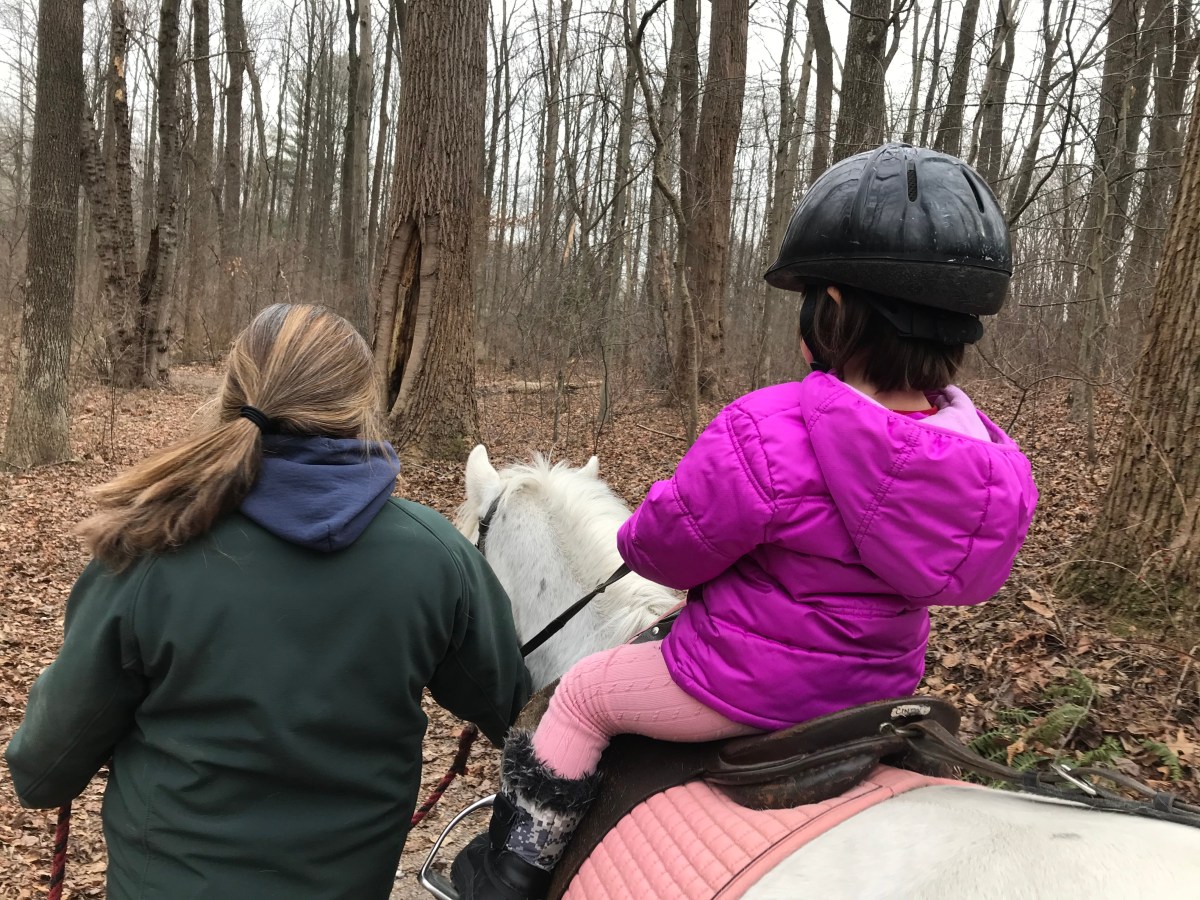
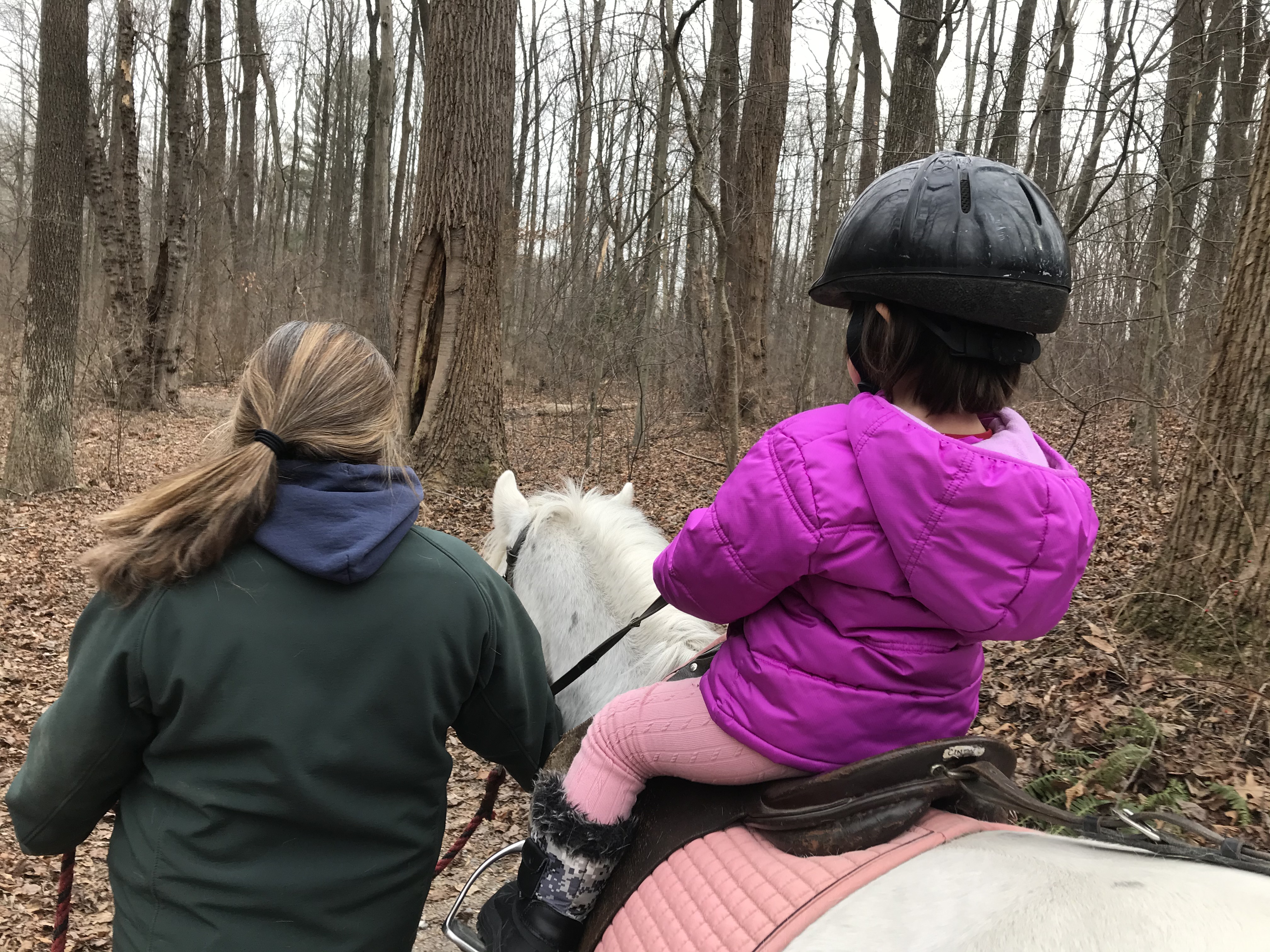
Keeping autonomy in mind, I have tried to help my daughter safely engage with the emotion of fear. Lots of things are scary at first, like swimming classes, ice skating classes, pony riding classes. We have practiced deep breathing to take the edge of fear. That said, when she says she’s scared, I ask the instructors to let her sit out. Patience is a critical element of a child’s engagement with fear. Perhaps one of the most comical experiences was a horse ride in Arizona. She wanted on the horse, but when I lifted her up to the western saddle of a full-sized horse and she was looking down at me, she started crying. I asked her if she wanted off the horse. This is where it gets funny. She said no. OK. What did she want me to do? Hold her hand. OK, I held her hand. A good 10 minutes while she cried and refused several more offers to remove her from the horse. We were in the sun in Arizona and she complained it was too hot. I felt hot too. I suggested we move the horse two steps ahead to the shade. She agreed. However, when I started to walk to the front of the horse, to use the lead rope to move it forward, Ann complained. She wanted to hold my hand. I explained that I couldn’t move the horse out of the sun while holding her hand. We sat there a few minutes more. Then she agreed I could move the horse. We sat under the tree another 10 minutes. The crying subsided. I held her hand. Ann said she wanted to drink water. I did too. It was really hot. I explained that we had to go back to the barn to get our water bottle, so I’d need to walk the horse about 5 steps. She agreed, but complained as soon as the horse started to move. I held her hand. We waited. She complained again. I explained I had to let go of her hand to move the horse. She agreed. I moved the horse back to the barn and she whimpered as the horse walked. We got the water. We stood for another 10 minutes. Around the final 15 minutes of the one hour, she asked me to walk. She complained it was too fast. I stopped and started the horse because there was never a speed slow enough for her comfort.
Ann has had dozens of experiences like the horse where I allow her to be afraid, but provide whatever support she asks for as she negotiates her own fears. Just in the last few weeks, I’ve noticed an impressive improvement in confidence. I think confidence is a key element of leadership.
While we engage her fears, we also talk a lot about cars and strangers. I don’t want Ann to be fearless. Fear provides a critically important element of survival in that it often prevents us from doing dangerous things. I want her to critically analyze risk and danger and determine if she should or should not do something not purely based on whether it is frightening but on whether it is dangerous.
TaeKwonDoPrincessElsa

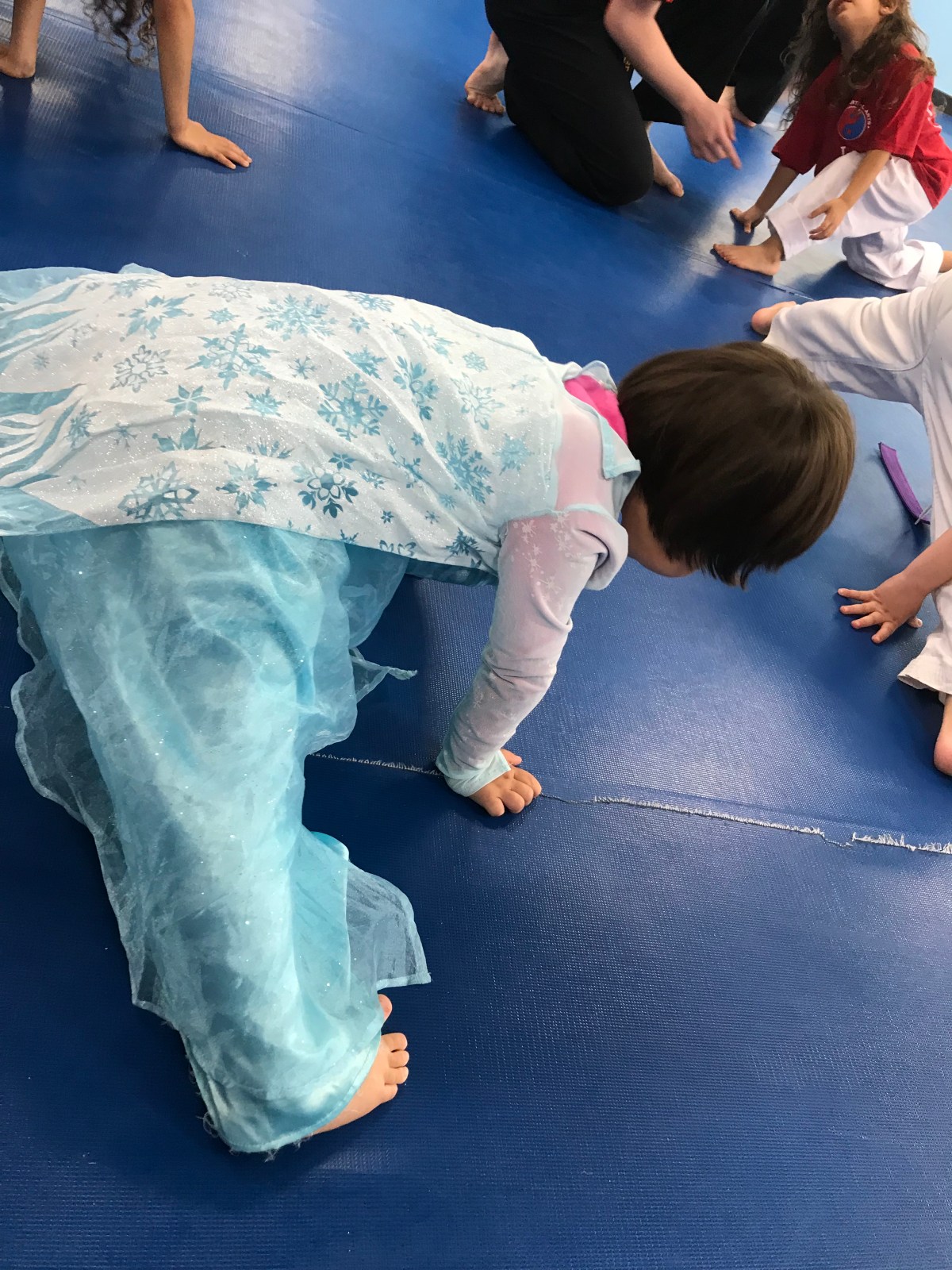
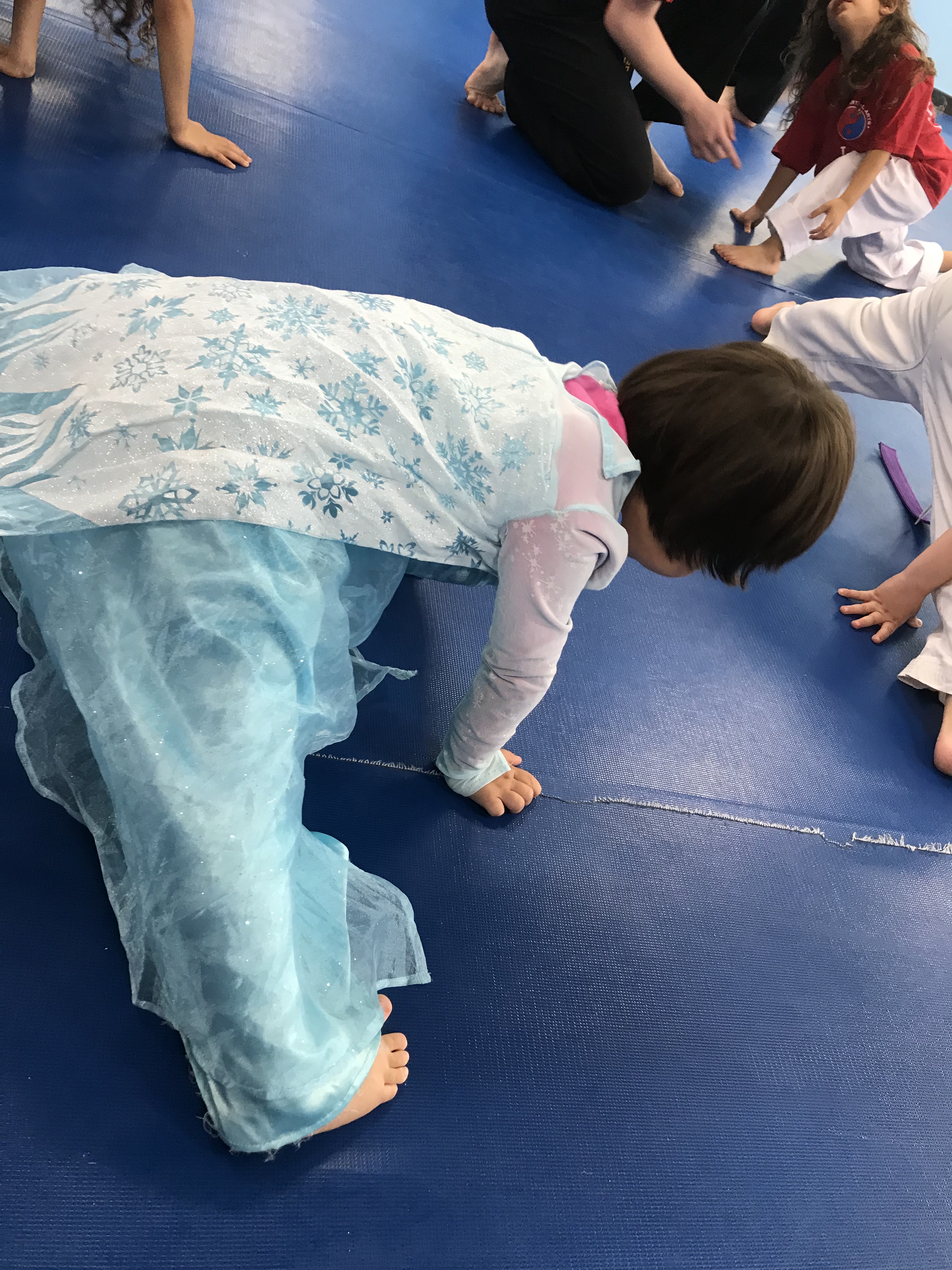
Ann “Vee” Hu in tae kwon do class wearing her Elsa costume from the Disney movie Frozen.
What are we doing with our daughter?

Of course, the truth is, we have no idea what we’re doing with our daughter. What we’ve done up to this point is swimming classes beginning at 10 months old, soccer classes beginning at 18 months old, as well as piano and Chinese language classes beginning at age 2. At age 3, she did a 6-week class in archery, several sessions of basketball, two 6-week sessions of ice skating, two 4-week sessions of pre-ballet, one 4-week session of creative movement dance, 6 months of gymnastics and 6 months of tae kwon do. She continued Chinese classes during age 3. We had several months of violin classes, although it was mostly sawing on the violin with the bow.
AnnMyPonyClass
Just on the cusp of age 4, she has started Spanish classes. Right now, I think her Saturdays are perfect. Toddlerhood is a kinetic experience, so academics are difficult to focus on. Saturday morning starts out with soccer class, then Spanish class, which includes singing and dancing and energy, then a gymnastic-like creative movement dance class, finally a relatively low movement, but remarkably engaging Chinese class and at least the first week, followed by an hour in the local park playing soccer with dad. This mix of movement and theory seems to fit her now.

Why?
Some decisions are rudimentary. Drowning is a top cause of death for children ages 5 to 8, so we want our daughter to be able to save herself if she falls into water. Swimming is really a survival skill.
The Tae Kwon Do was added per her preschool principal’s recommendation because Ann was remarkably abusive to adults and peers around age 2. The principal rightly assessed that martial arts would reduce her violence toward people nearby her. Now, even when she wants to kick and punch things at home, she asks me to hold a pillow the way they hold padded targets in her school. Why does she like to kick and punch things? I have no idea.
Other activities like basketball, dance, soccer, gymnastics are just to keep her moving because she has a surprising amount of energy, and we feel exhausted.

Overscheduled?
Experts say, which I’m not actually sure, that unstructured play is critical. I’m not entirely certain what that means, but what I have observed is that when she had a 6-session series of ice skating, the Wells rink gave us a plastic punch card with 6 free sessions at their various open skating days. I managed to get Ann to the rink 9 times during the 6 weeks. In addition to her classes. She seems to make better skill gains on non-class days. This isn’t to say that classes are bad or a waste of time and money. When she has a class, like swimming once per week, she often replicates some of the movements from her class during her free swim time. I usually managed to get her to the pool twice per week in addition to her class.
GreenBelt TestI have discussed this principle with her piano instructor to no avail. Ann is a completely different person on her home keyboard in her playroom than in the exalted hall of her music school. At home she literally stomps on the keyboard. At school when we arrived early, she carefully explored the keyboard, often making short compositions herself of 3 keys. One sounded a bit like the classic iconic notes from the theme song for the movie Jaws. Once she finishes exploring the keyboard, she often tried to play whichever music I had put in front of her. She never tried to play music from a book at home. I wish they had an open piano time like they have open swim, open skate and open gym at the gymnastics center. But the best I managed was before class. It’s a pity because it’s too dense, too concentrated.
In any case, in addition to all her classes, dad usually gets her out to a park almost every afternoon. They play soccer, basketball, she rides her bike, they run through the forest trails. Unstructured play is unquestionably engaging for her, it’s just exhausting for us, so the classes help reduce some of the energy burden.
AnnWenHuNinjaTraining

She’s really, really, really black

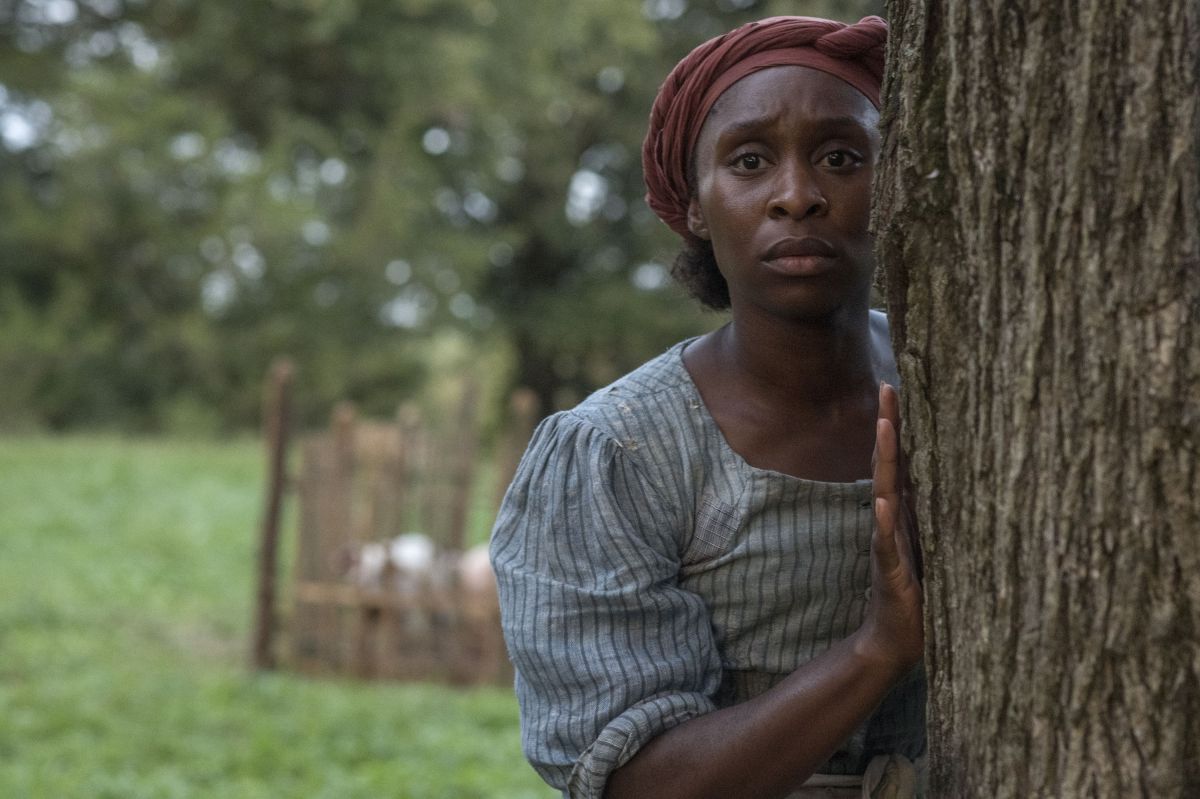
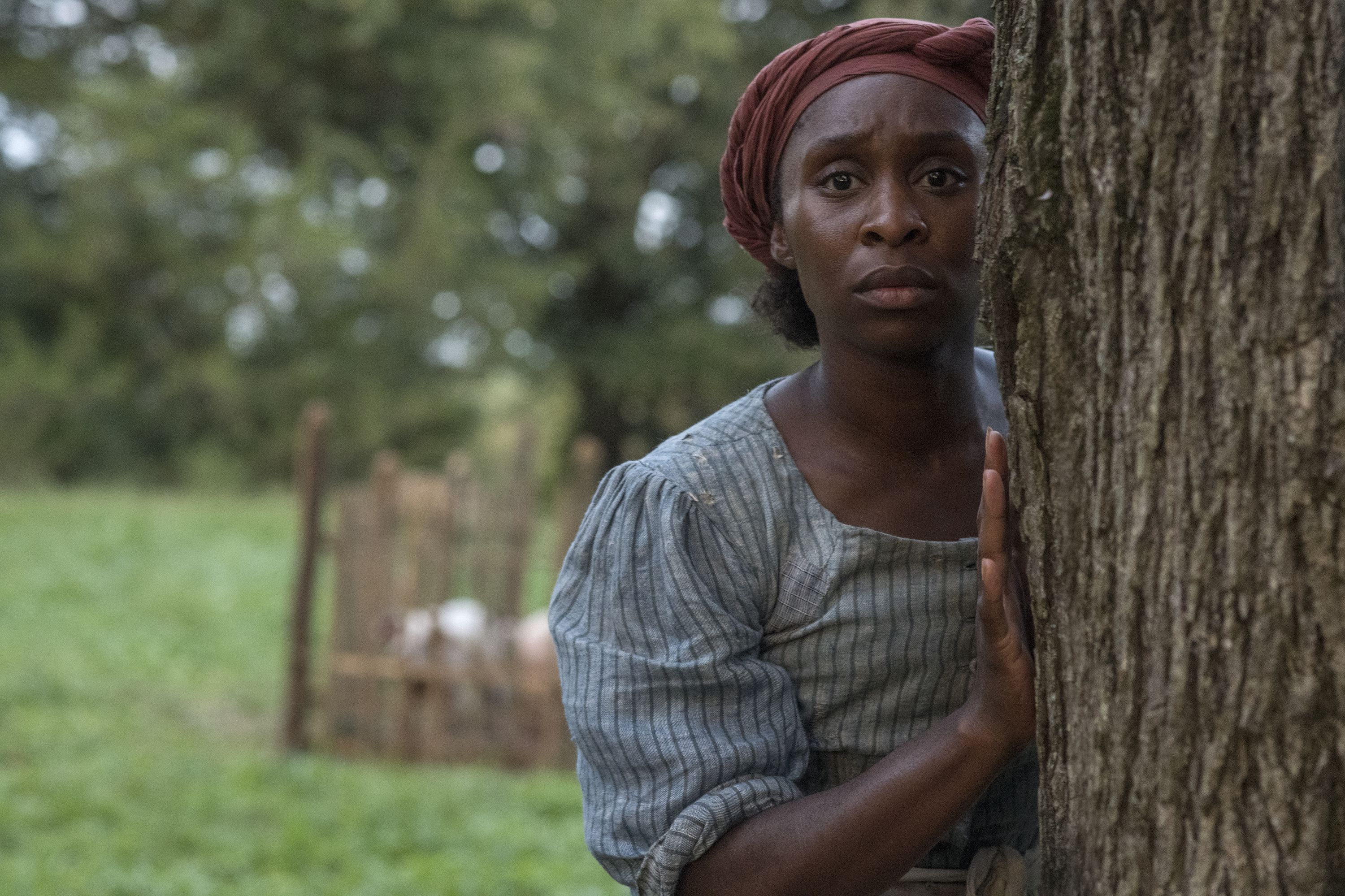
My 3-year-old daughter will turn 4 in a week. She’s Amerasian. I want to raise a racially aware child because she will likely present as white, and I want her to be aware that a lot of people, including her father who has unusually dark skin by Chinese standards, face a lot of rude behavior from people just because of skin color. As a part of this educational process, we watched the movie Harriet about a month ago. https://www.youtube.com/watch?v=GqoEs4cG6Uw
From the movie about the life of Harriet Tubman, Ann learned that people with dark brown skin can be referred to as black. The week after watching the movie, she said to me as we started one of her many classes, referring to a colleague’s mom, “She’s black like Harriet.” Yes, she is, I replied. I wanted to discuss more, but all parents were wrangling toddlers out of jackets and into chairs and the teacher was there and the class was starting before I could get more conversation either with my daughter or with the mom she had just compared with the stunning beautiful actress who portrayed Harriet in the movie.
Today, we were leaving her pre school at noon on our way to pony riding class. I encouraged her to wish her favorite teacher, Ms. Jones to have a wonderful evening, and she did with unusual enthusiasm. Ms. Jones responded equally affectionately, rubbing both of her checks and wishing Ann a wonderful evening. As we walked forward, Ann said to me, “She’s really, really, really black.” Yes, Ms. Jones is likely African American, although as with most American citizens, she’s likely to have more than one racial/ethnic category. However, since the first comment, I wanted to get into this conversation more deeply and since we weren’t pressed for time, I stopped right there and said, “I’m also white. And you are Asian.” Ann did a double-take. “What is Asian?” Actually, you are not Asian, I explained. Your dad is Asian. Your grandma is Asian. But you … Ann cut me off. “What is Asian?” she asked. Asian is people like your father from places in Asia like China. “I’m Asian?” She asked. Well, you’re half Asian. You got Asian genes from your dad and white genes from your mom. Then she said I want ice cream.
I’m posting this because I have no idea if I’m doing this right or wrong. Kids don’t come with manuals, and I have no idea to how to approach conversations like this.
We had another encounter completely independent but related to the idea of accepting the people in your neighborhood. We were leaving ice skating class maybe 2 or 3 months ago and a group of women and girls dressed in burkas came into the ice skating rink. Ann stopped and stared at them for a long time, and I was unable to continue the clothing changeover and backpack organization that goes with leaving the rink because she wouldn’t move. She just stared at the group from a distance of a meter or two.
I walked her over to the group and asked Ann to give a salutation in Arabic from the Qu’ran. I forgot which one I selected. But she was unable to pronounce it, so I said that’s okay, you can say Hello.
“You won’t understand this right now, but your mom is Christian. Your grandma is Buddhist. You dad generally talks like a Taoist and your new friends are Muslim. These are people in our neighborhood. Let’s say hello to them.”
By this time, the girls who had been getting shoes off and skates on stopped and looked at us. We greeted them. They said hello. The oldest woman in the group, possibly grandma for one of the girls thanked me. After the hello, Ann didn’t stare any more and women in burka seemed to have achieved a non-alien status.

I’m happy for any inputs on these topics, including criticism, because I’m not sure if I’m doing it right, and I’d like to get it right. All ideas welcome.
Harriet