Of course, we want our daughter to be successful. Every parent does. But what exactly does that mean? And how do we get there? Let’s say, rather tongue in cheek, that we wanted Ann Hu to become President of the United States. Actually, I think fame is a painful existence, and that job ages people prematurely, but if she really wanted that, I’d support her. So, how does one make a 4-year-old into a future president? Well, statistically speaking, the 3 institutions that have graduated the highest number of people who went on to that public office are the Naval Academy, Harvard University and West Point.
Now we’re talking! Huge numbers of parents around the world dream of their child being accepted to and graduating from Harvard. Particularly in Asia, where brand fetishism is globally disproportionate, Harvard is sometimes the quintessential definition of academic success. And in Asian, in pursuit of this goal, a perfect SAT is considered a milestone to achieve that goal. However, lots of Asians, both US born and born abroad have been bringing lawsuits against American universities because universities don’t make decisions based purely on grades, transcripts and SATs. Most have some vague language on their websites about a whole person concept or well rounded, etc.
Obviously, the service academies, including West Point, the Naval Academy and the Air Force Academy also look at SAT/ACT scores and transcripts, but they also require a physical fitness test and like the SAT goal of Asian Harvard wannabes, I’ll assume that a perfect score on the fitness exam is probably the goal to shoot for.
Most universities, especially Ivy League and the service academies talk a lot about demonstrated leadership skills. Back to a new version of how to build a 4-year-old into a President, how do you help a 4-year-old develop leadership? I learned from a colleague that the Air Force Academy decision makers value Civil Air Patrol experience. I’ve read a lot of organizations both government and corporate like Eagle Scouts. Scouts starts at age 5 and civil air patrol begins at age 12. So, now, we’re getting a little closer to 4 years old.
What makes leadership? Obviously, many would say the ability to influence people, but Marines would likely say, someone who by their actions can inspire people. I spent 13 years in the Marine Corps. Marines have a set of leadership traits: Bearing (outward emotional control, which is a part of emotional intelligence), Courage, Dependability, Decisiveness, Enthusiasm, Endurance, Integrity, Initiative, Justice, Judgment, etc. A detailed discussion of the list is here: http://www.txdevildog.com/backbone-usmc-leadership-traits-jjdidtiebuckle/
Let’s focus on Courage, which is a heady word at any age. The Marine Corps informed me around the time I turned 18 that I should try to develop courage, which is a mildly terrifying assignment, seemingly mission impossible. However, in the same boot camp discussion, they defined courage as the ability to act when you’re scared. Marine Corps boot camp also gave me a series of physical activities to engage with fear, including meeting my raging drill instructors, rappelling from a 50-foot tower on the wall and from the “hell hole”, throwing a live hand grenade, qualifying with a rifle and the most horrifying for me, swim qualification. I think rappelling is one of the best activities in Marine Corps boot camp. When a late age teen stands on the 50-foot edge of the tower, most are afraid. Once they successfully get to the bottom and all will, they suddenly lose their fear and gain confidence.
Let’s go back to toddlerhood and talk about fear and confidence which take on a totally different scale at this age. But before we get there, let’s talk about autonomy. I have 150 sky dives and a USPA C license in skydiving. I trained with and participated in a couple of canopy relative work competitions with an older team in California in the 1990s. Our team had one rule. The person receiving the canopy dock, which is the person who could careen to earth in a silken parachute funeral shroud, is the only person allowed to opine on the quality of the dock. If the person receiving the dock feels nervous, scared or uncomfortable, they fold up their legs and the other parachute flies right under, never connecting to the stack. This is to say that fear is personal and the only person with a right to decide what is fearful is the person experiencing fear. For some crazy reason, we lose our sense of respect when dealing with children.
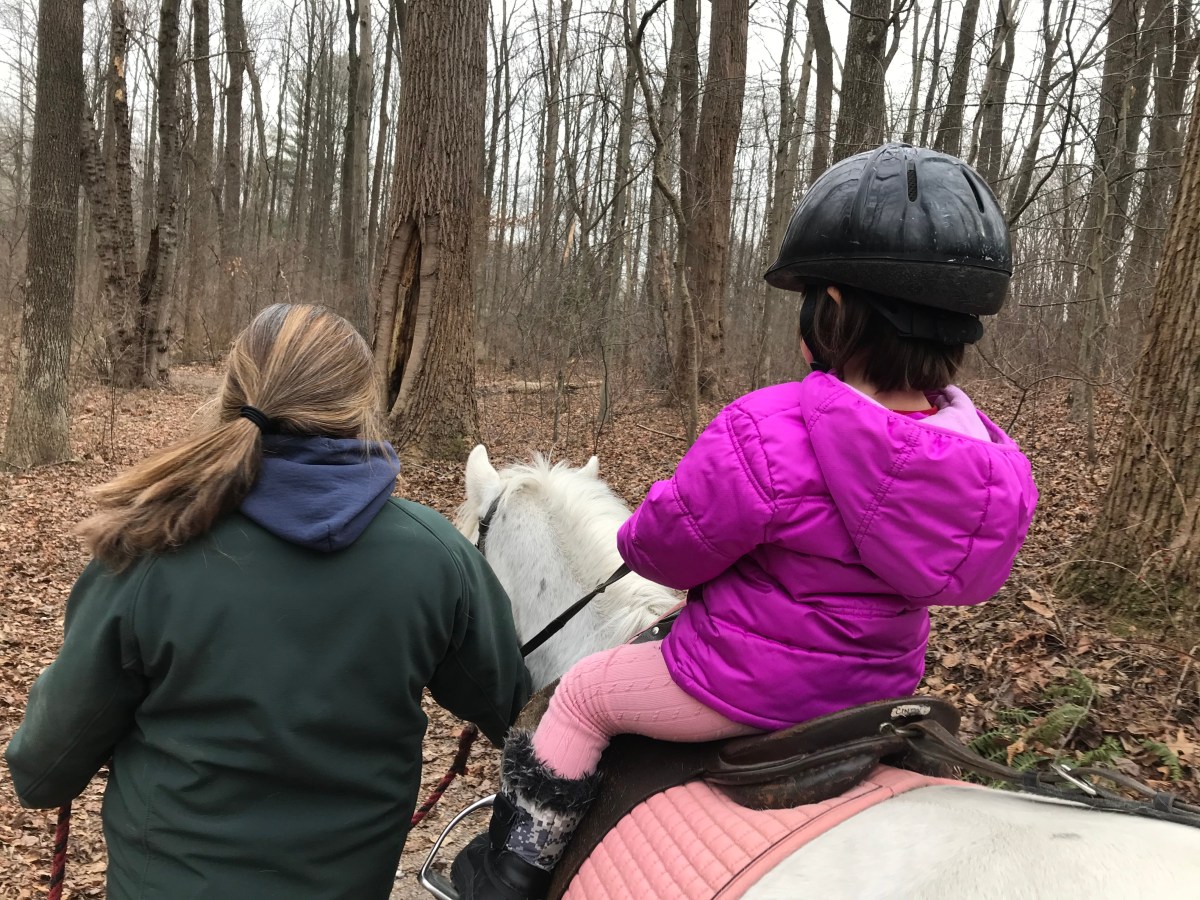
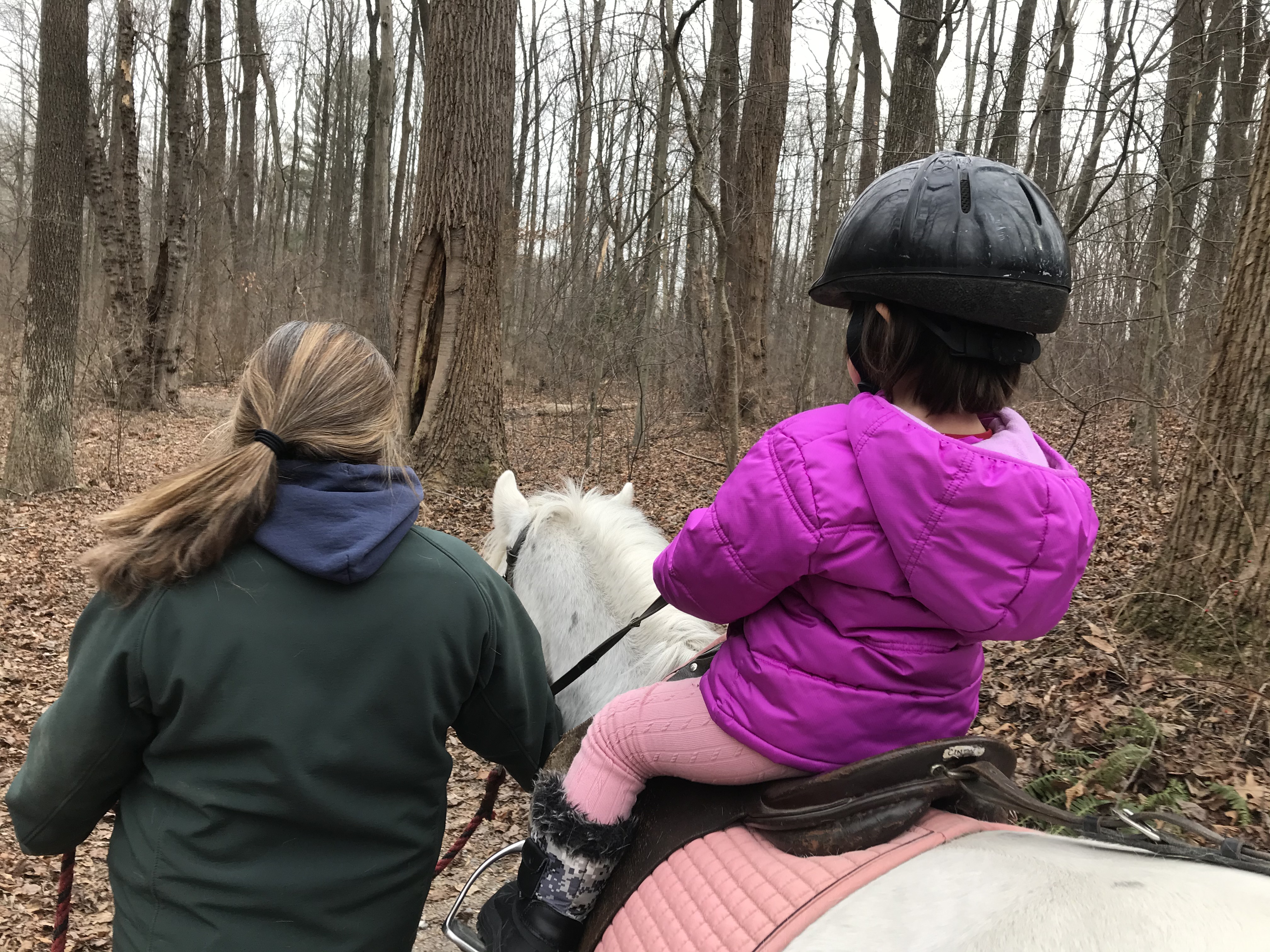
Keeping autonomy in mind, I have tried to help my daughter safely engage with the emotion of fear. Lots of things are scary at first, like swimming classes, ice skating classes, pony riding classes. We have practiced deep breathing to take the edge of fear. That said, when she says she’s scared, I ask the instructors to let her sit out. Patience is a critical element of a child’s engagement with fear. Perhaps one of the most comical experiences was a horse ride in Arizona. She wanted on the horse, but when I lifted her up to the western saddle of a full-sized horse and she was looking down at me, she started crying. I asked her if she wanted off the horse. This is where it gets funny. She said no. OK. What did she want me to do? Hold her hand. OK, I held her hand. A good 10 minutes while she cried and refused several more offers to remove her from the horse. We were in the sun in Arizona and she complained it was too hot. I felt hot too. I suggested we move the horse two steps ahead to the shade. She agreed. However, when I started to walk to the front of the horse, to use the lead rope to move it forward, Ann complained. She wanted to hold my hand. I explained that I couldn’t move the horse out of the sun while holding her hand. We sat there a few minutes more. Then she agreed I could move the horse. We sat under the tree another 10 minutes. The crying subsided. I held her hand. Ann said she wanted to drink water. I did too. It was really hot. I explained that we had to go back to the barn to get our water bottle, so I’d need to walk the horse about 5 steps. She agreed, but complained as soon as the horse started to move. I held her hand. We waited. She complained again. I explained I had to let go of her hand to move the horse. She agreed. I moved the horse back to the barn and she whimpered as the horse walked. We got the water. We stood for another 10 minutes. Around the final 15 minutes of the one hour, she asked me to walk. She complained it was too fast. I stopped and started the horse because there was never a speed slow enough for her comfort.
Ann has had dozens of experiences like the horse where I allow her to be afraid, but provide whatever support she asks for as she negotiates her own fears. Just in the last few weeks, I’ve noticed an impressive improvement in confidence. I think confidence is a key element of leadership.
While we engage her fears, we also talk a lot about cars and strangers. I don’t want Ann to be fearless. Fear provides a critically important element of survival in that it often prevents us from doing dangerous things. I want her to critically analyze risk and danger and determine if she should or should not do something not purely based on whether it is frightening but on whether it is dangerous.
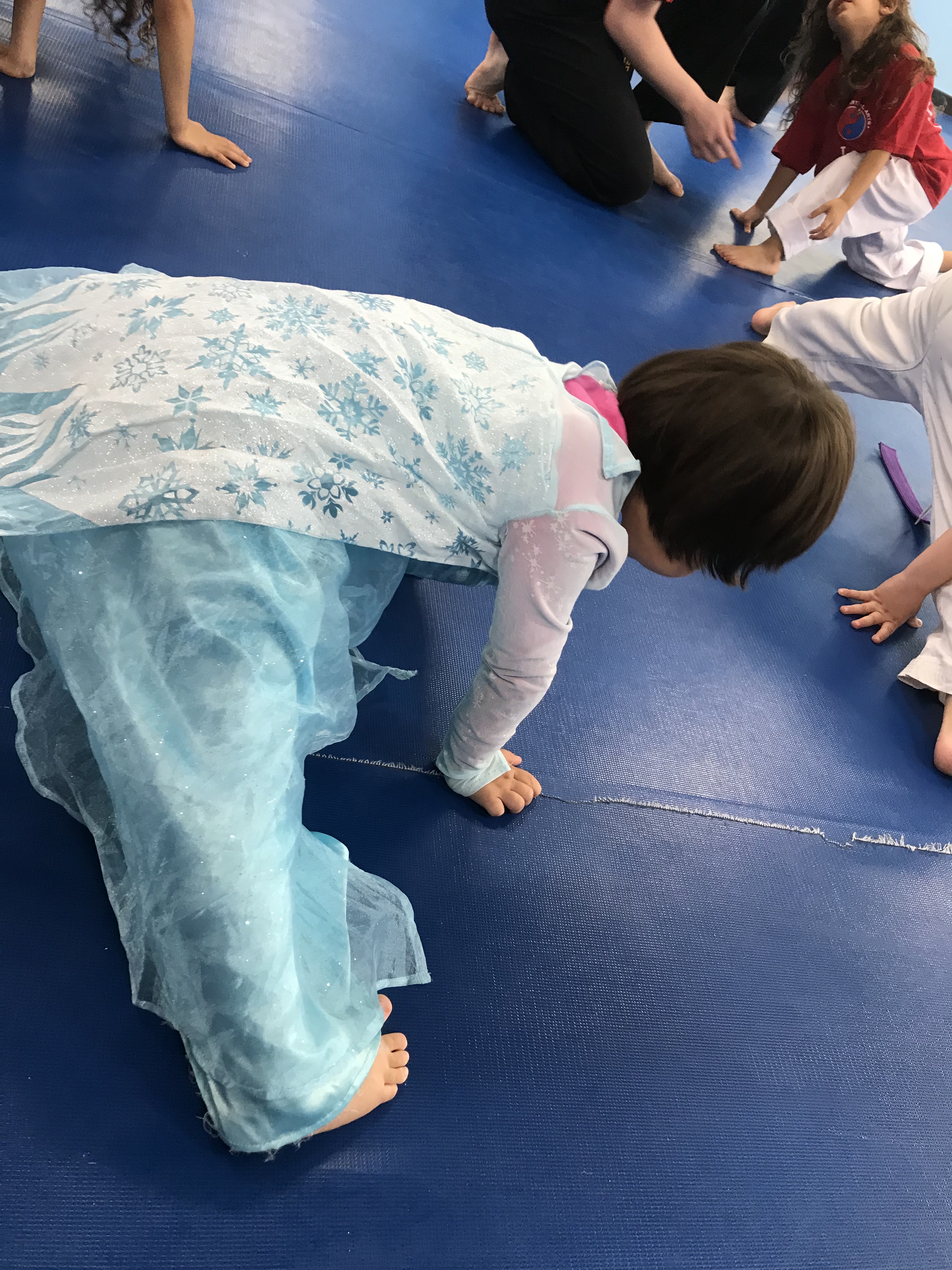
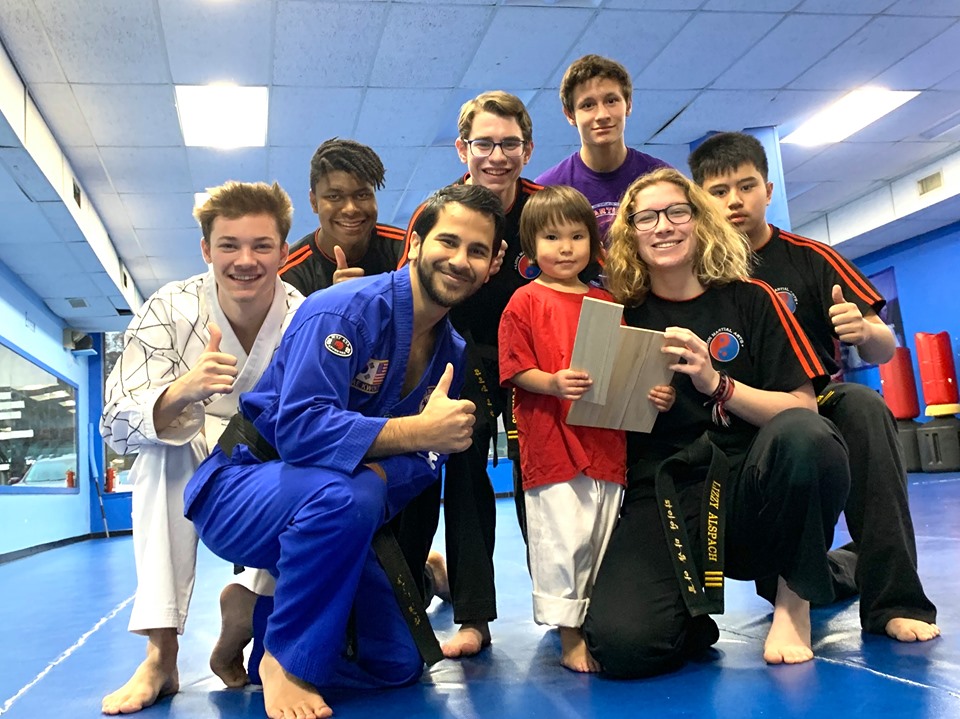
Ann “Vee” Hu in tae kwon do class wearing her Elsa costume from the Disney movie Frozen.







![Cinderella [Russian Edition] audiobook cover art](https://m.media-amazon.com/images/I/51urS0RYYPL._SL500_.jpg)


![El Fantasma de Canterville [The Canterville Ghost] audiobook cover art](https://m.media-amazon.com/images/I/61e98LWlOjL._SL500_.jpg)


![Alice no País das Maravilhas [Alice in Wonderland] audiobook cover art](https://m.media-amazon.com/images/I/51n0DI2ibVL._SL500_.jpg)


 My niece was treated nicely in a job interview. Yes, it comes as a surprise. She got addicted to Meth. I’m not going to apologize and neither should she. After 3+ years clean, she had a relapse. She was caught with drug paraphernalia and spent a couple of days in prison. She explained all this to both companies that interviewed her. One brilliant hiring official said all that matters is that you got clean. Both companies hired her.
 I have discussed this principle with her piano instructor to no avail. Ann is a completely different person on her home keyboard in her playroom than in the exalted hall of her music school. At home she literally stomps on the keyboard. At school when we arrived early, she carefully explored the keyboard, often making short compositions herself of 3 keys. One sounded a bit like the classic iconic notes from the theme song for the movie Jaws. Once she finishes exploring the keyboard, she often tried to play whichever music I had put in front of her. She never tried to play music from a book at home. I wish they had an open piano time like they have open swim, open skate and open gym at the gymnastics center. But the best I managed was before class. It’s a pity because it’s too dense, too concentrated.


 35-Year Public Affairs & IT Professional